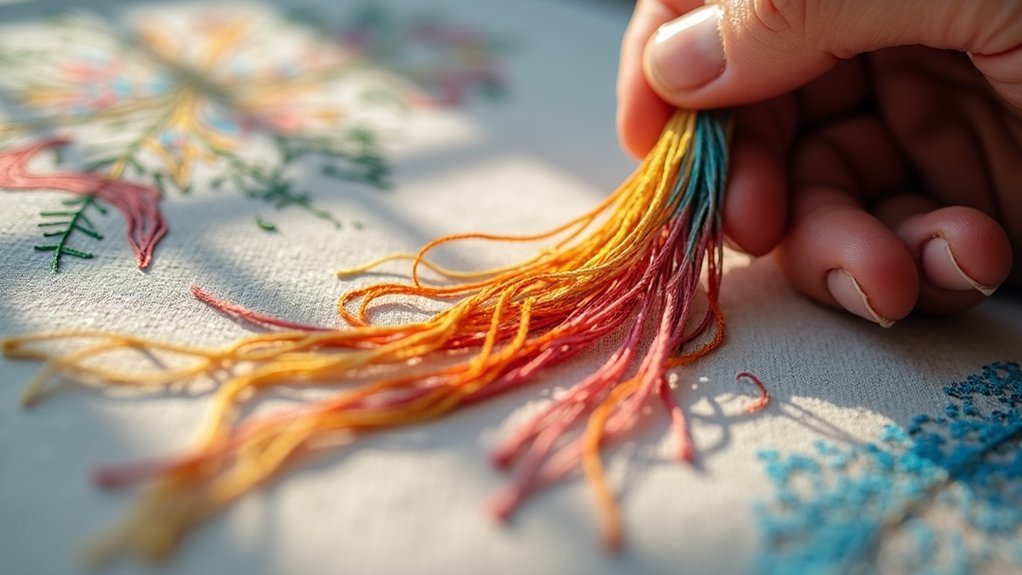
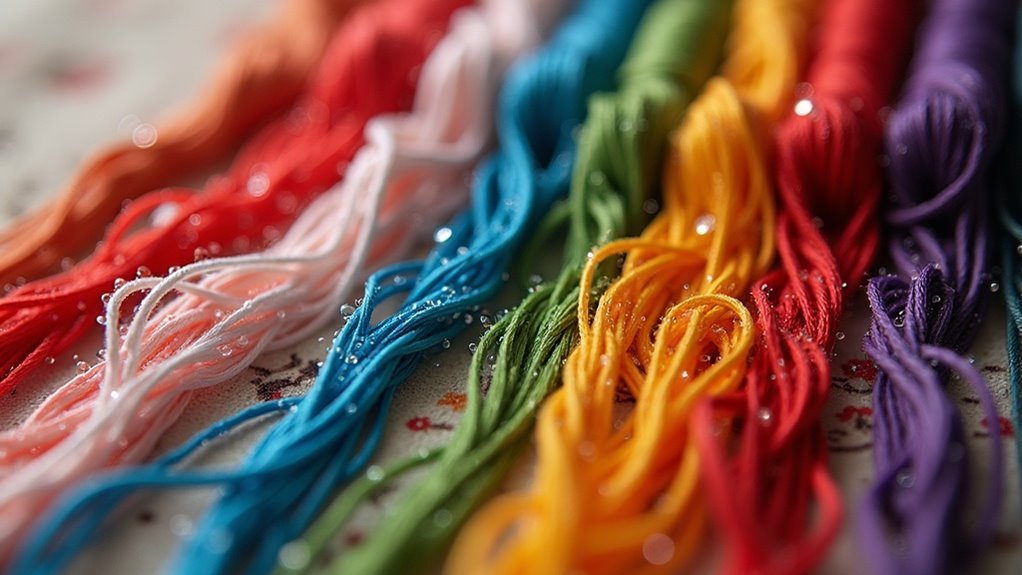
Embroidery thread can bleed, especially if you’re using non-colorfast threads like DMC 321 red. When excess dye transfers onto fabric, it can ruin your project. Factors such as hot water, certain detergents, and incompatible adhesives can exacerbate bleeding issues. To prevent this, prewash your threads and test their colorfastness. If bleeding occurs, act quickly by rinsing in cold water. There’s much more you can do to manage and prevent color run effectively.
Key Takeaways
- Yes, some embroidery threads, especially deep reds like DMC 321, can bleed when washed, transferring dye onto fabric.
- Color bleeding is influenced by the type of dye used and external factors like heat and sunlight.
- Prewashing threads helps determine colorfastness and identify potential bleeding issues before starting a project.
- Immediate rinsing in cold water is essential if bleeding occurs to minimize damage to the fabric.
- Using color catchers during washing can help absorb excess dye from non-colorfast threads to protect your work.
Understanding Thread Bleeding
Have you ever noticed unwanted color streaks on your fabric after washing? This phenomenon, known as thread color bleeding, occurs when excess dye from non-colorfast threads transfers onto your fabric.
Certain colors, like DMC 321 red, are notorious for bleeding, especially during rinsing. Factors such as hot water washing and specific detergents can exacerbate this issue.
DMC 321 red is infamous for bleeding, particularly during rinsing, with hot water and certain detergents making it worse.
To combat this, always prewash your threads to check for colorfastness and consider testing with a small swatch.
If bleeding occurs, immediate rinsing in cold water can help mitigate damage and remove excess dye, preserving the integrity of your embroidery project.
Factors Contributing to Color Run
Understanding the factors that contribute to color run is essential for any embroidery project. The type of dye used in threads, especially deep reds, oranges, and greens in rayon, often leads to bleeding.
External factors like washing in hot water, direct sunlight, and specific adhesives can exacerbate this risk. Pre-washing threads before use allows you to test colorfastness, revealing potential issues early on.
Additionally, interactions between threads and washable glues can lead to unexpected bleeding. If you notice any color run, act immediately by rinsing the area with cold water to minimize damage and prevent further dye transfer.
Preventative Measures for Embroidery Projects
To guarantee your embroidery projects maintain their integrity, you should adopt effective preventative measures.
Start by prewashing threads to confirm colorfastness and conduct a colorfastness test with a swatch.
Additionally, implement safe washing practices to minimize the risk of dye transfer and preserve the quality of your finished pieces.
Thread Prewashing Techniques
Before you start stitching your embroidery project, prewashing your threads is essential for ensuring colorfastness and preventing unwanted dye transfer.
Soak threads, particularly those prone to bleeding like reds and deep colors, in cold water to identify any dye release. If you notice any bleeding, it’s best to switch to a different thread.
After prewashing, allow your threads to dry completely to minimize future bleeding risks. Additionally, using a test swatch can help assess potential colorfastness during cleaning.
Regularly incorporating color catchers in washes can further protect your finished embroidery from dye transfer from untested threads.
Colorfastness Testing Methods
Conducting a colorfastness test is essential for ensuring the longevity and quality of your embroidery project. Start by soaking a small piece of thread in cold water to detect any thread bleeding. You can also stitch a test swatch and wash it to evaluate color stability. Prewash known bleeding threads, especially reds, and use a color catcher during the washing process for added protection. If you notice bleeding, rinse immediately under cold water to stop dye spread.
| Method | Description | Purpose |
|---|---|---|
| Soaking | Submerge thread in cold water | Detects bleeding |
| Test swatch | Stitch and wash a sample | Evaluate colorfastness |
| Prewashing | Wash threads before use | Prevents color transfer |
| Color catcher | Use during washing | Absorbs excess dyes |
Safe Washing Practices
While washing your embroidered projects, implementing safe practices is vital to maintaining their integrity and appearance.
First, prewash any threads prone to bleeding, especially reds and deep colors, to guarantee colorfastness. Always use cold water, as hot water can cause dyes to run.
Incorporate Color-Catchers to absorb fugitive dyes during washing, minimizing color transfer risks. Test thread colorfastness by soaking a small piece in cold water beforehand.
If you notice bleeding, rinse the piece immediately in cold water and soak it to draw out excess dye. These practices will help preserve your embroidery’s brilliance and longevity.
Immediate Actions to Take When Bleeding Occurs
When you notice bleeding, stop washing immediately to prevent further damage.
Rinse the affected area under cold running water for several minutes to halt dye transfer.
Quick action is essential; addressing the issue promptly will help preserve your embroidery’s integrity.
Stop Washing Immediately
Noticing color bleeding during washing can be alarming, but immediate action can greatly mitigate the damage. First, stop washing immediately to prevent further dye transfer. Your quick response is vital.
- Protect the integrity of your piece.
- Preserve the original beauty of the embroidery.
- Enhance your ability to restore it later.
Next, rinse the affected area under cold water for several minutes. This helps remove excess dye.
After rinsing, soak the piece in cold water, changing the water multiple times as needed. Continuous rinsing and soaking can minimize visibility, preserving your cherished work for years to come.
Rinse Under Cold Water
After stopping the wash cycle, your next step is to rinse the affected area under cold running water for several minutes.
Use ice-cold water to effectively draw out the bleeding dye. Soaking the entire piece can enhance this process; change the soaking water frequently, ideally every few hours. This maximizes dye removal and minimizes re-bleeding.
After rinsing, avoid wringing or twisting the fabric, as this can spread the dye further. Instead, gently press out excess water.
If bleeding persists, repeat the cold water rinse until the color fully dissipates and the fabric returns to its original state.
Techniques for Managing Color Run
If you detect color bleeding during the embroidery process, acting quickly can greatly minimize damage to your work.
Follow these techniques to manage the situation effectively:
- Rinse the area under cold running water for several minutes to stop dye transfer.
- Soak the piece in cold water, changing the water until the color runs clear.
- Use products like Synthrapol or Shout Color Catchers to absorb excess dye from non-colorfast threads.
Community Experiences and Recommendations
How can you best prepare for potential color bleeding in your embroidery projects? Community experiences emphasize the importance of prewashing vibrant threads, especially red ones like DMC 321. Many recommend immediate rinsing in ice cold water if you notice any bleeding. Here’s a quick reference:
| Thread Type | Recommended Action | Tips |
|---|---|---|
| Red Threads | Prewash before use | Use Shout Color Catchers |
| Vibrant Colors | Soak in ice cold water | Change water frequently |
| Finished Pieces | Rinse immediately | Prevent further bleeding |
Engaging with these techniques can greatly minimize the risk of color bleeding in your embroidery.