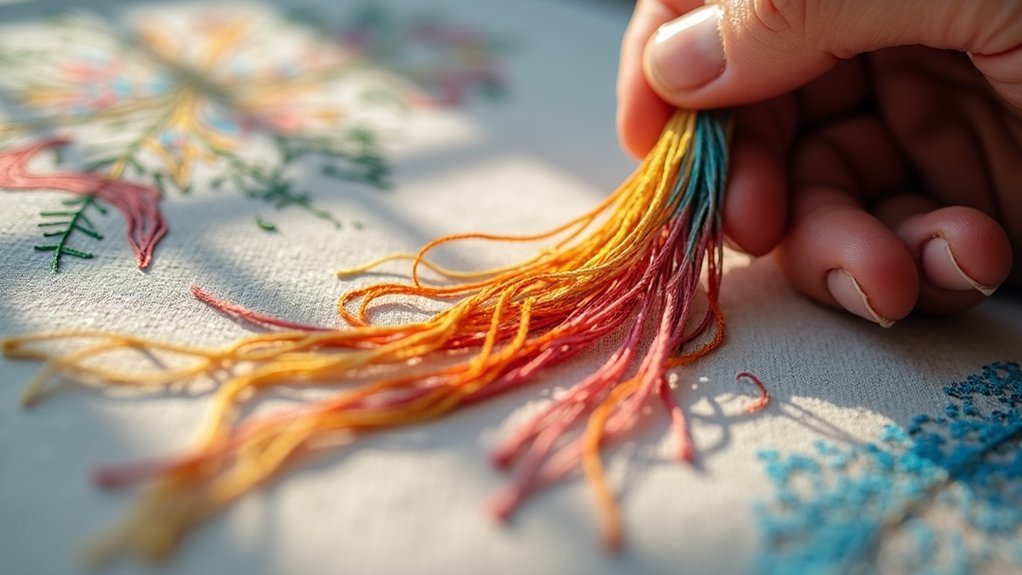
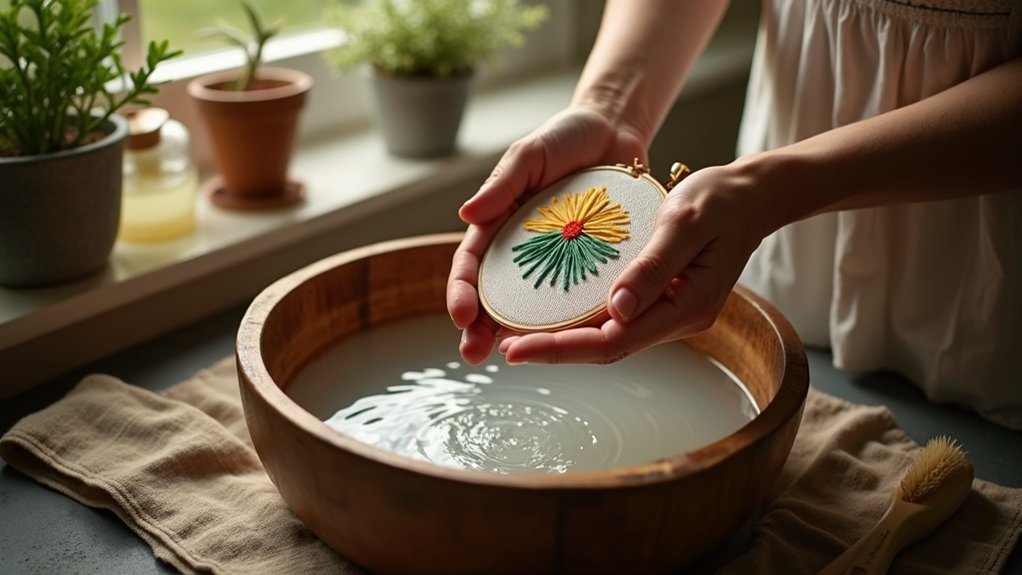
To wash embroidery by hand, first gather mild soap, a bowl, and soft towels. Soak your piece in lukewarm water mixed with soap for 15 minutes to an hour, gently swishing it around. Rinse under cool running water or in a cool water bowl, avoiding wringing. Lay it flat on a towel to absorb excess water, then air dry it away from direct sunlight. When it’s dry, iron it from the back on low heat for a perfect finish. There’s more you can learn about caring for your embroidery!
Key Takeaways
- Prepare a lukewarm water and mild soap solution in a large bowl before submerging the embroidery for 15 minutes to 1 hour.
- Gently rub stubborn stains with a soft toothbrush while the piece is submerged in the soapy water.
- Rinse the embroidery under cool running water or in a bowl of cool water, avoiding twisting or wringing the fabric.
- Lay the embroidery flat on a towel to absorb excess water, then air dry away from direct sunlight or heat.
- Iron the dried piece from the back using low heat, and use a press cloth to protect the stitches if necessary.
Materials Needed for Washing Embroidery
When washing embroidery by hand, you’ll need a few essential materials to guarantee the process goes smoothly.
First, gather mild soap, like Soak Scentless or a gentle dish soap, to protect your embroidery piece.
Gather mild soap, such as Soak Scentless or gentle dish soap, to ensure your embroidery piece stays protected during washing.
Then, prepare a large, clean bowl or container for the water and soap solution.
You’ll also want 2 or 3 soft cotton bath towels on hand to absorb excess water and safeguard the fabric while drying.
Finally, an iron and ironing board will be necessary for flattening the piece after it dries, restoring its shape.
Optionally, consider a press cloth to shield the embroidery during ironing.
Soaking the Embroidery
To effectively soak your embroidered piece, start by filling a large, clean bowl with lukewarm water, adding a drop or two of mild soap to create a gentle cleansing solution.
Stir the mixture to guarantee even dispersion. Submerge your embroidery in the soapy water for 15 minutes to 1 hour, gently swishing it occasionally to help release dirt or stains.
If needed, rub any stubborn spots with a soft toothbrush while it’s submerged. Avoid wringing or twisting the fabric to protect the stitches.
After soaking, let it air dry, ensuring the soap is completely rinsed out to maintain fabric integrity.
Rinsing Techniques
When rinsing your embroidered piece, use cool water and repeat the process several times to guarantee all soap is washed away.
Incorporating a tablespoon of white vinegar during the final rinse can enhance the threads’ sheen and vibrancy.
Always remember to handle the fabric gently, avoiding any wringing or twisting to maintain the integrity of your embroidery.
Cool Water Rinsing
Rinsing your embroidered piece in cool water is essential for preserving its beauty and integrity.
Start by gently holding your hand embroidery under cool running water. This effectively removes any water-soluble marks while preventing stains from settling in. Be careful to use cool water, as warmer temperatures can cause thread colors to bleed.
If preferred, you can also swish the embroidery in a bowl of cool water to cleanse it without stressing the fabric.
After rinsing, remember not to wring or twist the fabric, as this can distort the embroidery and damage the threads, compromising your careful work.
Vinegar Rinse Benefits
Incorporating a vinegar rinse can greatly enhance the appearance and longevity of your embroidered pieces. By adding one tablespoon of white vinegar during the final rinse, you neutralize soap residue, leaving your fabric feeling fresh.
This vinegar rinse acts as a natural color fixative, helping to prevent the dye from bleeding, which is vital for maintaining the integrity of your work. Additionally, the acetic acid softens the fabric, making it more comfortable against the skin.
It also eliminates lingering odors, ensuring your embroidery not only looks vibrant but smells fresh too. This simple step can truly transform your finished pieces.
Multiple Rinse Cycles
After adding a vinegar rinse to enhance your embroidery’s freshness and color retention, the next step involves ensuring that all soap residues are thoroughly removed.
Perform multiple rinse cycles using cool water, rinsing until the water runs clear. This is essential to maintain the integrity of the stitches and colors. Aim for three to four rinse cycles, especially if you used more soap.
Gently press the fabric against the sink or bowl to remove excess water—avoid wringing it out. For the last rinse, consider adding a tablespoon of white vinegar to further enhance sheen and set colors.
Drying the Embroidery
Once you’ve washed your embroidery, it’s crucial to handle it with care during the drying process.
Start by laying your embroidery pieces on a clean towel, pressing lightly to remove excess water—never wring or twist.
Gently lay your embroidery on a clean towel, pressing to absorb excess water without wringing or twisting.
For air drying, place the pieces flat on a drying rack or hang them with nails and strings, guaranteeing they maintain their shape.
If you’re blocking, lightly dampen and pin the embroidery to a cork board, working from the center out.
Always avoid direct sunlight or high heat, as these can fade colors and damage fabric.
Verify everything is thoroughly dry before proceeding.
Ironing Your Embroidery
When it comes to ironing your embroidery, taking the right approach is essential to preserve its beauty and structure.
Always place your piece on an ironing board, and iron from the back to protect the stitches and prevent flattening. Set your iron to a low heat and keep it moving to avoid scorching.
Use a press cloth, like a thin cotton fabric, between the iron and your embroidery, especially if you’re tempted to use steam.
Special Considerations for Different Fabrics
While you might be keen to wash your embroidered pieces, understanding the unique needs of different fabrics is essential for maintaining their beauty.
- Dry clean silk or wool threads to avoid irreversible damage.
- Handle vintage pieces gently, minimizing washing to protect delicate fabrics.
- Newly embroidered items are more resilient and can withstand hand washing.
- If you notice color bleeding, soak the piece in cold water with detergent for at least 30 minutes to stabilize the colors.
Always avoid harsh chemicals or bleaches, as they can harm both the embroidery and the fabric’s quality.
Stain Treatment Tips
To effectively tackle stains on your embroidered pieces, start by pre-treating the affected area with a Tide pen, allowing it to sit for a few minutes before washing.
For common stains like spaghetti splatters, gently dab the area with a soft cloth to absorb excess sauce before applying a stain remover.
Gently dab spaghetti splatters with a soft cloth to absorb excess sauce before applying stain remover for best results.
For stubborn stains, mix 2 parts peroxide and 1 part dishwasher soap in a spray bottle, letting it set for a day.
Always test these methods on a small, inconspicuous area first to prevent damage.
Regularly inspect your DMC floss work, addressing stains promptly to maintain its beauty.
Storage Recommendations for Embroidered Items
Proper storage of your embroidered items is essential for preserving their beauty and longevity.
To keep your embroidery in pristine condition, follow these recommendations:
- Store items flat, using acid-free tissue paper for protection.
- Keep them in a cool, dry place, away from direct sunlight.
- Use breathable storage bags or cotton pillowcases to prevent dust and moisture.
- Confirm all pieces are completely dry before storing to avoid mildew.