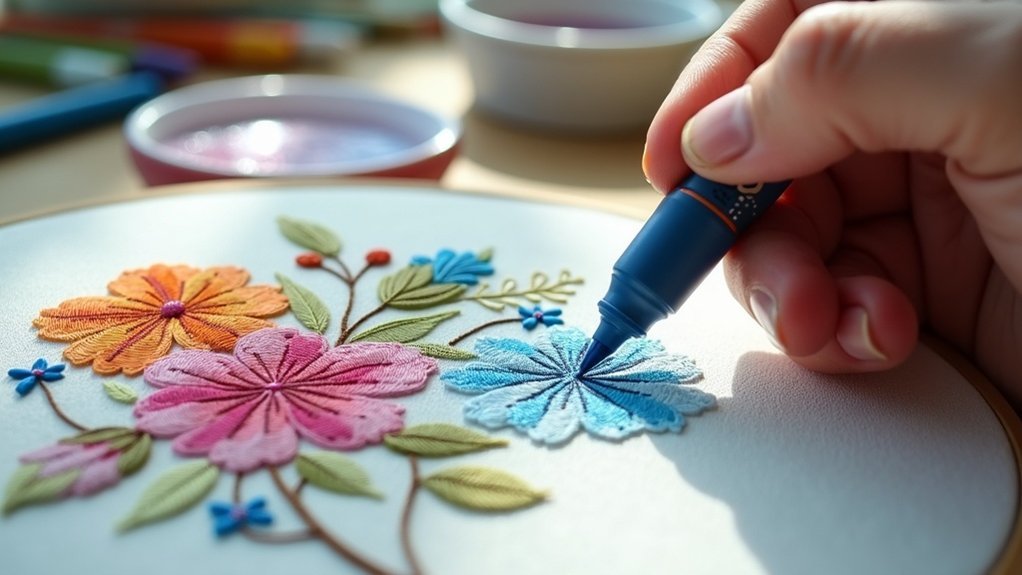
To use water-soluble pens for embroidery, first, find quality markers at craft stores like Kearing or Dritz. Test the ink on a fabric scrap to verify it’s removable. Once confirmed, draw your design directly on the fabric, opting for medium-colored fabrics for better visibility. After stitching, soak the piece in room-temperature water with mild soap for 15 minutes to remove the ink. Follow up for more tips on maximizing your embroidery results.
Key Takeaways
- Choose a suitable fabric and test the water-soluble pen on a scrap piece to ensure compatibility and visibility.
- Draw your design directly onto the fabric with the pen once compatibility is confirmed.
- Soak the fabric in room-temperature water with mild soap for at least 15 minutes after completing your embroidery.
- Rinse the fabric gently under running water to remove soap residue and any remaining ink marks.
- Avoid ironing the fabric before washing to prevent setting the ink permanently.
Where to Find Water-Soluble Fabric Markers
Water-soluble fabric markers are essential tools for any embroidery project, and finding them is easier than you might think. You can typically locate these markers in craft stores, often positioned near embroidery supplies, sewing notions, or quilting sections.
Popular brands like Kearing, Dritz, and Clover offer quality options known for their effectiveness. When shopping, consider availability, as specific brands may vary. Always check user reviews to confirm the markers meet your marking and removal needs.
Additionally, verify compatibility with your fabric type before purchasing to avoid complications during your embroidery project. Happy crafting!
How to Test Your Fabric for Marker Compatibility
Once you’ve picked out your water-soluble fabric markers, the next step is to verify they’re compatible with your chosen fabric.
Start by testing the ink on a scrap piece of fabric to ascertain it can be easily removed after stitching. Draw a small design to check the visibility of the markers against the fabric color.
Be cautious with delicate fabrics like wool and silk, as these may absorb permanent marks. After testing, rinse the marked area with water to confirm the ink washes out completely without residue.
Steps to Transfer Your Design Using Water-Soluble Pens
To effectively transfer your design using water-soluble pens, start by selecting a fabric that works well with the ink.
Next, test the marker on a scrap piece to verify the ink is both visible and removable.
Once confirmed, you can confidently draw your design directly onto your chosen fabric.
Selecting Appropriate Fabric
Choosing the right fabric is essential for successfully transferring your design with water-soluble pens. Opt for medium or light-colored fabrics to guarantee good visibility of pen marks, as dark fabrics may obscure the ink.
Always test the water-soluble pen on a scrap piece of your chosen fabric to verify that the ink can be easily removed after stitching and adheres well. Steer clear of delicate fabrics like wool or silk, which might stain or retain ink.
After completing your embroidery, soak the entire piece in room-temperature water with mild soap to thoroughly rinse away any remaining ink.
Testing Marker Effectiveness
How can you guarantee that your water-soluble pen will effectively transfer your design onto fabric? Start by conducting a simple test on a scrap piece of the same fabric.
Follow these steps:
- Check the contrast between the ink and fabric color to verify marks are visible.
- Use the pen to draw your design, applying consistent pressure for even lines.
- Observe if the ink bleeds or spreads.
- After stitching, rinse the fabric gently in room-temperature water to remove any ink marks.
This method helps verify your embroidery process goes smoothly, yielding a beautiful final piece.
Proper Removal Techniques
While you can confidently transfer your design onto fabric using water-soluble pens, proper removal techniques are essential to guarantee a clean finish. After embroidering, soak the fabric in room-temperature water with mild soap for at least 15 minutes to lift any ink marks. Rinse gently under running water to remove soap residue, repeating the soak if necessary. Avoid ironing before washing, as heat can permanently set the ink. For a quick reference, see the table below:
| Step | Action |
|---|---|
| 1 | Soak in water with soap |
| 2 | Rinse under running water |
| 3 | Repeat soaking if ink remains |
| 4 | Do not iron before washing |
| 5 | Air dry after ink removal |
Tips for Stitching Over Water-Soluble Marks
Before you begin stitching over water-soluble marks, make sure the marks are clearly visible on your fabric, as this clarity enhances the precision of your embroidery design.
Consider these tips to achieve the best results:
- Use dual tips for varying stitch widths and intricate details.
- Be mindful of your fabric type; some may absorb ink differently.
- Avoid ironing your fabric before washing, as it can set the ink.
- After stitching, soak the entire piece in room-temperature water to effectively remove marks, ensuring thorough saturation for ideal results.
This careful approach will enhance your embroidery project.
Effective Methods for Removing Ink After Embroidery
To effectively remove ink from water-soluble pens after your embroidery, start by soaking the fabric in a mixture of room-temperature water and mild soap for about 15 minutes.
This soaking technique guarantees thorough cleaning, but if stubborn marks persist, you may need to repeat the process.
Additionally, consider alternative ink removal methods if necessary, but always remember to test your markers on a scrap piece first to avoid unwanted staining.
Soaking Techniques Explained
When your embroidery is complete, it’s crucial to effectively remove any ink from water-soluble fabric markers to guarantee a clean finish.
Follow these soaking techniques:
- Soak the entire fabric in room-temperature water with mild soap for 15-30 minutes.
- Gently rinse under running water to eliminate soap residue.
- If ink reappears, repeat the soaking process, as some fabrics may need multiple washes.
- Avoid ironing before washing; heat can set the ink.
Always test water-soluble markers on a scrap piece first, ensuring the ink washes out without unwanted staining on your final project.
Alternative Ink Removal Methods
While soaking is a common method for ink removal, there are several effective alternatives that can save time and guarantee your embroidery project looks pristine.
For stubborn marks, dab the inked areas with a damp paper towel to gently lift the ink without saturating the fabric excessively. If traces remain, soak the fabric in room-temperature water mixed with mild soap for about 15 minutes, ensuring complete saturation.
For quicker results, consider sunlight exposure, as direct light can help fade air-erasable marks.
Always test your fabric and water-soluble pens on a scrap piece first to find the best ink removal technique.
Community Insights and Best Practices for Using Fabric Markers
As you explore the world of fabric markers for embroidery, testing your chosen water-soluble pens on a scrap piece of fabric is essential to guarantee you achieve the desired visibility and easy ink removal.
Here are some community insights and best practices:
- Use a mild detergent and soak the entire piece in room-temperature water for ideal ink removal.
- Avoid ironing before washing to prevent setting the ink.
- Dab ink marks with a damp paper towel to minimize fabric distortion.
- Engage with fellow crafters for tips on specific marker brands and effective washing techniques for best results.