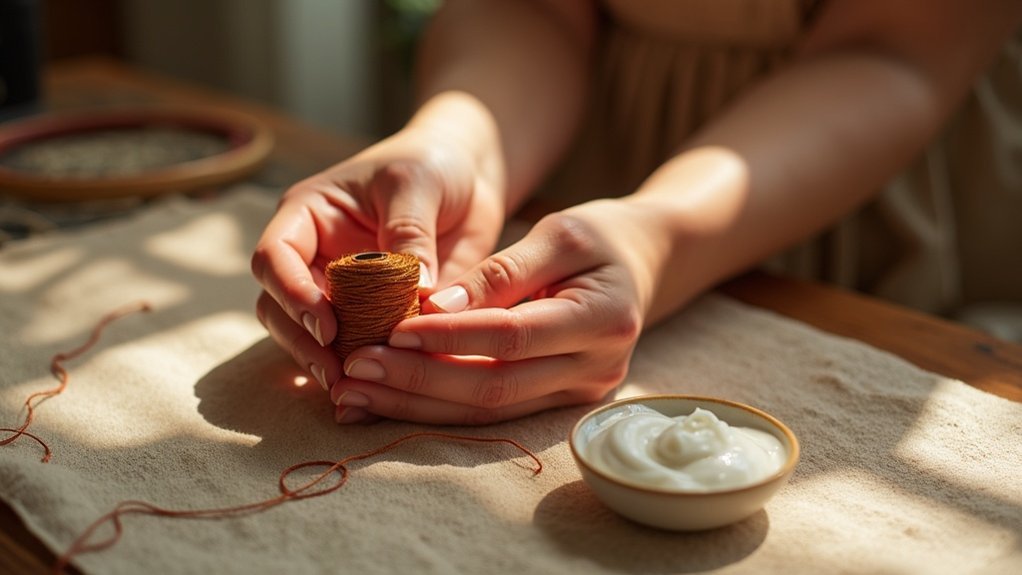
To use embroidery thread conditioner, lay your thread flat on the conditioner and pull it through gently. This helps prevent stickiness; just apply a small amount to each strand. For best results, condition specialty threads every use, while cotton ones need less frequent treatment. Smooth the waxed thread between your fingers to remove excess. This technique enhances your stitching experience, making it enjoyable and hassle-free. Want to learn about benefits and common issues? Keep going!
Key Takeaways
- Lay the thread flat on the conditioner and gently pull through to apply evenly without over-saturating.
- Condition each strand individually for smooth results, avoiding stickiness.
- Use beeswax for cotton threads and silicone-based conditioners for metallic or specialty threads.
- Apply conditioning before each use for metallic threads, while cotton may require less frequent application.
- Experiment with different conditioners and techniques to find what works best for your specific threads.
Types of Thread Conditioners
When it comes to selecting the right thread conditioner for your embroidery projects, understanding the two main types can greatly enhance your stitching experience.
Natural beeswax, used for centuries, offers a traditional option for conditioning your thread, ensuring it’s 100% pure without paraffin additives for peak performance.
On the other hand, synthetic silicone-based options like Thread Magic provide a modern alternative that’s acid-free and non-toxic, often appealing for their ease of application and ability to reduce residue.
Experimenting with both types is key, as personal preference and thread behaviors can vary widely among stitchers, enhancing your crafting journey.
What Kind of Thread Conditioner Should I Use?
Choosing the right thread conditioner can greatly influence your embroidery projects, so it’s important to contemplate what works best for your specific needs. If you’re working with metallic or specialty threads, a silicone-based thread conditioner, like Thread Magic, is perfect for its ease of use. For a more traditional approach, 100% beeswax is excellent for cotton threads and can enhance durability. Remember, natural fibers often don’t require conditioning. Check out the table below to help you decide:
| Thread Type | Recommended Conditioner |
|---|---|
| Cotton Thread | Beeswax |
| Metallic Thread | Silicone-based |
| Specialty Threads | Silicone-based |
| Natural Fibers | Minimal to no conditioning |
| General Use | Beeswax or Silicone-based |
What Does Thread Conditioning Do?
Thread conditioning plays an essential role in enhancing your embroidery experience, as it strengthens the thread while reducing fuzziness.
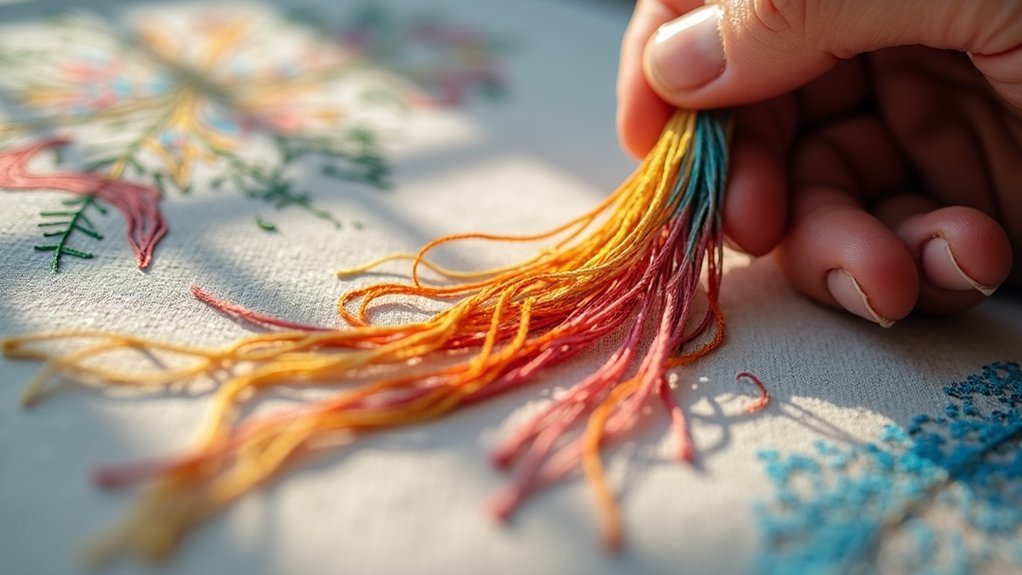
Using thread conditioners helps minimize tangles and knots, making it easier to manage multiple strands of embroidery threads. You’ll find that waxing threads improves their manageability, especially when working with natural fibers in intricate designs.
Additionally, thread conditioner helps specialty threads, like metallic or glow-in-the-dark, lay flat for better stitch appearance. It also reduces friction and static electricity, particularly beneficial in dry environments.
In the long term, these benefits lead to a more enjoyable and efficient stitching experience.
How to Apply Beeswax or Thread Conditioner
To apply beeswax or thread conditioner effectively, start by laying the thread flat on the wax and gently pulling it through with your thumb.
Remember, just a small amount goes a long way; conditioning a few inches at a time helps prevent stickiness.
For the best results, condition each strand of embroidery floss individually before combining them for a smooth stitching experience.
Proper Application Technique
Applying beeswax or thread conditioner correctly can greatly enhance your embroidery experience.
To do this, lay the thread flat on the wax and gently pull it between the wax and your thumb to coat the thread evenly. Use only a small amount; too much can make your thread sticky and attract lint.
For the best results, smooth the waxed thread between your thumb and forefinger. If you’re using multiple strands, wax each one individually before combining them to keep tension and alignment manageable.
Finally, run your fingers down the thread to remove any excess, ensuring a smooth stitching experience.
Suggested Thread Conditioning Frequency
While you might be tempted to condition your thread every time you sit down to stitch, it’s crucial to find a balance that suits your materials and project type.
Many stitchers condition metallic or specialty threads with every use, while cotton embroidery floss often needs less frequent attention.
When using beeswax or a thread conditioner, apply a small amount to each strand individually for even coverage. Avoid over-application, as too much can lead to sticky threads that attract lint.
Carrying a portable conditioner can help maintain thread manageability and guarantee you’re always ready for your next creative endeavor.
When to Condition Your Thread
Conditioning your thread is essential, especially when working with metallic, glow-in-the-dark, or specialty threads, as these materials often tangle and fray more easily. Natural fibers like cotton may not need conditioning, so you can choose based on your project. Some stitchers condition their thread to enhance performance on every project, while others do so for challenging designs. If you’re in a dry environment, waxing can help reduce tangling caused by static. Experimentation is key; try conditioning different threads and fabrics to discover what works best for you.
| Thread Type | Condition? | Notes |
|---|---|---|
| Metallic Threads | Yes | Reduces tangling |
| Natural Fibers | Optional | Based on preference |
| Specialty Threads | Yes | Enhances performance |
Benefits of Using Thread Conditioner
Using thread conditioner can transform your embroidery experience by reducing friction and tangles, making each stitch smoother.
You’ll also notice enhanced durability in your threads, which means fewer breakages and a longer lifespan for your materials.
Plus, with improved stitch appearance, your intricate designs will shine with a polished finish that truly elevates your work.
Reduces Friction and Tangles
Embroidery thread conditioner offers a simple yet effective way to enhance your sewing experience by reducing friction and minimizing tangles.
By applying the thread conditioner, you’ll reduce friction, making it easier for the thread to glide through fabric while preventing snagging. This coating helps keep multiple strands together, minimizing tangling and reducing thread drag.
Additionally, it manages static electricity, preventing twists that can lead to frustration, especially in dry conditions.
Ultimately, using thread conditioner not only makes your sewing smoother but also enhances the appearance of your stitches, resulting in more polished and beautiful designs.
Enhances Stitch Durability
While it may seem like a small step, applying thread conditioner greatly boosts the durability of your stitches.
Thread conditioning reduces friction, which helps prevent breakage, ensuring your projects withstand the test of time. By minimizing tangling and fraying, it maintains the thread’s integrity, leading to a more reliable embroidery experience.
Specialty threads, like metallic or silk, especially benefit, as conditioning keeps their structure intact. Regularly using conditioner also protects your threads from environmental factors such as UV light and static electricity, prolonging the lifespan of your materials.
Invest this small effort for considerably enhanced durability in your embroidery projects!
Improves Stitch Appearance
Transform your embroidery projects by incorporating thread conditioner into your routine. Using a thread conditioner enhances your stitch appearance, giving you more even and polished results, especially for intricate designs.
It works by reducing friction between the embroidery thread and fabric, minimizing risks of breakage that can disrupt your masterpiece. Plus, it helps manage multiple strands, ensuring they lay flat and uniform for a professional finish.
Common Issues With Thread Conditioners
When you start using thread conditioners, you might encounter some common issues that can hinder your stitching experience.
These problems can lead to frustration and affect your project’s outcome. Here are a few key concerns to keep in mind:
- Over-application can create sticky thread, attracting lint and debris.
- Conditioners may become dry and cakey, diminishing their ability to reduce friction and prevent tangling.
- Some products can leave residue on darker fabrics, causing discoloration.
Personal Experiences and Recommendations
Using thread conditioners can sometimes lead to frustrating issues, but many stitchers have found ways to enhance their experience through personal experimentation and recommendations. For instance, many recommend using beeswax or silicone-based conditioners, especially for specialty threads like metallic ones. Applying a small amount can reduce tangling considerably. Here’s a quick comparison:
| Thread Type | Recommended Conditioner | Notes |
|---|---|---|
| Metallic Threads | Beeswax | Helps with stiffness |
| Silk Threads | Silicone-based | Smooth for easy stitching |
| Cotton Threads | None | Typically doesn’t require |
Experiment to see what works best for you!