To turkey work in embroidery, start by threading your needle with DMC stranded cotton, leaving a tail. Create uniform loop patterns with slack to achieve that dimensional texture. Secure the loops with back stitches, and trim carefully to your desired length. Choosing the right thread and maintaining consistent loop sizes is essential for a polished look. Experimentation is key to enhancing your texture. As you progress, you’ll discover even more creative applications for this unique technique.
Key Takeaways
- Start by threading your needle without knotting and leave a tail to prevent tension during stitching.
- Use DMC stranded cotton or alternative threads for a thick, textured look in your embroidery.
- Create uniform loop patterns while ensuring there is slack in the stitches for dimensional effect.
- Secure loops tightly with back stitches over the tail to maintain their shape and appearance.
- Trim loops carefully for desired length and texture, experimenting with variations for unique results.
Understanding Turkey Work
When you immerse yourself in Turkey work, you’ll discover a unique embroidery technique that adds plush texture to your projects.
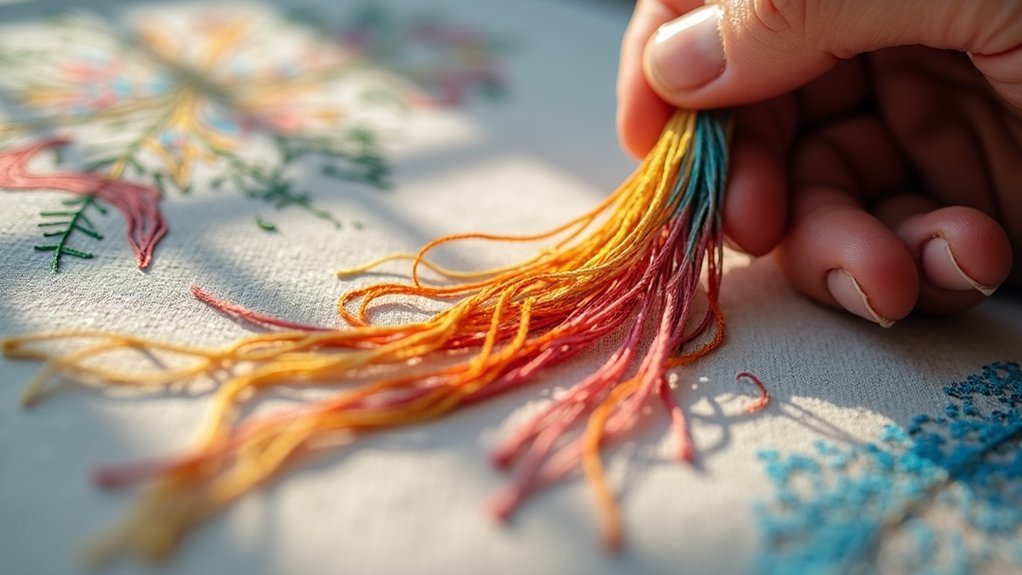
The Turkey Stitch involves creating thread loops by leaving slack in your stitches, resulting in a dimensional effect. You can choose to keep the loops intact for a fluffy look or trim them for a neater finish.
The Turkey Stitch creates dimensional thread loops, offering a choice between a fluffy texture or a polished trim.
Using DMC stranded cotton enhances this texture, but any thick thread can elevate your work.
This versatile technique allows you to mimic fur, flowers, or hairstyles, encouraging personal expression and creativity as you experiment with variations and adjustments throughout your embroidery journey.
Essential Materials for Turkey Work
To achieve the stunning results Turkey work is known for, selecting the right materials is key.
Begin with DMC stranded cotton, a top choice for its thickness and fluffy texture. Using six strands enhances the pile effect, creating a luxurious appearance.
Experiment with other threads like Bella Lusso and Vineyard Merino Wool to discover varied textures.
For precision in trimming and shaping loops, invest in curved scissors, ensuring you can adjust your texture effectively.
Finally, leave a sufficient thread tail at the start to prevent tension, allowing for easier manipulation while stitching your beautiful Turkey work designs.
Step-by-Step Turkey Work Technique
To master the Turkey Work technique, you’ll first prepare your needle and thread with precision, ensuring a clean start.
As you create loop patterns, pay attention to the placement for a uniform look while securing each loop tightly.
Finally, don’t forget to trim your loops carefully to enhance texture, leaving enough length for adjustments.
Preparing Your Needle
Before diving into the Turkey Work technique, you’ll need to prepare your needle properly to guarantee a smooth embroidery experience.
Start by threading the needle without knotting the end, keeping a tail length of 2-3 cm for easy handling. Poke the needle down along your subject line, leaving the tail above.
Next, bring the needle up on the line to the right of the tail, ensuring a small gap to create loops without pulling the tail. Secure the tail with a back stitch, leaving slack visible for the next loops.
Adjust as necessary for texture, and you’re ready to create!
Creating Loop Patterns
As you commence on the Turkey Work technique, creating beautiful loop patterns becomes an exciting journey of texture and design. Start by threading your needle, then poke it into the fabric, leaving a 2-3 cm tail. Bring the needle up to the right of the tail to form your first loop, securing it with a back stitch over the tail. Continue this process for uniform loops, maintaining slack for height.
| Step | Description |
|---|---|
| Threading | No knot, leave a tail |
| Creating Loops | Pull needle through slack, secure loop |
| Variation | Snip loops for a shaggy effect |
Experiment and enjoy!
Securing and Trimming Loops
While working with Turkey Work, securing and trimming loops is essential for achieving the desired texture and structure. Start by securing loops with a small back stitch over the tail, keeping slack on top for height.
When trimming, leave loops longer to allow adjustments, using sharp scissors to avoid overcutting. For added texture, stagger loops by inserting the needle in the middle of the previous loop, ensuring each securing stitch is complete before moving on.
If you want fringe effects, split stitches and secure with back stitches. Finally, fluff your loops with an eyebrow comb for a fuller look.
Creative Applications of Turkey Work
Turkey Work opens up a world of creative possibilities in embroidery, allowing you to add rich texture and dimension to your designs. You can achieve fluffy bunny tails or dandelion heads by using turkey techniques, creating a lovely visual appeal.
By bringing your needle through one hole and leaving the loops, you can also fill shapes and motifs, mimicking back stitch filling. Experiment with different threads like DMC stranded cotton or wool to create quite a bit of unique textures.
Additionally, this method is perfect for detailed hairstyles in projects like “Soul Sisters,” enhancing your hand embroidery stitches beautifully.
Tips for Perfecting Your Turkey Work
To perfect your Turkey Work, start by choosing the right thread; DMC stranded cotton can elevate your texture considerably.
Keep your loop lengths consistent and remember to leave slack in your securing stitches for ideal height.
Experiment with various techniques for securing your loops to achieve a polished and dynamic finish.
Choosing the Right Thread
Choosing the right thread is essential for achieving stunning Turkey work, as it directly influences the texture and appearance of your embroidery.
DMC stranded cotton is a top choice due to its thickness and fluffiness, creating a rich texture. For a plush carpet effect, consider using six strands, which enhances dimension.
Don’t hesitate to experiment with Bella Lusso or Vineyard Merino Wool for varied finishes. Remember, closer rows and smaller locking stitches contribute to a denser pile, so choose your thread and spacing wisely.
Always test your selected thread on scrap fabric to guarantee it meets your design’s needs.
Loop Length Consistency
Achieving consistent loop lengths in your Turkey Work can elevate your embroidery, creating a more polished and professional look.
Here are some tips to help you perfect your technique:
- Measure and adjust your working thread length before pulling through each loop.
- Use a ruler or template to guarantee uniform loop sizes.
- Practice your loops on scrap fabric to refine your skills.
- Maintain consistent tension while securing loops with back stitches to avoid height variations.
Securing Techniques Variations
While mastering the securing techniques in Turkey Work is essential for maintaining the integrity of your loops, experimenting with different methods can truly enhance your embroidery’s texture and appearance.
Make sure you leave slack when pulling through to maintain loop height. Secure your thread by using small back stitches over the tail, keeping it snug during stitching.
Try staggering your securing stitches slightly to the right for a dynamic look. For longer loops, snip them after securing to achieve a shaggy effect, but be careful not to cut too short.
Finally, using multiple thread strands adds fullness and richness to your work.
Inspiring Project Ideas Using Turkey Work
Turkey work opens up a world of creativity in embroidery, allowing you to transform ordinary designs into textured masterpieces.
Unlock your creativity with Turkey work in embroidery, turning simple designs into stunning textured art.
Here are some inspiring project ideas using Turkey work:
- Fluffy Bunny Tails: Add playful elements to quilts with adorable, textured bunny tails.
- Looped Floral Petals: Create vibrant, dimensional flowers that come to life with your needle.
- Hairstyles in Embroidery: Represent various hair textures, from elegant buns to intricate braids.
- Dandelion Motifs: Capture the beauty of nature by realistically depicting dandelion seeds.
Experimenting with different threads can enhance the uniqueness and fullness of each project you undertake.