To track your embroidery progress with a journal, start by documenting each project in a grid layout. Capture monthly designs, reflect on milestones, and set specific goals. Organize your threads using labeled bobbins for easy access and color selection. Dedicate weekly stitching time, and create checklists to visualize your journey. Engage with online embroidery communities for insights and motivation as you share your progress. This practice not only enhances your skills but enriches your crafting experience. You’ll discover even more helpful techniques ahead.
Key Takeaways
- Use a grid format in your embroidery journal to document monthly projects and visualize your progress over time.
- Set specific goals for each project to ensure timely completion and maintain motivation.
- Create checklists to track tasks and celebrate milestones as you complete each design.
- Dedicate regular time weekly for stitching, aligning your progress with journal entries.
- Engage with online communities to share your progress and gain inspiration and feedback.
What Is an Embroidery Journal?
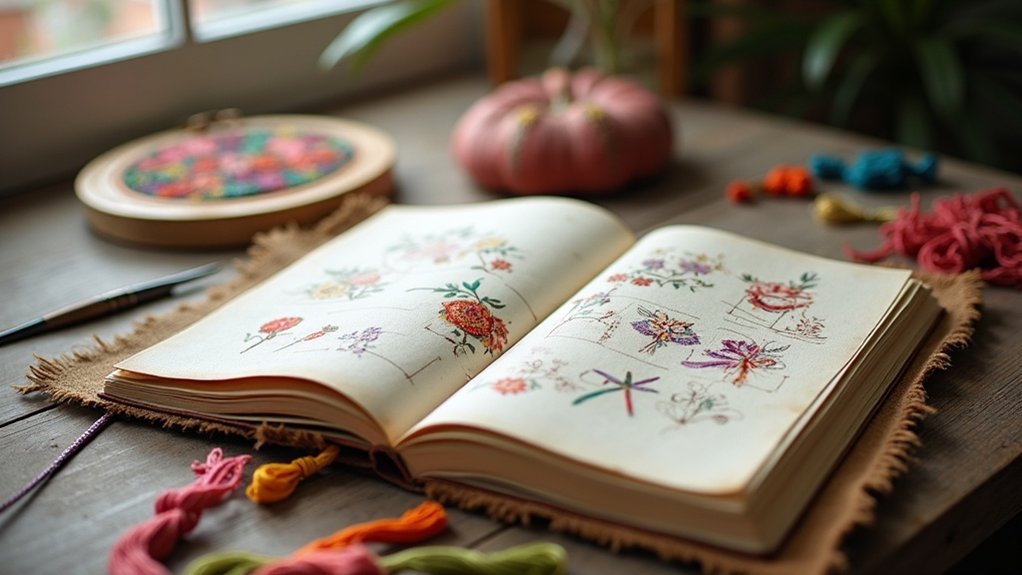
An embroidery journal is more than just a notebook—it’s a vibrant tapestry of your creative journey.
It serves as a daily embroidery journal, capturing the essence of each embroidery project through stitched icons and memories. Organized in a grid format, it allows you to document experiences month by month, fostering mindfulness and a slower pace in your craft.
As you record unique designs for each milestone, you create a personal reflection of your life. This practice not only enhances your skills but also keeps you consistently engaged, making your embroidery journey a fulfilling and enriching experience.
Organizing Embroidery Thread
As you document your creative journey in your embroidery journal, organizing your embroidery thread becomes an essential step in enhancing your crafting experience.
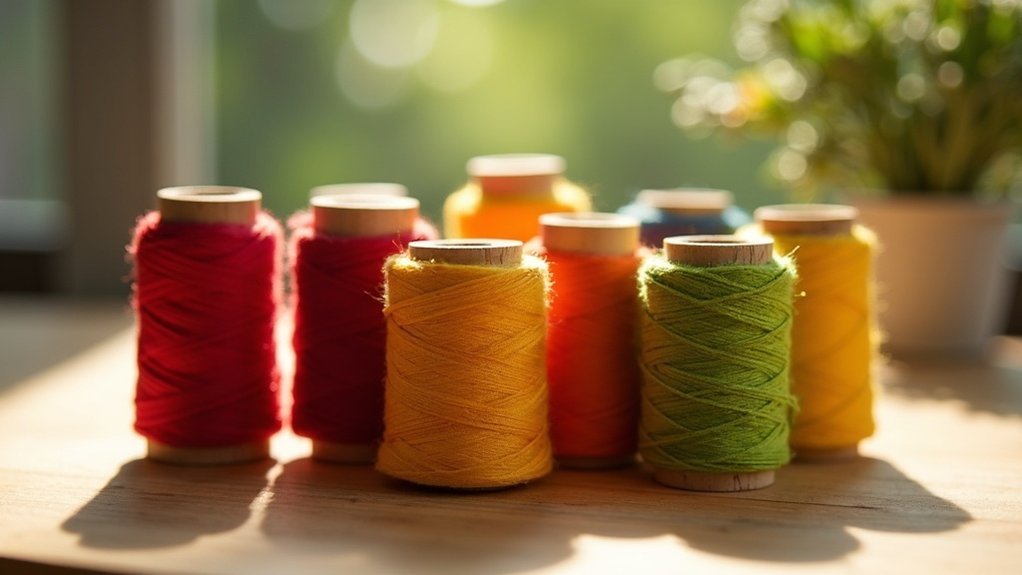
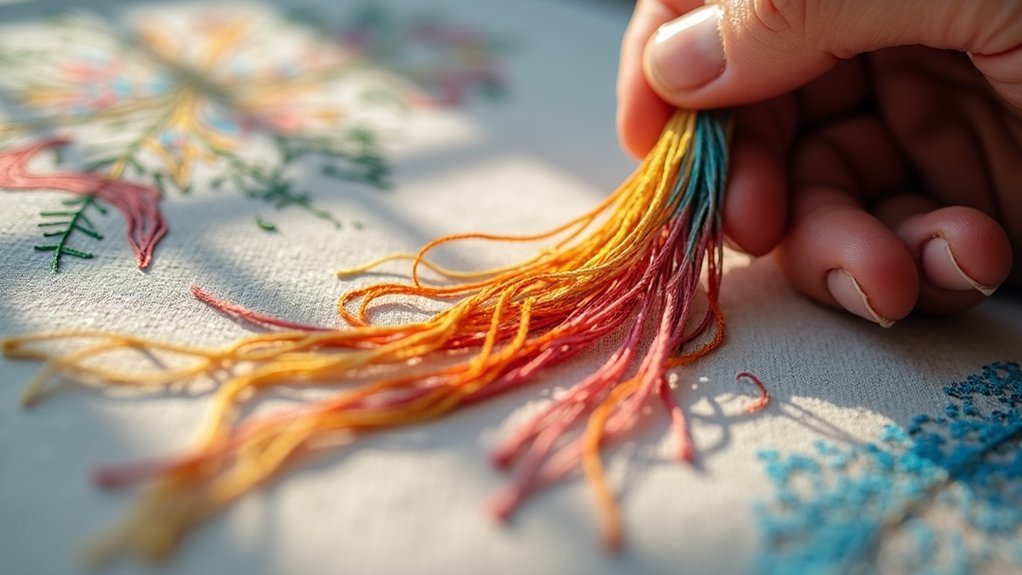
Start by wrapping skeins of embroidery floss around cardboard bobbins for easy identification. Be sure to note the brand and color number on each bobbin for quick reference during projects.
Store these bobbins in a snap-tight box, which can also hold compact, sharp embroidery scissors for convenience. This organized system simplifies color selection and prevents duplication, ultimately saving you time and helping you track usage across various embroidery projects.
Happy stitching!
Choosing Designs for Each Month in Your Embroidery Journal
Choosing designs for each month in your embroidery journal can transform your crafting experience into a meaningful narrative.
Create a grid layout to visualize your 12 months, selecting cross stitch patterns that commemorate family events or personal milestones. Consider using icons that symbolize significant moments like trips or birthdays to enrich your visual story.
Regularly reflect on your experiences while choosing designs, allowing your creativity to flourish. Aim to complete each month’s design by the first of the following month to maintain progress.
When you know something resonates with your journey, it brings joy and purpose to your embroidery.
How to Keep Your Embroidery Journal on Track
Staying organized is essential for keeping your embroidery journal on track. Set a specific goal to complete each month’s design by the first of the following month. It takes a lot of work, but it’s worth it! Dedicate regular time each week for stitching and document your experiences. Create a checklist to visually track your progress and celebrate milestones. Sharing your journey on social media can foster motivation and accountability within a supportive community. Use the table below to outline your goals and accomplishments.
| Goals | Completed |
|---|---|
| Monthly Design 1 | [ ] |
| Monthly Design 2 | [ ] |
| Monthly Design 3 | [ ] |
Community Sharing and Learning
While engaging with online embroidery communities, you can access a wealth of knowledge and inspiration that enhances your stitching experience.
Next time you plunge into a forum, don’t hesitate to share your embroidery journal progress; it can spark discussions about techniques and personal experiences.
By asking for feedback on design choices, you’ll gain valuable insights that can elevate your projects.
Seeking feedback on your design choices can provide invaluable insights to enhance your embroidery projects.
Start one of these conversations to explore diverse documentation styles, helping you discover what resonates with you.
Collaborating with fellow embroiderers not only builds connections but also promotes skill development, enriching your journey in the art of embroidery.