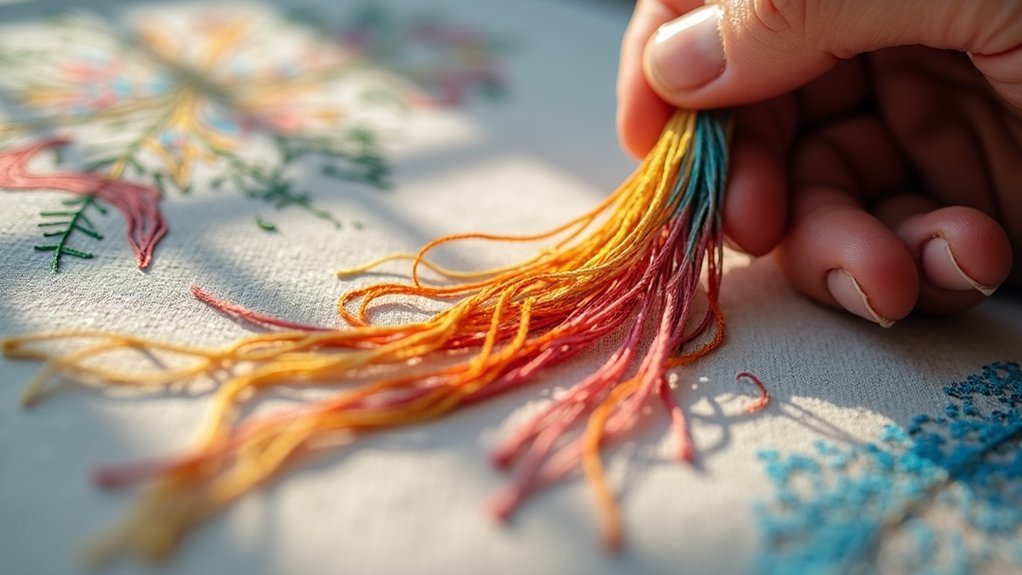

To test embroidery thread colorfastness, soak an 18-20 inch sample in warm water for 15-30 minutes. Place the soaked thread on a white paper towel, fold it over, and press firmly for 10 minutes. Examine the towel for any dye transfer; color indicates non-colorfast threads. Document results, and repeat tests with varying temperatures for accuracy. If bleeding occurs, you may want to contemplate switching to a more reliable brand to maintain your project’s integrity.
Key Takeaways
- Cut an 18-20 inch thread sample and soak it in warm water for 15-30 minutes to assess dye bleeding.
- Place the soaked thread on a white paper towel, fold it over, and press firmly for 10 minutes.
- Check the paper towel for any dye transfer, indicating the thread’s lack of colorfastness.
- Repeat the test with different water temperatures and soaking times to validate results.
- Document your findings, including thread type and any observed color transfer for future reference.
Understanding Color Fastness
Color fastness is a critical attribute in embroidery, as it determines how well threads withstand fading and bleeding when exposed to various environmental factors.
Selecting the right thread colors is essential for ensuring the longevity of your finished project. Threads notorious for bleeding, like red, deep blue, and deep purple, require careful evaluation.
To assess color fastness, use a small sample of the thread and apply water, observing any excess dye release. This testing helps you maintain the integrity of your work and avoid potential project failures, enhancing both the appearance and durability of your embroidery pieces.
Materials Needed for Testing
To effectively test the colorfastness of your embroidery threads, you’ll need a few specific materials. Gather the following items for an accurate assessment:
| Material | Purpose |
|---|---|
| White paper towel | To observe dye transfer |
| Thread | Approximately 18-20 inches for testing |
| Warm water | To enhance dye bleeding detection |
| Firm surface | For pressing the thread onto paper towel |
| Timer or clock | To track a minimum of 10 minutes soaking |
Using these materials will guarantee a thorough evaluation of your thread’s colorfastness, helping you serve others with high-quality embroidery.
Step-by-Step Testing Methodology
Testing the colorfastness of embroidery thread involves a straightforward, systematic approach.
First, cut an 18-20 inch sample of the thread and soak it in warm water for 15-30 minutes to guarantee moisture absorption.
Next, lay the soaked thread on a white paper towel, fold it over, and press down firmly for at least 10 minutes to facilitate dye transfer.
Afterward, observe the paper towel for any dye bleeding; if you see any, the thread lacks colorfastness and may not be suitable for your project.
For accurate results, consider repeating the test with varying water temperatures and soaking durations. Document your findings.
Observing and Interpreting Results
How can you effectively determine the colorfastness of your embroidery thread after conducting the test?
First, examine the paper towel for any dye transfer; if you see color, your thread isn’t colorfast.
Let the test sit for at least 10 minutes to thoroughly assess potential dye bleeding.
Check for color change immediately and after drying, as delayed bleeding can occur.
If multiple tests show consistent bleeding, it’s wise to switch to a different thread brand known for better colorfastness, like DMC or Anchor.
Document your test results, including thread type and observed color transfer, for future reference.
Tips for Handling Non Color Fast Threads
While you might be tempted to use vibrant threads in your embroidery projects, managing non color fast threads requires careful consideration to prevent unwanted dye bleeding.
Always test threads for colorfastness before starting your work. If a thread bleeds, switch to a reliable brand like DMC or Anchor.
Rinse non color fast threads under cold water to remove excess dye, although this may dull the color. Avoid using these threads in items subjected to washing or heavy handling.
Document your colorfastness tests, as results can vary between dye lots, ensuring you make informed choices in future projects.