
To master silk shading in needlepainting, start with high-quality silk threads and a smooth fabric. Begin your design with a split stitch outline and then use long and short stitches for color blending, starting with the darkest hues. Maintain even spacing and stagger your stitches for a realistic effect. Keep lighting ideal for detailed work, and consider experimenting with different angles. There’s much more to explore in techniques that can elevate your embroidery skills.
Key Takeaways
- Select a simple design that incorporates various colors and shades for effective silk shading.
- Use long and short stitches to blend colors, starting with the darkest shade.
- Stagger stitches and maintain even spacing to achieve a lifelike appearance.
- Experiment with different stitch angles and directions to create texture and depth.
- Ensure good lighting and use high-quality materials for better control and clarity during embroidery.
Understanding Silk Shading Techniques
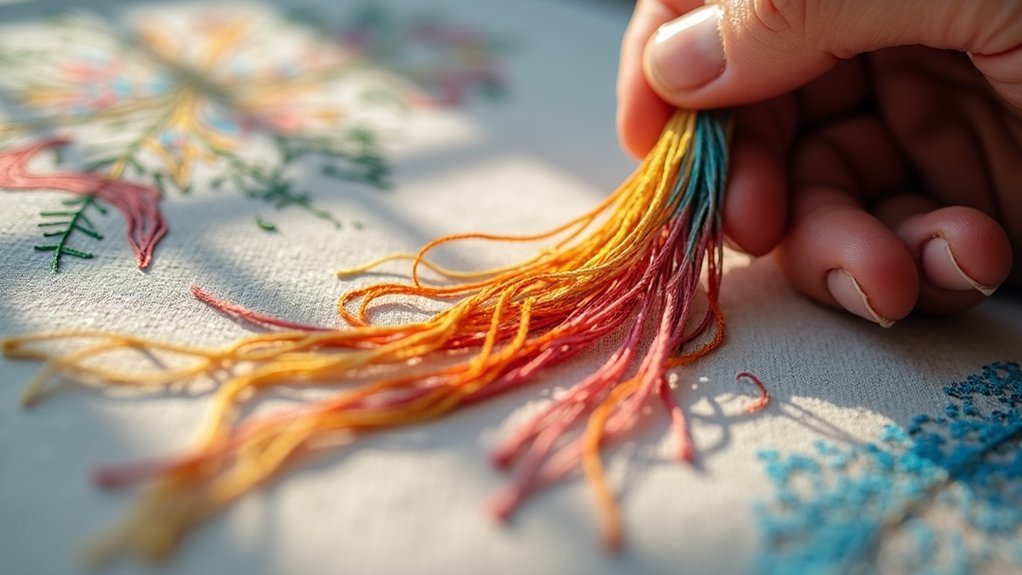
Silk shading, an enchanting technique in needlepainting embroidery, hinges on the mastery of long and short stitches to create lifelike images.
This art form, also known as thread painting, enables you to achieve remarkable color blending and smooth shifts. By employing natural silk shading, you can change stitch angles and colors to depict shapes, while tapestry shading utilizes vertical stitches for design rendering.
Using multiple needles threaded with various shades enhances efficiency, allowing for immediate access and seamless integration of hues.
Essential Materials for Silk Shading
To create stunning silk shading works, you’ll need a carefully curated selection of materials that enhance both the technique and the final outcome. High-quality silk threads or stranded cotton threads are essential, as they influence the texture. Use a variety of needles with larger eyes to accommodate different thread types. A smooth fabric, like cotton or linen, allows for easy needle movement. Don’t forget scissors for trimming threads and a good light source for clarity. Optional tools, like a hoop, can guarantee fabric tension for detailed long and short stitch shading.
| Material | Purpose |
|---|---|
| Silk threads or stranded cotton | Affects appearance and texture |
| Embroidery needles | Accommodate various thread types |
| Smooth fabric | Enables easy needle movement |
Step-by-Step Guide to Silk Shading
When starting on your silk shading journey, choosing a design that features a variety of colors and shades can greatly enhance your practice.
Follow these steps for effective silk shading:
- Select a simple design, like a pansy or bird.
- Use long and short stitches to blend colors, starting with the darkest shade.
- Maintain even stitch spacing and stagger stitches for realism.
- Outline with a split stitch foundation before filling.
- Experiment with stitch angles and directions to create texture.
These techniques will elevate your embroidery, making your shading techniques truly enchanting and lifelike.
Common Challenges and Solutions
As you refine your silk shading skills, you’ll likely encounter common challenges that can hinder your progress. Achieving even stitch spacing is vital; try staggering stitches and using a split stitch foundation to define smooth edges.
For effective color blending, practice shifting between multiple thread shades for a lifelike effect. Good lighting is essential, so consider a magnifying lamp for detailed work.
To avoid fabric damage, use high-quality material and control your stitching tension. Finally, set small goals to maintain motivation and a sense of accomplishment as you navigate through online courses and complete your silk shading projects.
Resources for Further Learning
While mastering silk shading techniques can be a rewarding journey, utilizing the right resources can greatly enhance your learning experience.
Consider exploring these valuable tools:
- The Royal School of Needlework’s online courses, including an Introduction to Silk Shading.
- Clare Hanhams’ “Beginners Guide to Silk Shading” for foundational knowledge.
- Trish Burr’s “Needlepainting Embroidery: Fresh Ideas for Beginners” for project inspiration.
- Needlepainting kits from Tanja Berlin, offering guided support.
- Free YouTube tutorials and the Needle n Thread LongShort Stitch Sampler for practical techniques.
Engaging with these resources will elevate your needle painting skills and deepen your artistry.