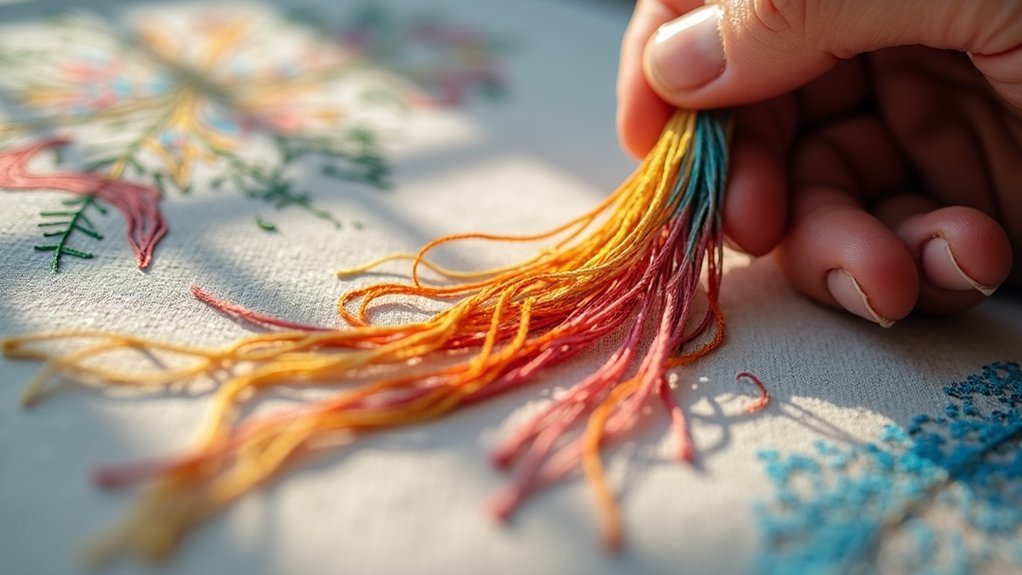

To secure your embroidery thread on the back, start by using a waste knot method to anchor your thread before cutting. Weave the thread back through several stitches to lock it in place. For a clean finish, avoid long threads and travel across wide areas. Trim any tweakers and make certain there are no clumps or crisscrossing. Following these steps not only enhances your project’s durability but also keeps the back tidy. Discover more techniques to elevate your embroidery skills!
Key Takeaways
- Weave the thread tail back through several stitches on the back to secure it and prevent unraveling.
- Use the waste knot method to anchor the thread before starting your embroidery for added security.
- Trim any excess thread short after securing to maintain a tidy back and avoid tangles.
- Avoid long traveling threads across open spaces, as they can lead to unsightly tangling on the reverse side.
- Regularly check for loose threads and clumps, trimming them to ensure a neat and professional finish.
Understanding Your Stitching Path
When you plan your stitching path effectively, you not only reduce thread waste but also enhance the overall quality of your embroidery.
Start by analyzing your design for colors and stitches, mapping out a sequence that minimizes unnecessary jumps. This helps guarantee each element has its own thread start and end, contributing to a tidy back.
Analyzing your design and mapping stitch sequences ensures a tidy back and enhances your embroidery’s overall quality.
Focus on thread placement; avoid traveling threads across wide spaces to prevent unsightly clumps. By keeping your stitching path organized, you maintain the integrity of the design and create a professional appearance.
Regular practice in this process will refine your skills and efficiency.
Effective Techniques for Starting Threads
To guarantee your embroidery starts off smoothly, mastering effective thread-starting techniques is essential. One common method is using a waste knot on the front, pulling the thread through, and securing it with backstitches before snipping the knot.
Alternatively, for a knot-free start, fold the thread in half to create a loop, securing it on the back. If using two strands, confirm the loop end is longer for stability.
To further secure the thread, weave it back through a few stitches on the back. Always start each new design element with a clean thread for a tidy back and polished finish.
Best Practices for Ending Threads
Securing your embroidery threads properly is essential for ensuring your finished project withstands wear and tear.
Here are some best practices for ending threads:
- Weave the thread through several back stitches to prevent unraveling.
- Knot the end of the thread a couple of times for added security, especially on items like pillowcases.
- Check for any loose stitches before securing to maintain a neat finish.
- Trim excess thread short after securing to keep a tidy back.
Maintaining a Tidy Back
A neat and tidy back in your embroidery work not only enhances the overall appearance but also guarantees the durability of your project.
To maintain this tidy back, avoid traveling threads across wide spaces, which can lead to tangling. Trim any tweakers—short threads that stick out—close to the fabric. Organize your stitching paths to prevent visible threads from criss-crossing.
Weaving thread tails into back stitches helps secure them and keeps knots at bay. Regularly check for large clumps of threads on the back and trim them to maintain a professional finish, ensuring your work looks as great on the back as it does on the front.
Community Tips and Personal Insights
While many embroiderers focus on achieving a flawless front, the importance of a tidy back shouldn’t be underestimated.
Here are some community tips to help you secure your thread effectively:
- Use a waste knot on the front, followed by backstitches to securely anchor the thread.
- Weave your thread tails into existing stitches for a neater finish.
- Avoid large clumps or crisscrossed threads to enhance the overall aesthetic.
- Share personal experiences with fellow stitchers to discover what securing methods work best for you.
Experimenting with various techniques will help you find your perfect balance between security and elegance!