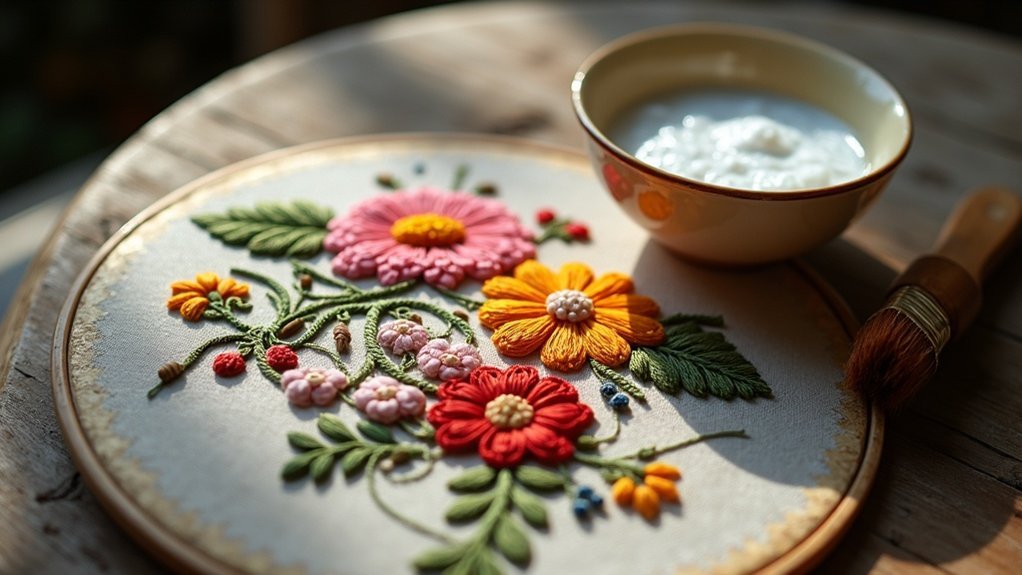
To rescue stained embroidery, first identify the stain type—food, oil, or tannin. Use vinegar-soaked cloths for tannin stains, and apply gentle dish soap for oil stains. Soak the fabric in cold water overnight to loosen the stain, then target the area with diluted detergent and a soft toothbrush. Rinse thoroughly to guarantee all soap is removed. If stains persist, consider creative stitching solutions to conceal them. There’s more to learn about effective cleaning techniques and prevention strategies.
Key Takeaways
- Identify the stain type (food, oil-based, or tannin) to choose the appropriate treatment method.
- Soak the stained fabric in cold water overnight to help loosen the stain before cleaning.
- Use diluted dish soap for oil stains and vinegar-soaked cloths for tannin stains.
- Apply a soft toothbrush with diluted liquid detergent to gently scrub the stained area.
- Rinse the fabric thoroughly in lukewarm water multiple times to remove any cleaning agents.
Assessing the Damage: Understanding Stain Types
When you encounter a stain on your embroidered fabric, the first step is to identify the type of stain, as this directly influences the treatment approach.
Different stain types, such as food, oil-based, or tannin stains from beverages like tea or coffee, require specific cleaning methods. For instance, vinegar-soaked cloths effectively treat tannin stains, while oil stains may call for gentle dish soap.
Always pre-wash to prevent heat from setting stains, especially on vintage fabrics, which may react unpredictably to cleaning agents.
Effective Cleaning Techniques for Embroidery
To effectively clean stained embroidery, start by soaking the fabric in cold water overnight, which can loosen stubborn stains and prepare it for treatment.
After soaking, apply diluted liquid detergent, like Dawn, using a soft toothbrush to gently scrub the affected areas. This targeted approach minimizes damage to delicate fabrics.
For vintage stains, consider using RetroClean, which users highly recommend for its effectiveness.
Always rinse thoroughly in lukewarm water multiple times to guarantee all detergent and loosened stains are removed.
Before proceeding, test any cleaning method on an inconspicuous area to prevent further staining or damage.
Creative Stitching Solutions to Cover Stains
Transforming a stained piece of embroidery into a unique work of art is not only possible but also a rewarding creative endeavor. Start by outlining the stain with chalk for precision. Use basic stitches like backstitch and French knots to conceal the blemish while adding texture. Choose thread colors that either contrast or match the fabric to enhance the overall aesthetic. Here’s a quick reference table for your stitching options:
| Stitch Type | Purpose | Color Choice |
|---|---|---|
| Backstitch | Conceal & outline | Contrasting or matching |
| French Knot | Add texture | Matching |
| Chain Stitch | Create design features | Contrasting |
Embrace your creativity!
Community Tips and Personal Experiences
Have you ever wondered how others tackle stubborn stains on their cherished embroidery? Community members have found success with various methods.
Curious about how to remove stubborn stains from your beloved embroidery? Discover community-approved methods that really work.
Here are some tips worth trying:
- Use diluted Dawn dish soap for targeted stain treatment.
- Soak stained embroidery in cold water overnight to lift stubborn stains.
- Test stain removers on inconspicuous areas first to prevent damage.
- Research specific methods for treating pencil marks before proceeding.
- Share your cleaning experiences and outcomes to help others learn.
Implementing these techniques fosters a supportive environment that encourages improvement and enhances your embroidery care skills.
Future Precautions for Your Embroidery Projects
When caring for your embroidery, taking proactive steps can save you from future headaches.
Always test stain removers on a small, inconspicuous area first to avoid damage. Use non-permanent marking tools, like washable markers, to help remove potential stains from permanent inks.
Consider the fabric type; some vintage materials may react poorly to common detergents, so choose cleaning agents carefully.
Store your pieces in breathable materials instead of wooden containers to prevent oil stains.
Finally, document your cleaning methods and outcomes to build a helpful reference guide, ensuring you learn from past experiences to improve your techniques.