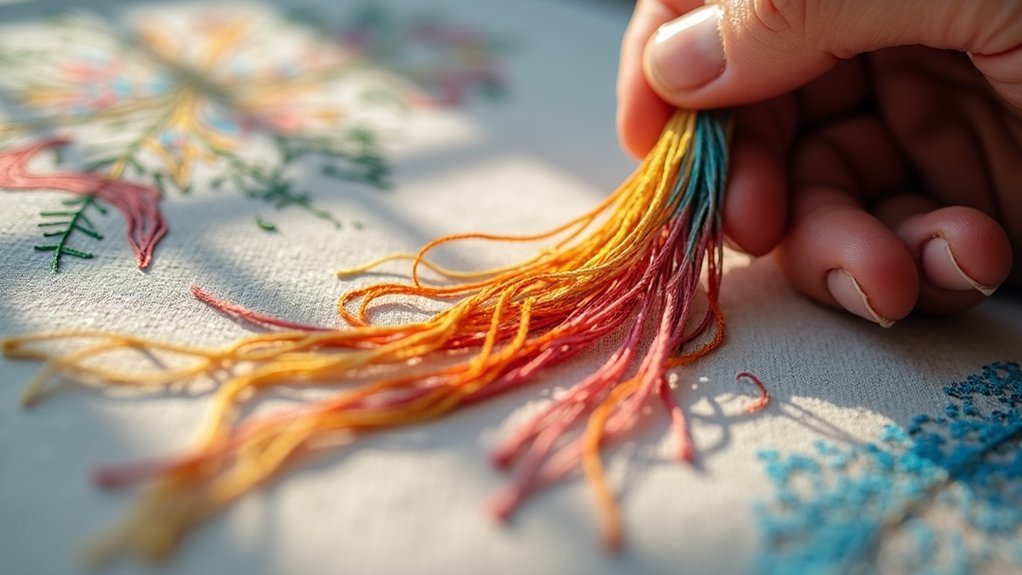
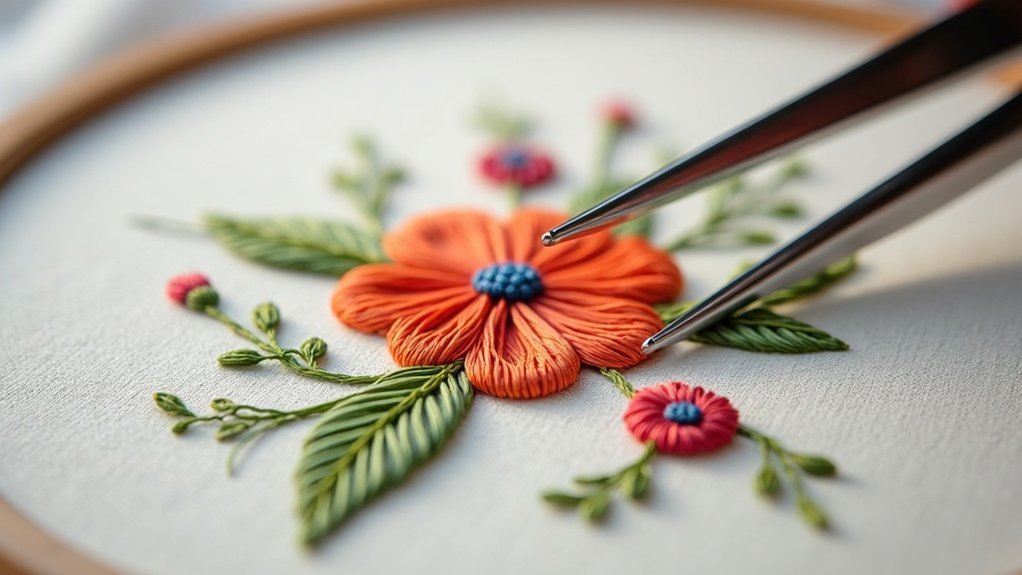
To remove waste canvas from your embroidery, first cut the thread securing the design. Gently pull threads from the edges without damaging your stitches, and trim excess canvas if needed. Use tweezers for precision, removing horizontal and vertical strands alternately for best results. Collect all canvas remnants during cleanup, checking for missed pieces afterward. Dispose of strands responsibly to minimize environmental impact. For expert tips and alternative methods, keep going to enhance your embroidery skills.
Key Takeaways
- Cut the securing threads and gently pull out the waste canvas threads from the edges without damaging your stitches.
- Use tweezers to grip and pull out threads systematically, alternating between horizontal and vertical strands for efficiency.
- Trim excess canvas with sharp scissors if needed, ensuring not to cut any embroidery threads.
- Collect and dispose of removed canvas strands responsibly, checking for any missed pieces afterwards.
- For future projects, consider using soluble canvas for easier removal and cleaner finishes.
Understanding Waste Canvas
When you plunge into the world of embroidery, understanding waste canvas is essential for achieving precise designs on unconventional surfaces.
This temporary aid, made of stiff, woven fabric, allows you to cross-stitch on textiles like denim and cotton. Available in various thread counts, the 8.5 count is popular for versatility.
The pregridded design, marked with blue thread, helps you count and maintain even stitch placement.
Once you complete your stitching, the removal process is straightforward; simply wet the canvas, which is held together with water-soluble glue, allowing for easy extraction of fibers without damaging your intricate work.
Initial Steps for Removal
To begin the removal of waste canvas, first cut the sewing thread that secured the borders of your design, ensuring you detach the canvas carefully.
Next, gently pull out the thread from the edges, being cautious not to damage your stitches. If excess canvas remains, trim around the design with sharp embroidery scissors, taking care not to cut into the project fabric or cross stitches.
Before you proceed, organize your tools and workspace to create a clear environment for the process. Secure all embroidery threads at the back to prevent any loose threads from unraveling as the canvas is removed.
Technique for Effective Removal
Effective waste canvas removal requires a systematic approach that minimizes the risk of damaging your embroidery. Start by gently pulling out horizontal and vertical strands alternately; this loosens the grid more efficiently.
Focus on smaller strands first, as they’re easier to manage. If you hit a stubborn section, shift your focus momentarily to another area before returning.
Use sturdy tweezers for a gentle grip, avoiding any forceful tugging. Snipping the canvas between letters can also help you remove the waste canvas more methodically, ensuring the integrity of your design while you work through the intricate details.
Disposal and Cleanup
Proper disposal and cleanup of waste canvas are essential for maintaining an organized workspace and ensuring the integrity of your embroidery project.
Follow these steps for efficient cleanup:
- Collect all removed waste canvas strands as you work to prevent clutter.
- After the removal process, thoroughly check for any missed strands.
- Dispose of waste canvas responsibly—recycle if possible, or place in regular trash to minimize environmental impact.
Celebrating Completion
Now that you’ve removed the waste canvas, it’s time to celebrate your completed embroidery project.
Share your beautiful creation on social media platforms like Instagram to inspire others and connect with fellow crafters.
Acknowledging your hard work and dedication not only enhances your sense of accomplishment but also encourages you to explore new techniques and projects.
Project Completion Excitement
Once you’ve successfully removed the waste canvas from your embroidery, you’ll likely feel a rush of excitement as your project transforms into a beautifully finished piece.
This moment is perfect for celebrating your hard work and the skills you’ve honed. Here are three ways to embrace this project completion excitement:
- Reflect on the techniques you’ve learned and how they enhance your craft.
- Consider showcasing your finished piece on social media to inspire others in the Tatreez community.
- Engage with fellow crafters to build a supportive network and motivate future projects.
This celebration marks both an end and a new beginning!
Sharing Creations Online
Celebrating your completion doesn’t stop at admiring your finished piece; it’s time to share your creativity with the world.
Once you’ve removed the waste canvas, take high-quality photos of your work and post them on social media platforms like Instagram. Engage with the Tatreez community by using hashtags like #Tatreez and #EmbroideryArt.
Describe your techniques and any challenges faced during the process to help others learn. Create a dedicated story highlight for your embroidery projects, showcasing your journey.
Consider joining online challenges or contests to further connect with fellow crafters and gain recognition for your unique creations.
Future Recommendations
For your future embroidery projects, consider using soluble canvas instead of waste canvas, as it simplifies removal and minimizes the risk of damaging your stitches.
This type of canvas dissolves in water, making it perfect for intricate designs where precision is key.
Always test a scrap piece first to verify compatibility and achieve the best results.
Soluble Canvas Benefits
While many embroiderers appreciate the traditional methods of using waste canvas, opting for soluble canvas can greatly enhance your stitching experience.
Here are three key benefits:
- Easy Removal: Soluble canvas dissolves in water, eliminating the tedious thread pulling often required with stitching on waste.
- Versatile Thread Counts: It’s available in various thread counts, allowing you to adapt it for different fabrics and intricate designs.
- Cleaner Finish: Using soluble canvas provides a neater outcome, reducing the chances of fraying or unraveling.
Easier Removal Techniques
How can you streamline the removal of waste canvas from your embroidery projects? Consider these techniques for an easier process:
| Technique | Description | Tools Needed |
|---|---|---|
| Use Soluble Canvas | Dissolves in water, leaving only the embroidery. | Water |
| Test on Scrap Fabric | Guarantees compatibility and ease of removal. | Scrap fabric |
| Utilize a Kelly Clamp | Provides better leverage for pulling out threads. | Kelly clamp |
| Spray with Water | Soaks and breaks down adhesive bonds. | Spray bottle |
| Snip Between Sections | Reduces material pulled at once for manageable removal. | Embroidery scissors |
Implement these methods to enhance your embroidery experience!
Enhanced Embroidery Experience
As you commence your next embroidery project, consider integrating soluble canvas into your workflow to significantly enhance your experience. This innovative material dissolves in water, eliminating the hassle of thread removal and preventing damage to your stitches.
Here are three benefits of using soluble canvas:
- No Residue: Unlike waste canvas, it leaves no remnants, ensuring a clean finish.
- Versatile Thread Counts: It’s available in various counts, making it suitable for different fabrics and designs.
- Time-Saving: Streamlining the removal process allows you to focus more on creativity and design.
Engaging with the embroidery community can also provide valuable recommendations.