Mixing cotton and silk in your embroidery can elevate your designs dramatically. Start by choosing a blend ratio, like 51% silk and 49% cotton, to harness both fibers’ strengths. Use a single strand of silk for precision, layering it over cotton for texture and stability. Experiment with stitch lengths and techniques to accentuate the silk’s luster while maintaining cotton’s definition. The combination adds depth and sophistication to your projects; keep exploring to refine your skills and techniques.
Key Takeaways
- Use one strand of silk with two strands of cotton to create unique textures in your embroidery work.
- Incorporate satin stitches with cotton outlines and silk fillings for enhanced visual interest.
- Adjust stitch lengths to accommodate the lighter tension of silk for a smoother finish.
- Test thread combinations on scrap fabric to ensure compatibility before starting your main project.
- Maintain even tension and use a sharp needle to avoid shredding silk and breaking threads.
Understanding Cotton and Silk Properties
When diving into the world of embroidery, it’s essential to understand the unique properties of cotton and silk.
Cotton’s affordability and vibrant color retention make it a forgiving choice for beginners, while silk’s natural sheen elevates your work with a luxurious finish.
Blending these fibers creates a thread that captures silk’s luster and cotton’s durability, enhancing moisture management and drape in your projects.
A typical cotton/silk blend, with 51% silk and 49% cotton, offers a perfect balance, allowing for smoother stitches and a more cohesive look.
Embrace these properties to transform your embroidery into stunning masterpieces.
Choosing the Right Thread for Your Project
Choosing the right thread for your embroidery project can elevate your design from ordinary to extraordinary, especially when blending the unique qualities of cotton and silk. When mixing cotton and silk, consider aesthetics and the fibers’ characteristics. Select silk threads that harmonize with cotton shades. For precision, use a single strand of silk, while cotton provides necessary stability. Experiment with thickness and adjust your stitch technique accordingly.
| Silk Threads | Cotton Thread | Mixing Tips |
|---|---|---|
| Fine, shiny | Durable, affordable | Match colors |
| Delicate feel | Structure | Adjust tension |
| Luxurious look | Versatile | Combine textures |
Techniques for Blending Threads Effectively
To effectively blend cotton and silk in your embroidery, it’s essential to understand how each thread interacts with your design.
Here are some techniques for blending threads effectively:
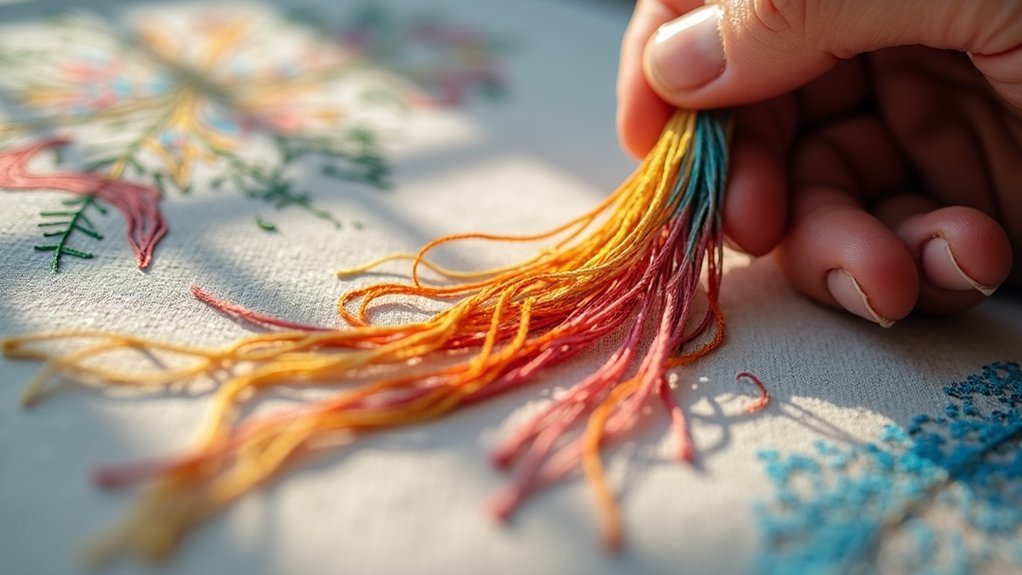
- Use a single strand of good silk thread with two strands of stranded cotton for a harmonious texture.
- Incorporate complementary stitches, like satin stitches with cotton outlines and silk fillings, for visual depth.
- Experiment with varying stitch lengths; silk needs lighter tension to avoid puckering.
- Remember, working with cotton adds definition while silk enhances smooth color gradients through silk shading.
Embrace these tips to elevate your hand embroidery projects!
Creative Applications of Mixed Threads
Blending cotton and silk threads opens up a world of creative possibilities in embroidery, allowing you to experiment with textures and visual effects.
You can use cotton floss for base layers, providing structure and vibrant colors, while incorporating silk for highlights and silk shading to achieve a luminous finish. This combination enriches intricate designs, adding visual depth that captivates.
Utilize cotton floss for vibrant base layers and silk for luminous highlights, creating captivating depth in your embroidery designs.
For instance, try a single strand of silk for delicate accents over cotton backgrounds, enhancing texture and contrast.
Community feedback often celebrates these creative applications, where mixed threads complement each other, transforming your embroidery into a stunning work of art.
Troubleshooting Common Issues With Mixed Threads
While mixing cotton and silk threads can elevate your embroidery projects, it’s essential to troubleshoot common issues that may arise. Here’s what to check:
- Stitch Tension: Adjust it for mixed threads; improper tension can cause shredding or breaking.
- Testing Thread Combination: Always test on a scrap piece to catch fraying or uneven stitching.
- Compatible Needle: Use a sharp needle for silk and a larger eye for cotton to prevent snagging.
- Fabric Distortion: Employ a hoop to keep fabric taut and minimize uneven tension, ensuring your silk shading looks flawless.