
To identify Ukrainian vyshyvanka embroidery, look for vibrant colors and intricate geometric patterns. Each vyshyvanka tells a story through its colors, with white for purity, red for love, and blue and yellow representing Ukraine’s identity. The designs often feature protective symbols and motifs like the Tree of Life, reflecting regional diversity. Pay attention to the stitching style and floral or geometric elements, as they vary by region. Explore more to uncover the rich meanings and histories behind these beautiful garments.
Key Takeaways
- Look for distinct geometric patterns or floral motifs, which vary by region and reflect local cultural identities in vyshyvanka embroidery.
- Identify the use of primary colors like red, black, blue, and yellow, each carrying specific meanings related to purity, bravery, and national identity.
- Check for protective symbols woven into designs, which are intended to ward off evil spirits and convey spiritual significance.
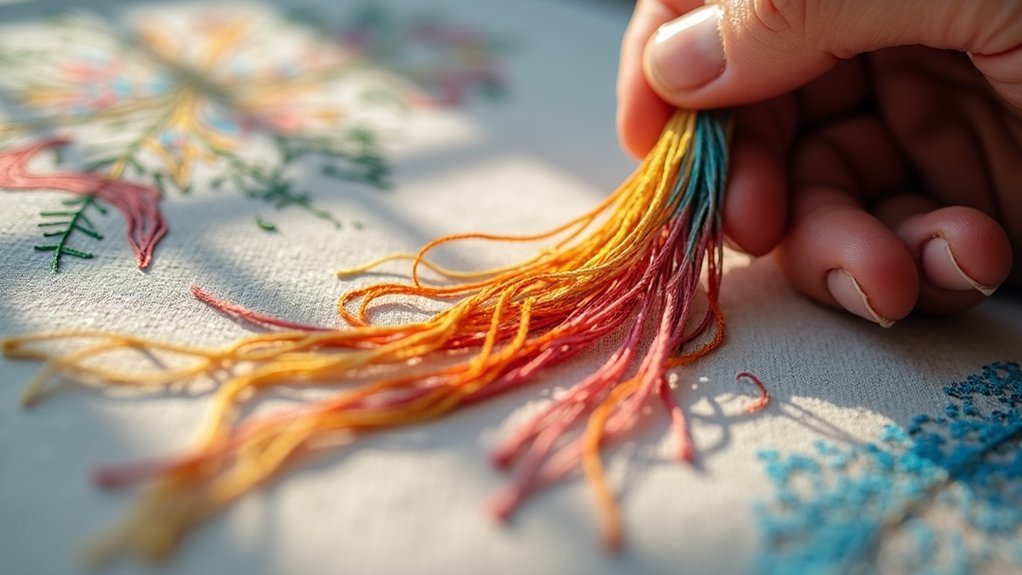
- Examine the stitching techniques, as intricate patterns often feature varying thread colors, especially in regions like Central and Northern Ukraine.
- Notice the presence of the Tree of Life symbol, commonly found across different regions, representing heritage and continuity in Ukrainian culture.
Symbolism in Ukrainian Embroidery
Ukrainian embroidery isn’t just a decorative art; it’s a rich tapestry of symbolism woven into each stitch. Each vyshyvanka tells a story, with colors and designs reflecting deep cultural beliefs.
For instance, geometric shapes and the Tree of Life represent heritage and continuity. The six primary colors—white, black, red, blue, yellow, and green—carry distinct meanings, where red symbolizes love and black represents fertility.
Additionally, many patterns incorporate protective symbolism, believed to ward off evil spirits. Regional variations highlight local customs, showcasing the diversity of Ukrainian traditional clothing and the profound connection to history and identity.
Interpreting Colors in Ukrainian Embroidery
While exploring the vibrant world of vyshyvanka embroidery, you’ll discover that colors play a pivotal role in conveying meaning and emotion. Each hue carries symbolic meanings: white for purity, black for bravery, green for nature, and red for love.
Yellow and blue, derived from natural sources, symbolize prosperity and reflect Ukraine’s national identity. These colors create a powerful connection to the land and culture.
However, interpretations can vary by region, with specific combinations reflecting unique cultural, folk, and religious beliefs. Understanding these colors enriches your appreciation for Ukrainian embroidery and its profound significance in serving communities.
Regional Diversity of Ukrainian Embroidery
As you explore the regional diversity of vyshyvanka embroidery, you’ll uncover a rich tapestry of styles that reflect the unique cultural identities across Ukraine.
Halychyna’s floral motifs contrast beautifully with Western Ukraine’s bold geometric patterns in striking black and red.
Meanwhile, Central and Northern regions showcase intricate stitching using white and coral-red threads.
Kyiv’s embroidery stands out with delicate floral designs like grapes and roses, highlighting the capital’s artistic finesse.
In Southern regions, like Odesa and Kherson, plant and animal motifs flourish, often illustrated in the popular Tree of Life pattern, weaving together a vibrant embroidery diversity.
The Role of Rushnyk in Ukrainian Culture
Rushnyk, a beautifully embroidered ritual cloth, plays an essential role in East Slavic culture, symbolizing life’s journey and the connection between the spiritual and physical domains.
This remarkable piece of Ukrainian culture is often present in ceremonies like baptisms, weddings, and funerals, embodying family heritage. Each rushnyk features intricate symbols, such as the Tree of Life, representing lineage and continuity.
The Evolution and Significance of Vyshyvanka
The vyshyvanka, a vibrant embodiment of Ukrainian culture, has undergone a remarkable evolution since its origins in the 5th century BCE.
Rooted in traditional Ukrainian embroidery, these garments showcase geometric patterns and symbols that reflect regional identities.
By the 19th century, vyshyvankas became recognized as national attire, symbolizing social status and unity. Their cultural significance surged, particularly after the EuroMaidan Revolution, embodying resilience and national pride.
By the 19th century, vyshyvankas emerged as symbols of national pride and unity, especially following the EuroMaidan Revolution.
Celebrated each year on Vyshyvanka Day, this garment fosters a sense of belonging.
Today, modern interpretations are gaining international acclaim, proving that the vyshyvanka continues to inspire and connect communities worldwide.