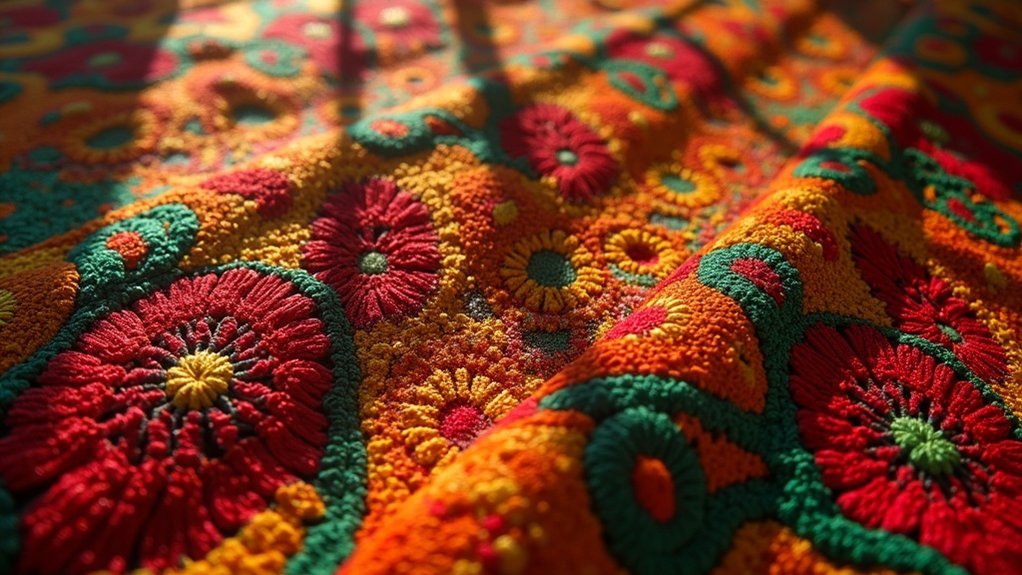
To identify Kantha embroidery characteristics, look for irregular stitching patterns and visible knots on the reverse side, which signify authenticity. Hand-embroidered pieces have a textured weight and slight imperfections that distinguish them from machine-made versions. Pay attention to the fabric, as high-quality cotton and silk often enhance the beauty of the work. Remember, the story behind each piece is unique, and there’s much more to discover about the art of Kantha embroidery.
Key Takeaways
- Look for simple running stitches that create intricate motifs, characteristic of Kantha embroidery.
- Check for visible knots on the reverse side, indicating authentic hand embroidery.
- Notice slight irregularities in stitching patterns and textures, which differentiate hand-embroidered pieces from machine-made ones.
- Observe the use of recycled fabrics like old cotton saris, showcasing sustainability in Kantha work.
- Identify common motifs such as floral designs, animals, and geometric patterns typically found in Kantha creations.
What Is Kantha Work?
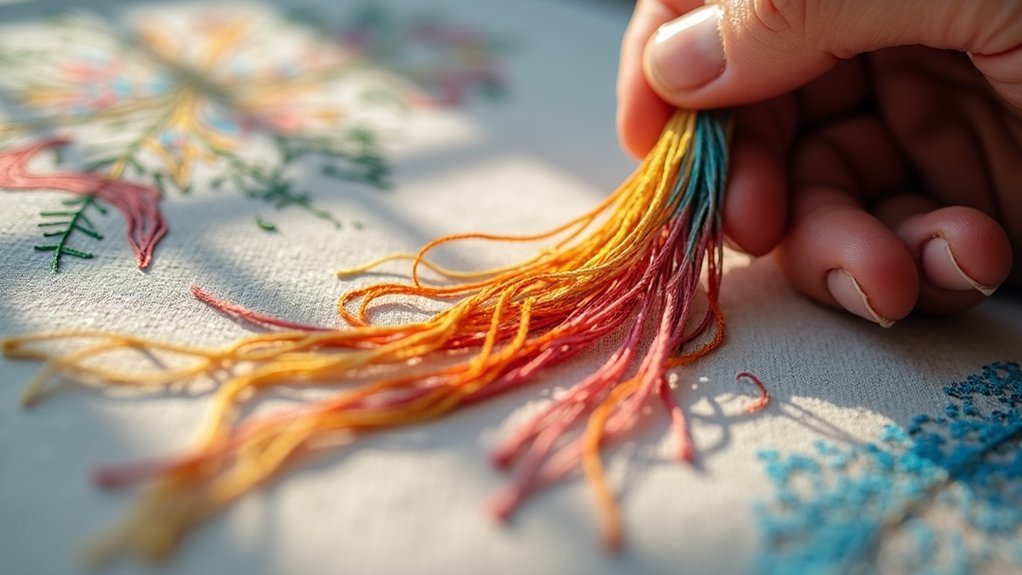
Kantha work is a vibrant expression of cultural heritage, rooted in the regions of West Bengal and Bangladesh. This traditional embroidery technique employs simple running stitches to create intricate motifs, often showcasing the stories and artistry of the artisans.
By recycling old cotton saris and dhotis, you’ll find unique textiles that reflect sustainability and creativity. Each hand-embroidered Kantha piece takes weeks or months to complete, highlighting the skill involved.
Authentic Kantha features irregular stitching and visible knots on the reverse side, distinguishing it from machine-made alternatives. Embracing Kantha means appreciating an art form steeped in history and cultural significance.
Hand-Embroidered Vs Machine-Made Kantha: What’s the Difference?
When comparing hand-embroidered and machine-made Kantha, the authenticity indicators become strikingly clear.
You’ll notice that hand-embroidered pieces display slight irregularities and a textured weight, while machine versions offer a slick, uniform appearance.
Understanding these differences not only enhances your appreciation for the craft but also aids in making informed purchasing decisions.
Authenticity Indicators
To distinguish between hand-embroidered and machine-made Kantha, it’s essential to observe specific authenticity indicators that reveal the craftsmanship behind each piece.
Authentic hand embroidery features slight stitching irregularities and raised threadwork, showcasing the artisan’s personal touch. Flip the piece over, and you’ll notice visible knots and a mirror image of the front design, unlike the clean backs of machine-made items.
Additionally, authentic Kantha tends to feel stiffer and heavier due to dense threadwork. Consider the pricing; higher costs often reflect the skill and time invested, while unusually low prices may indicate mass production, lacking that unique character.
Texture and Feel
Understanding the nuances of texture and feel can greatly enhance your appreciation of Kantha embroidery.
Hand-embroidered pieces generally have a stiffer, heavier texture due to dense stitching, while machine-made variants feel lighter and more uniform. The unique character of hand-stitched Kantha is evident in the slight irregularities, showcasing individuality and craftsmanship absent in machine-made items.
Tactile sensations arise from the raised threadwork, enhancing the sensory experience. Additionally, the reverse side reveals visible knots, contrasting with the clean backs of machine alternatives.
This rich texture and authenticity create a profound connection, making hand-embroidered Kantha truly one-of-a-kind.
Know the Fabric: Where Handwork Shines the Most
Kantha embroidery truly shines on fabrics that enhance its intricate artistry, particularly when you choose materials like cotton, tussar silk, blended silk, and Bangalore silk.
These fabrics elevate the hand-stitched kantha quilts and sarees, allowing the delicate embroidery technique to stand out.
Pure silk, especially when paired with batik artistry, adds a luxurious touch, showcasing the artisans’ skill.
Consider the Stylist Hand Work Blended Silk Saree for an affordable yet elegant option, or the Hand-Stitched Kantha Stitch Sarees for classic motifs with meticulous detail.
The choice of fabric profoundly impacts the beauty and character of your kantha creations.
Pricing: Real Handwork Takes Time & Talent
When you consider purchasing authentic Kantha sarees, remember that the time artisans invest is a key factor in their pricing.
The lengthy process of hand-embroidery often spans weeks to months, resulting in higher costs that reflect the craftsmanship and quality.
Time Investment for Artisans
Artisans dedicate countless hours to perfecting their craft in Kantha embroidery, often spending weeks or even months on a single piece.
This significant time investment reflects the dedication and talent required for authentic handwork. Each stitch embodies unique craftsmanship, telling the story of the artisan’s skill and creativity.
Unfortunately, many artisans earn a mere Rs. 2,000-4,000 annually, far below a living wage.
Therefore, when you consider purchasing Kantha items, remember that reputable sellers price them according to the quality materials and intricate craftsmanship involved.
Supporting these artisans not only values their time but also helps preserve this beautiful tradition.
Price Indicators of Authenticity
Pricing for authentic Kantha embroidery often reflects the intricate artistry and extensive labor behind each piece, making it essential for consumers to understand the indicators of authenticity.
Genuine hand embroidery showcases remarkable craftsmanship, requiring significant time investment for detailed running stitches. If you encounter unusually low prices, be cautious; such offers may signal machine-made or mass-produced items rather than true Kantha work.
Reputable sellers like BANGLARSARE offer transparent pricing, aligning quality materials with labor costs. While affordable options exist in blended silk collections, always consider the price indicators that represent the dedication and talent involved in creating authentic pieces.
Why Choose Hand-Embroidered Kantha Sarees?
Choosing hand-embroidered Kantha sarees offers you a unique blend of artistry and cultural heritage that machine-made alternatives simply can’t match.
Each piece showcases the intricate Kantha Stitch, reflecting the artisan’s dedication and the vibrant traditions of Bengal. The visible thread knots on the reverse side highlight authenticity, while the luxurious weight and texture enhance your experience.
Characteristics of Authentic Kantha Embroidery
Authentic Kantha embroidery is distinguished by its unique characteristics that set it apart from mass-produced alternatives.
You’ll notice the irregular stitching patterns and slight imperfections, showcasing the hand-stitched craftsmanship of individual artisans. Genuine pieces often feature a simple running stitch, forming intricate floral motifs and geometric patterns.
Flip the fabric over, and you’ll see visible thread knots, a proof of its authenticity, along with a mirror image of the front design.
Unlike lighter machine-made versions, authentic Kantha items feel stiffer and heavier, making them truly reversible and a hallmark of traditional craftsmanship that serves both beauty and utility.
Common Motifs and Patterns in Kantha Work
When exploring the world of Kantha work, you’ll quickly discover that the motifs and patterns aren’t just decorative but deeply rooted in cultural narratives and personal histories.
Common motifs like intricate floral designs, animals, and birds evoke the essence of nature, while Nakshi kantha prominently features large floral imagery. Geometric patterns, influenced by Islamic art, add a unique dimension to Kantha embroidery.
Each piece carries cultural significance, often reflecting daily life, folklore, and spiritual beliefs. Through these patterns, artisans narrate stories and preserve familial heritage, ensuring that every stitch connects generations in a meaningful tapestry of tradition.
Caring for Your Kantha Embroidered Pieces
Caring for your Kantha embroidered pieces is essential to preserving their beauty and longevity, especially since these textiles often carry personal and cultural significance.
You can easily maintain Kantha items through hand or machine washing, but opt for gentle detergents to protect the delicate embroidery done by hand. Washing in cold water prevents color fading, so avoid direct sunlight during drying.
Air drying is ideal to maintain the integrity of both fabric and embroidery. When storing, keep your Kantha pieces in a cool, dry place, folded neatly to prevent creasing and guarantee they retain their traditional form and allure.