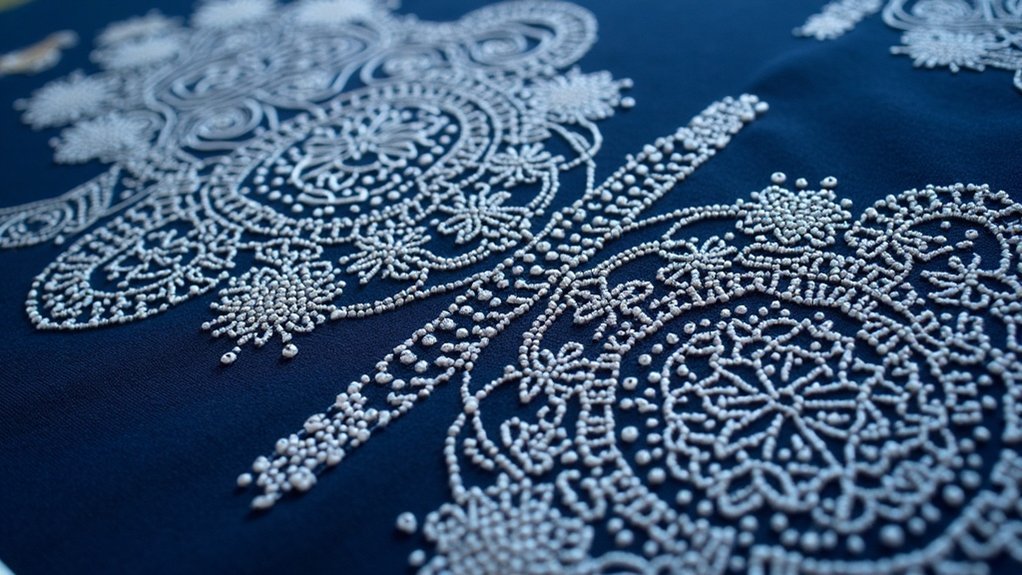
To identify Japanese Kogin embroidery, look for intricate geometric designs stitched with running stitches on even-weave fabrics. The patterns often use an odd number of threads, creating unique diamond shapes. You’ll typically see a classic color scheme of white thread on indigo fabric. Pay attention to regional variations and specific motifs, which symbolize good fortune. Each stitch is precise and crafted with care, taking significant time to complete. There’s much more to uncover about its rich history and techniques.
Key Takeaways
- Kogin embroidery features intricate geometric designs created using a counted thread technique on even-weave fabric.
- Traditional patterns often utilize an uneven number of threads, typically focusing on odd counts like 1, 3, or 5.
- Common color schemes include white thread on indigo or blue fabric, highlighting the contrast and craftsmanship.
- The designs exhibit strict symmetry with motifs that symbolize good fortune, such as Neko no ashi and Sayagata.
- Stitches are meticulously crafted using thick, unbleached cotton yarn, resulting in textured and durable patterns.
Understanding Kogin Embroidery
Kogin embroidery, a fascinating form of sashiko, stands out for its intricate geometric designs and counted thread technique.
You’ll notice that Kogin employs running stitches on even-weave fabric, creating striking diamond shapes. Traditional patterns, like Modoko, utilize an uneven number of threads, enhancing complexity.
Each stitch is meticulously placed, emphasizing precision and craftsmanship, often taking over 40 hours to complete. The use of cotton thread allows for varied color palettes, though classic designs feature white thread on indigo fabric.
Understanding these elements will deepen your appreciation for Kogin embroidery and its unique visual language, transcending mere decoration to embody artistry.
Historical Background of Kogin
Emerging from the rugged landscapes of northern Japan, Kogin embroidery has a rich historical narrative that highlights its practical origins and evolution into a cherished art form.
Originating in Aomori Prefecture, this technique began as a method for farmers to reinforce garments against harsh winters. Documented since 1685, Kogin shifted from utility to decorative art during the Meiji Period.
Sumptuary laws in 1724 led to the use of bast fibers, which Kogin enhanced with its distinctive blue and white patterns. The term “Kogin” itself connects to traditional koginu jackets, emphasizing the enduring legacy of this unique embroidery style in Japan’s history.
Traditional Materials Used in Kogin
The materials used in Kogin embroidery play an essential role in defining its unique aesthetic and functional qualities.
Traditionally, you’ll find Kogin stitched on even weave fabrics like hemp, ramie, or cotton for durability and warmth. The shift to cotton thread during the Meiji Period expanded accessibility, with white cotton contrasting beautifully against indigo-dyed fabrics.
Dense, multi-stranded unbleached cotton yarns create textured stitches, enhancing each piece’s visual appeal. The base fabric’s thickness and weave count, typically 18 to 20 holes per inch, greatly affect the visibility of your counted embroidery, ensuring the intricate designs stand out beautifully.
Distinctive Patterns and Designs
When you explore kogin embroidery, you’ll notice its striking geometric shapes and symmetry that define its unique aesthetic.
Traditional color combinations, primarily white thread on a blue background, not only enhance visual contrast but also reflect cultural significance.
Furthermore, regional pattern variations add depth to this craft, showcasing the diversity within the cohesive framework of kogin designs.
Geometric Shapes and Symmetry
While exploring the intricate world of Kogin embroidery, you’ll quickly notice the dominance of geometric shapes and symmetry that define this art form. Kogin features a range of patterns, primarily small diamond motifs, constructed through counted work techniques. Stitch placement follows a careful crossing of odd warp threads, enhancing the visual impact.
| Pattern Type | Stitch Count | Fabric Use |
|---|---|---|
| Modoko | 1-5 | Indigo/Color |
| Diamond | 3 | Cotton/Silk |
| Star | 5 | Linen/Blend |
| Hexagon | 3-5 | Cotton/Denim |
These patterns create a harmonious balance, inviting you to appreciate their beauty.
Traditional Color Combinations
Kogin embroidery showcases a striking interplay of color, primarily featuring white cotton thread against indigo-dyed blue fabric.
This traditional color combination creates a vivid contrast that accentuates the intricate patterns.
You’ll find that Kogin designs often incorporate geometric shapes, characterized by:
- Neko no ashi: A unique motif resembling a cat’s paw.
- Sayagata: A repeated pattern symbolizing good fortune.
- Strict color placement: No color repeats in any row, column, or diagonal.
- Modoko designs: About 45 patterns, each with deep cultural significance.
These elements highlight Kogin’s historical roots and artistic depth, celebrating Japan’s heritage.
Regional Pattern Variations
Although Kogin embroidery is rooted in a shared tradition, you’ll find that regional variations give rise to distinctive patterns and designs, each reflecting the unique cultural identity of its area.
In Aomori Prefecture, intricate geometric designs like “neko no ashi” and “sayagata” showcase skilled kogin stitching. The Tsugaru region embraces bold, large-scale motifs with diamonds and zigzags, while Hiraka focuses on smaller, delicate patterns inspired by nature.
Across regions, odd-numbered thread combinations create unique arrangements, often using indigo-dyed backgrounds with white thread, though modern interpretations expand color palettes, further enhancing each region’s distinctiveness in Kogin embroidery.
Techniques and Stitching Methods
When exploring the techniques and stitching methods of Kogin embroidery, you’ll find that the artistry lies in the meticulous use of a counted thread technique, which allows for intricate designs to emerge.
Focus on these essential aspects:
Emphasize key techniques: use odd threads, start from the center, and alternate weft crossings for beautiful Kogin designs.
- Use 1, 3, or 5 threads for running stitches across an uneven number of warp threads.
- Start your stitching from the center, working outward to guarantee symmetry.
- Construct patterns by alternating between crossing weft threads over and under the warp.
- Employ thick, unbleached cotton yarn for dense stitching, enhancing the texture of your Kogin fabric.
This approach leads to stunning, geometric embroidery.
Color Choices and Fabric Selection
Choosing the right colors and fabrics is essential for achieving the distinctive look of Kogin embroidery, as the interplay between thread and background can dramatically influence the overall design. Traditional Kogin often uses white threads on dark indigo fabric, creating striking contrasts. For a modern twist, explore varied color choices using Auriful cotton floss, which offers over 250 hues. Fabric selection should focus on evenweave materials like cotton or linen, ideally with 18 to 20 holes per inch for precise counted work.
| Color Choice | Fabric Type | Thread Type |
|---|---|---|
| White on Indigo | Cotton | Auriful Cotton Floss |
| Pastels | Linen | Wool |
| Bright Colors | Cotton Blend | Silk |
Contemporary Applications of Kogin
Kogin embroidery has evolved beyond its traditional roots, finding a place in contemporary design that resonates with modern aesthetics.
You can see its contemporary applications in:
- Decorative items like bags, cushions, and table runners that blend tradition with modern flair.
- Fashion accessories, including clothing embellishments, bow ties, and hair slides, expanding everyday wear options.
- Unique Kogin-covered buttons that enhance garment texture and visual appeal.
- Accessible workshops and online tutorials encouraging experimentation with colors and fabrics, beyond the classic indigo and white.
Social media platforms showcase these innovations, inspiring a global crafting community to embrace Kogin’s versatility.