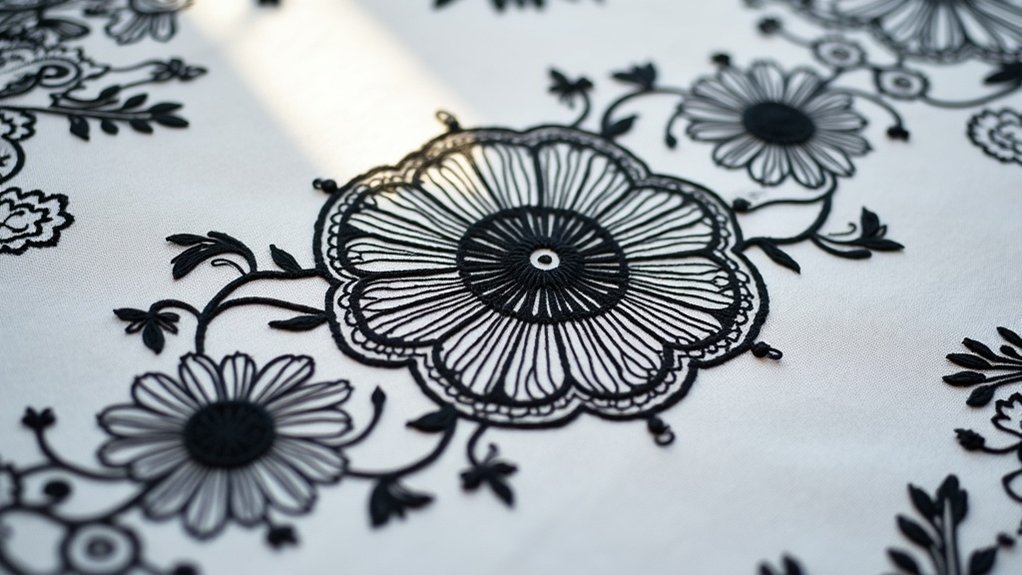
To identify English Blackwork embroidery, look for precise geometric designs crafted using black silk thread on high-quality linen. The characteristic double running stitch creates intricate patterns with a strong emphasis on counted-thread techniques. You’ll notice a monochromatic palette, traditionally featuring black thread against white fabric. Floral motifs and negative space contribute to the overall elegance. As you explore further, you’ll discover the rich historical context and variety of techniques that define this distinctive style.
Key Takeaways
- Look for the use of black silk thread on high thread count fabrics, typically 28-count or 32-count linen.
- Identify intricate geometric patterns and scrolling vines, which are characteristic of Tudor-era designs.
- Note the predominance of the double running stitch, allowing for reversible designs.
- Observe the monochromatic color scheme; traditional Blackwork remains primarily in black against white or off-white backgrounds.
- Recognize motifs such as floral designs and geometric shapes that symbolize love, chastity, and other themes from the era.
Key Features of Blackwork Embroidery
When you explore Blackwork embroidery, you’ll notice its distinctive characteristics that set it apart from other needlework styles. This technique utilizes black silk thread on high thread count fabrics, like 28-count or 32-count linen, creating a striking contrast against a light background.
It employs counted-thread embroidery methods, prominently featuring the double running stitch, which allows for reversible designs. You’ll find intricate geometric patterns alongside scrolling vines that reflect the Tudor-era aesthetic.
While modern interpretations may introduce color variations, traditional Blackwork remains focused on its monochromatic elegance, emphasizing precision and detail in each stitch.
Historical Context of Blackwork
As Blackwork embroidery blossomed in England during the 15th century, its significance extended far beyond mere decoration.
Introduced by Catherine of Aragon, this technique became a hallmark of English embroidery, particularly under Henry VIII’s reign. Its characteristic use of black silk thread against white linen showcased intricate geometric patterns, embodying the Tudor aesthetic.
The introduction of Blackwork by Catherine of Aragon marked a defining moment in English embroidery, celebrated for its striking geometric designs.
Literary references, like those in Chaucer’s Canterbury Tales, highlight its cultural relevance prior to the 1500s.
While it adorned garments such as shirts and coifs, by the late 16th century, Blackwork evolved to include pictorial motifs, affirming its status among the aristocracy, including icons like Elizabeth I.
Materials Used in Blackwork
When exploring Blackwork embroidery, the choice of materials plays an essential role in achieving the desired aesthetic.
You’ll find that traditional black silk thread paired with high-quality linen or cotton creates a stunning contrast, while modern interpretations open up a world of textures through the use of stranded and perle cotton.
To guarantee precision in your geometric designs, selecting evenweave fabric and employing an embroidery hoop will greatly enhance your stitching experience.
Recommended Fabric Types
Choosing the right fabric is essential for successful Blackwork embroidery, and several options stand out for their unique characteristics.
Traditional choices include white or off-white linen or cotton fabric, which creates a striking contrast with black silk thread. For precision in geometric patterns, evenweave fabric is recommended, particularly 28-count or 32-count linen, ensuring high detail in your embroidery designs.
A high thread count, like 30 threads per inch, enhances authenticity. Beginners might prefer Aida cloth due to its grid structure, simplifying the stitching process.
Each of these recommended fabric types contributes to the quality and beauty of your Blackwork projects.
Essential Thread Choices
The choice of thread markedly influences the outcome of your Blackwork embroidery, shaping both the aesthetic and structural integrity of your designs.
Traditional Blackwork often utilizes black silk thread on high thread count fabrics, enhancing the contrast that showcases intricate geometric patterns. For precise counted stitches, select quality threads that maintain their shape, ensuring consistent tension in foundational stitches like the backstitch and double running stitch.
Modern variations may incorporate stranded or perle cotton, offering diverse textures and durability. While black remains classic, don’t shy away from other colors to expand your palette in contemporary designs.
Necessary Tools and Accessories
Starting on a Blackwork embroidery project requires an understanding of the crucial tools and accessories that enhance both the process and the final result.
An embroidery hoop is essential for maintaining tension on white or off-white fabric, allowing you to create precise stitches more easily.
For needle sizes, choose 22 or 24, which have elongated eyes and non-sharp tips, perfect for delicate threads.
Reliable embroidery scissors guarantee clean edges, while fabric marking pencils help you accurately trace patterns before you begin stitching.
With black silk thread and these tools, you’re set to create stunning designs that serve and inspire.
Techniques Employed in Blackwork
Exploring the techniques employed in Blackwork reveals a rich tapestry of methods that create its distinct visual appeal. You’ll discover:
- Double Running Stitch: This fundamental stitch allows for reversible designs, showcasing the beauty on both sides.
- Counted-Thread Methods: Precision is key here, as you carefully place stitches over fabric threads, forming intricate geometric patterns.
- Shading Techniques: By varying stitch density, you can achieve depth, using stab stitches effectively for texture without counting.
Traditionally, Blackwork embroidery uses black silk thread on white fabric, though modern adaptations may explore various thread weights and colors for added creativity.
Common Motifs and Patterns
In Blackwork embroidery, you’ll notice a striking interplay of geometric designs, floral motifs, and pictorial elements that create a rich visual narrative.
Each motif carries significance, often reflecting the cultural and artistic influences of the Tudor and Elizabethan periods.
Geometric Design Elements
Geometric design elements in Blackwork embroidery reveal a fascinating interplay of shapes and motifs that define its aesthetic.
You’ll notice several key aspects that enhance visual appeal:
- Interlocking Patterns: Squares, diamonds, and triangles form intricate arrangements.
- Negative Space: Background fabric is intentionally left visible, accentuating the geometric designs.
- Double Running Stitches: These allow for reversible patterns that retain their beauty on both sides.
Together, these elements create a harmonious blend of structure and artistry, reflecting the historical significance and elegance of Blackwork embroidery.
They invite you to appreciate the skill involved in crafting these exquisite geometric creations.
Floral Motifs Significance
Floral motifs in Blackwork embroidery hold deep significance, often embodying symbolic meanings that resonate with viewers. You’ll find stylized flowers like roses, representing love, and pomegranates, symbolizing chastity.
During the Elizabethan era, artists began introducing intricate vines and exotic floral designs, moving away from simpler geometric patterns. These motifs are usually arranged in repeating sequences, enhancing the visual appeal of the piece.
Blackwork employs various filling techniques, with outlines created by backstitch and filled using double running or other counted stitches. This meticulous approach adds depth and texture, showcasing the artistry of Blackwork embroidery beautifully.
Pictorial Representations in Blackwork
Building on the rich tradition of symbolic motifs in Blackwork, pictorial representations add another layer of depth to this intricate embroidery style.
These designs not only reflect nature but also embody significant meanings. Common motifs include:
- Geometric shapes that create a structured background.
- Floral designs symbolizing virtues, like pomegranates for chastity.
- Pictorial representations of birds and insects, capturing the essence of Tudor-era Blackwork and the complexity of Elizabethan designs.
These intricate patterns, filled with counted work, enhance the visual allure of garments and household items while maintaining coherence, making each piece a conversation starter.
Stitch Variety and Applications
While exploring blackwork embroidery, you’ll discover a rich variety of stitches that bring your designs to life.
Techniques like counted blackwork emphasize continuous stitching for efficiency, ensuring a uniform appearance on both sides. The backstitch outlines your patterns, while the stem stitch adds fine detail.
Counted blackwork techniques focus on continuous stitching for a consistent look, with backstitch outlining and stem stitch adding intricate details.
For shading effects, the stab stitch varies stitch density, creating depth and texture. Bold outlines emerge from chain and buttonhole stitches, enhancing your blackwork patterns.
Additionally, incorporating gold and silver threads, along with spangles, diversifies your stitch applications, elevating your projects and serving your audience with visually enchanting designs.
Modern Interpretations of Blackwork
How has blackwork embroidery evolved in contemporary crafting? Modern blackwork embraces innovative techniques and materials, enriching its traditional roots.
Key elements include:
- Textures: The use of stranded cotton and perle cotton enhances durability and variety in texture.
- Geometric Patterns: Designers often incorporate geometric motifs alongside classic Tudor and Elizabethan elements, expanding visual appeal.
- Even-Weave Fabric: Utilizing 28-count and 32-count linen allows for intricate, detailed patterns that showcase creativity.
This revival has fostered a vibrant community, where hobbyists explore diverse color combinations and design possibilities, breathing new life into this historic art form.
Resources for Learning Blackwork Embroidery
As you commence your journey to master Blackwork embroidery, a wealth of resources awaits you, each designed to enhance your skills and deepen your understanding of this intricate art form.
The Embroiderers’ Guild of America offers a Master Craftsman program focusing on Blackwork techniques and history.
Online courses, like Carolyn Standing-Webb’s “Ancestree,” provide structured projects for practice.
Free patterns, such as the Halloween Blackwork Biscornu, let you explore creative applications.
Engaging with community resources, including interviews with Blackwork experts, can inspire you.
Don’t forget visual references from the Victoria and Albert Museum to enrich your design journey.