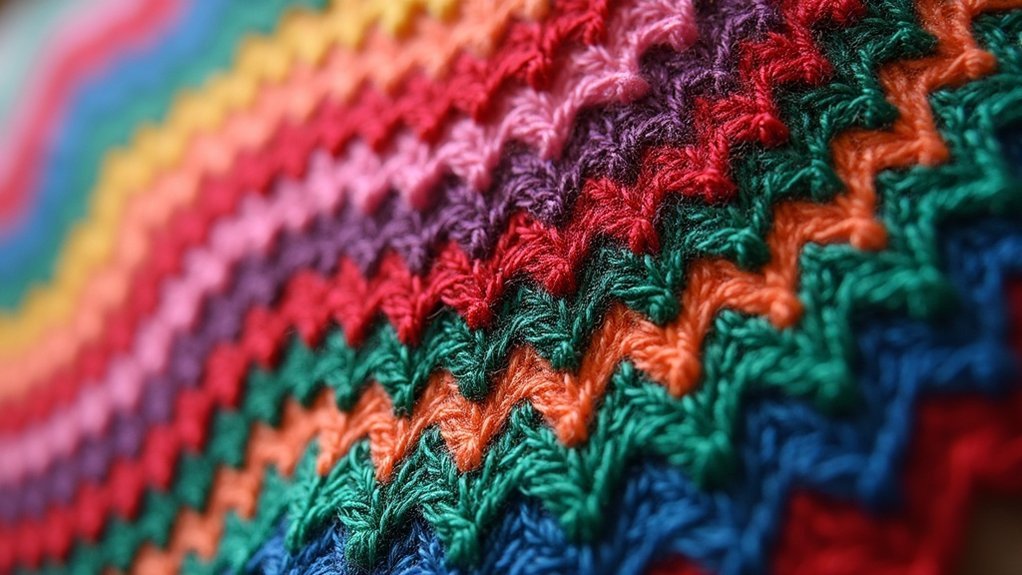
To identify Bargello embroidery characteristics, look for distinctive flame stitch patterns created by flat vertical stitches arranged in rhythmic zigzags. These stitches remain parallel to the canvas weave, producing smooth color shifts and depth. Common motifs include geometric shapes like diamonds and ribbons, often enhanced by a gradient of colors. Observe the use of contrasting hues for striking effects. If you analyze the patterns closely, you’ll discover additional techniques and tools that elevate this embroidery style.
Key Takeaways
- Look for distinctive flame stitch patterns characterized by rhythmic zigzag arrangements of flat vertical stitches.
- Check for the use of mono canvas, which provides clarity for repetitive stitching designs.
- Identify color gradation techniques with smooth shifts in shades, enhancing depth in the patterns.
- Notice the absence of diagonal crossing in stitches, as they lay parallel to the canvas weave.
- Observe common motifs like geometric shapes, including diamonds and medallions, reflecting both traditional and modern inspirations.
Understanding Bargello Embroidery
Bargello embroidery, known for its distinctive flame stitch patterns, utilizes flat vertical stitches to create intricate designs that often evoke the movement of flames.
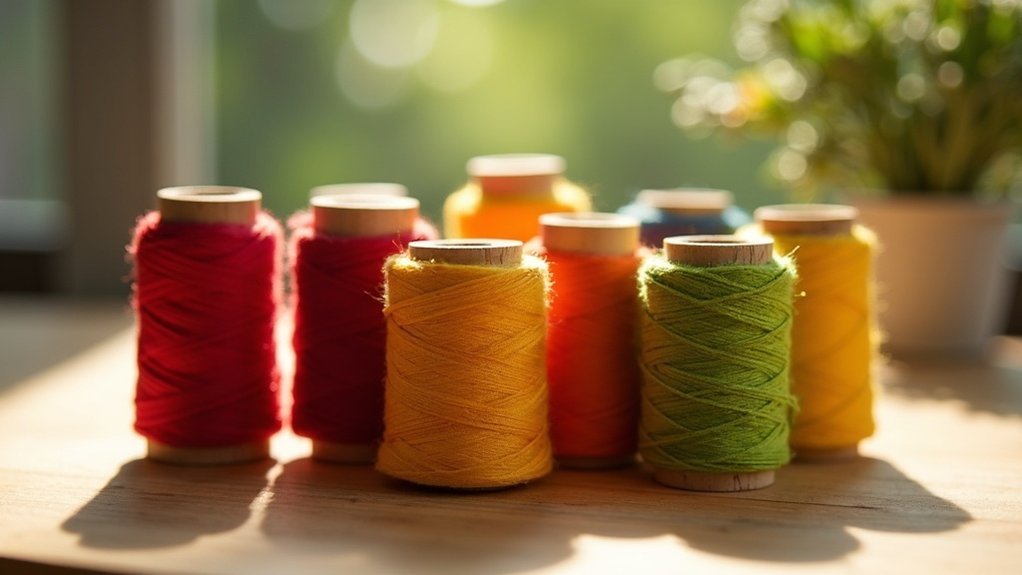
This technique employs a mono canvas, ensuring clarity and facilitating the repetitive stitching necessary for detailed patterns. The choice of yarn, whether wool, cotton, or acrylic, adds depth through gradating tones, enhancing the visual interest of your work.
Utilizing a mono canvas and varied yarns, Bargello embroidery creates intricate patterns with captivating depth and visual interest.
Additionally, color changes in designs employ both analogous and contrasting hues, contributing to the flame-like gradation.
Originating in 17th-century Italy, Bargello remains a valued technique in contemporary textile projects, enriching home décor and accessories alike.
Key Characteristics of Bargello Stitches
While exploring the unique aspects of Bargello stitches, you’ll notice that they’re distinctly defined by their flat vertical orientation and rhythmic zigzag arrangement.
These upright stitches create the signature flame stitch look, enhancing the visual appeal of Bargello embroidery. Unlike other canvas techniques, these stitches don’t cross diagonally, ensuring they lay parallel to the canvas weave.
This characteristic allows for smooth color shifts and depth, resulting in vibrant geometric patterns. You can employ gradating tones or contrasting colors to add interest, making Bargello suitable for everything from simple accessories to elaborate home décor items.
Common Patterns and Motifs
A variety of common patterns and motifs define the aesthetic landscape of Bargello embroidery. Central to these designs is the flame stitch, characterized by sharp zigzag patterns that evoke dynamic movement.
You’ll also encounter geometric shapes like diamonds, ribbons, and medallions, often achieved through stitch stepping techniques. These patterns range from simple to complex, making them accessible for both beginners and seasoned stitchers.
Many motifs reflect traditional and modern inspirations, incorporating seasonal themes or unique artistic interpretations. This versatility in patterns enhances your ability to create visually engaging pieces tailored to diverse tastes and occasions.
Color Gradation Techniques
In Bargello embroidery, mastering color gradation techniques is essential for creating the iconic flame stitch patterns.
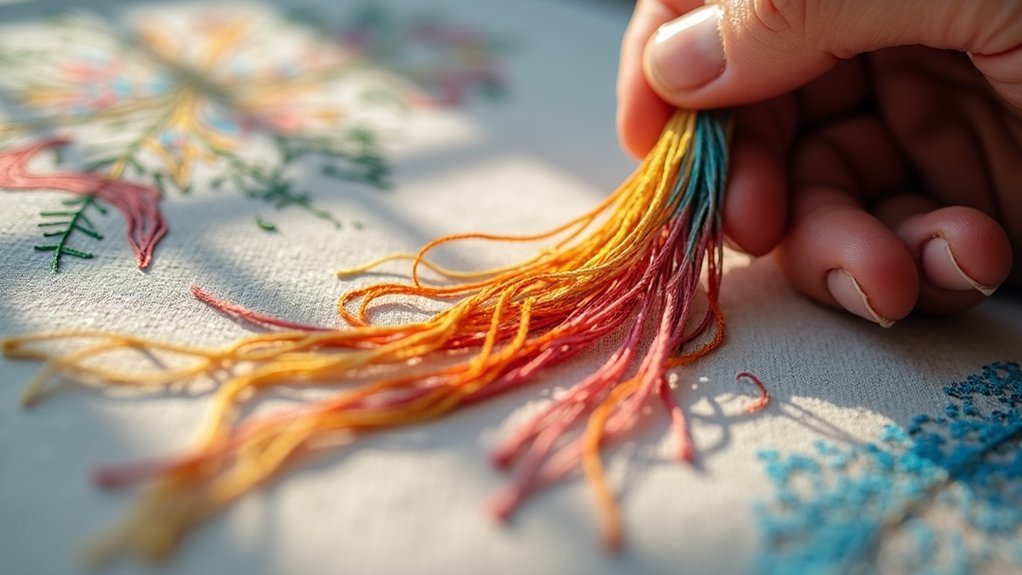
You’ll find that selecting shades in a smooth shift enhances the visual depth of your design while maintaining harmony through analogous colors.
Additionally, experimenting with contrasting hues can lead to striking patterns that elevate your work to a new level.
Flame Stitch Patterns
Flame stitch patterns in Bargello embroidery stand out due to their distinctive zigzag designs that evoke the movement of flames.
These patterns effectively utilize color gradation techniques, allowing adjacent stitches to shift smoothly between varying tones of the same color. This not only adds depth but also enhances the visual appeal of the piece.
Incorporating contrasting colors within flame stitch designs further increases vibrancy and complexity.
Typically, these motifs feature flat vertical stitches arranged in a wavy zigzag pattern, a hallmark of Bargello work.
Mastering color gradation is essential for achieving the harmonious look that defines traditional flame stitch patterns.
Color Transition Methods
While creating stunning Bargello embroidery, mastering color shift methods is essential for achieving enchanting gradients.
Here are key techniques for effective color changes:
- Use adjacent stitches to gradually shift hues, ensuring smooth gradients.
- Incorporate analogous colors from the color wheel for harmonious blending.
- Experiment with variegated yarns to add multiple shades within a single stitch.
- Maintain consistent tension while stitches are worked to prevent puckering that disrupts the gradient effect.
Tools and Materials Needed
Creating Bargello embroidery requires specific tools and materials to guarantee successful execution of this intricate craft.
You’ll need a sturdy fabric like interlock mono canvas or twill, providing a stable base for your stitches. It’s essential to select tapestry needles, ideally sizes 22-24, for seamless threading and maneuverability.
A variety of yarns—wool, cotton, or acrylic—in multiple colors will help achieve the characteristic gradient effects. Don’t forget sharp scissors for clean cuts while preparing fabric and trimming yarn ends.
Optional tools like a frame can keep the fabric taut, while a ruler and marker assist with precise stitch placement and design alignment.
Tips for Identifying Bargello Work
Recognizing Bargello embroidery involves understanding its distinctive visual elements and stitching techniques. To identify Bargello work effectively, consider these tips:
- Stitch Type: Look for flat vertical stitches arranged in a wavy zigzag pattern, often called flame stitch.
- Color Gradation: Notice the use of gradating tones or contrasting colors for depth in intricate designs.
- Canvas Orientation: Check that stitches are parallel to the canvas weave, not crossing diagonally.
- Motifs: Identify common geometric shapes like zigzags and diamonds, typical of this needlepoint technique.
With practice, you’ll appreciate the beauty of Bargello Palace’s artistry.