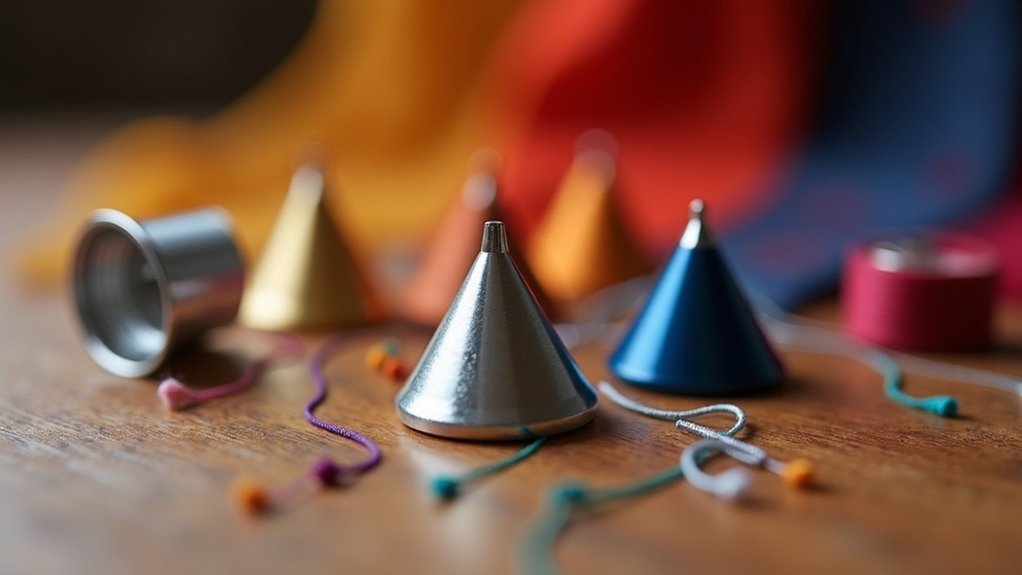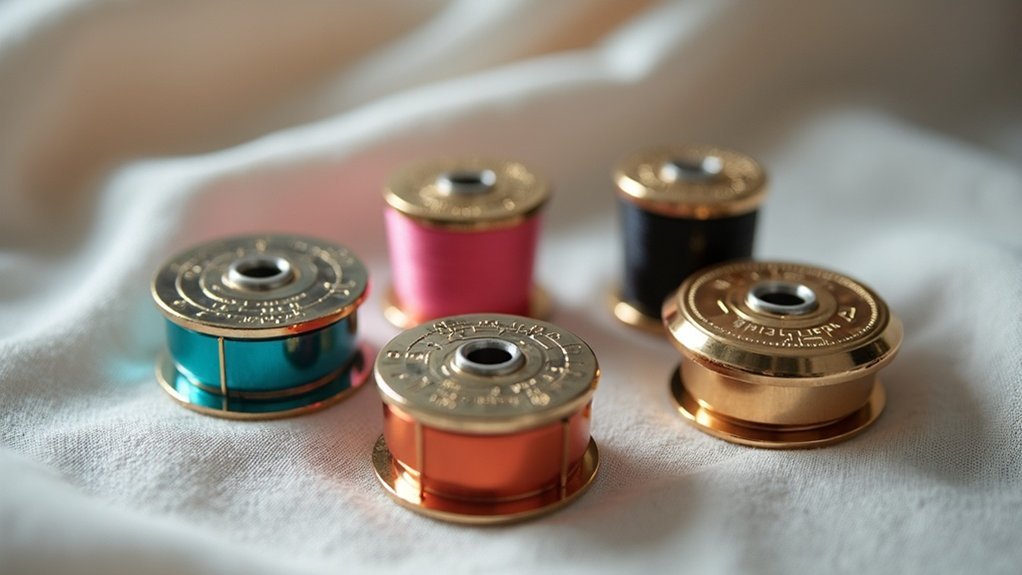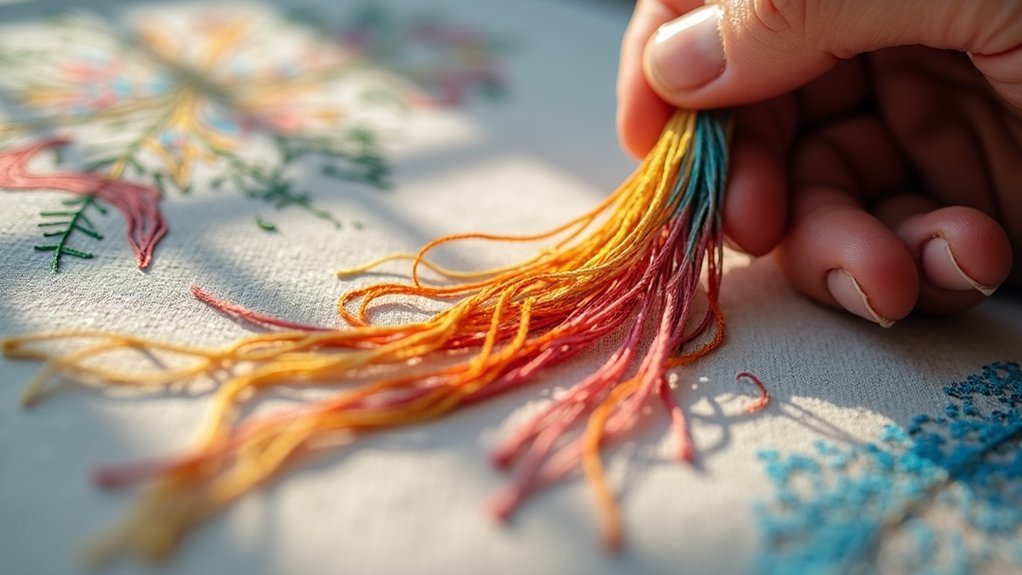
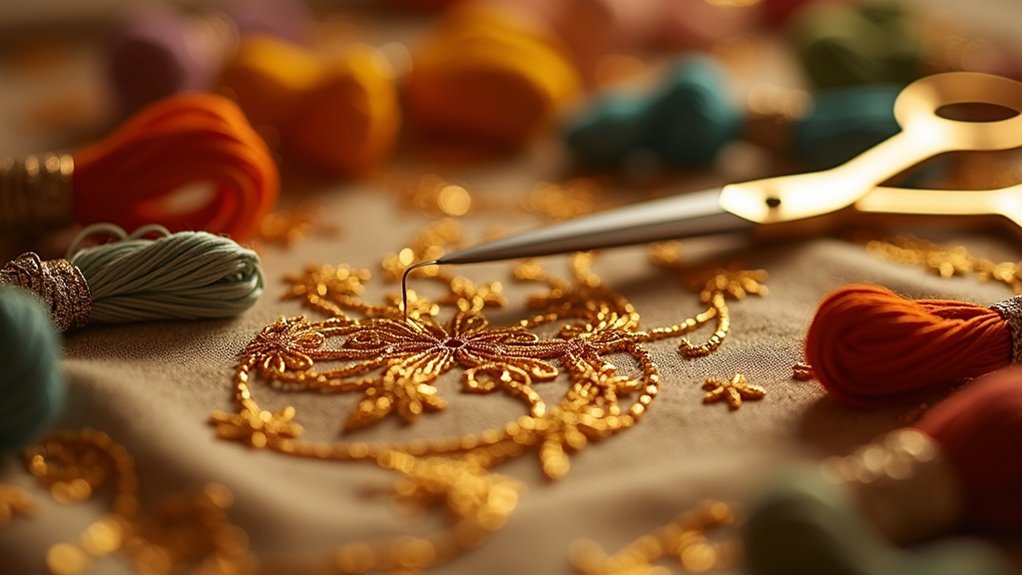
Goldwork embroidery is a beautiful craft that uses metal threads like gold, silver, or copper to create striking designs. Start with natural fabrics such as linen, and gather essential tools like fine needles and sharp scissors. Try the basic couching technique for securing metal threads and practice padding for depth. Explore modern artists for inspiration and check out beginner-friendly books for guidance. There’s so much more to discover to enhance your skills and creativity!
Key Takeaways
- Goldwork embroidery primarily uses couching to secure metal threads, creating intricate designs that play with light and texture.
- Start with natural fabrics like linen and thicker cotton for better support, and gather high-quality metal threads for your project.
- Essential tools include fine needles, sharp scissors, beeswax, a mellor, and an embroidery hoop to enhance your stitching experience.
- Explore foundational techniques like padding, surface couching, and underside couching, gradually progressing to advanced methods like Or Nué and Elizabethan twist.
- Utilize resources like books and online tutorials for guidance, focusing on essential stitches and gradually increasing project complexity for skill development.
What Is Goldwork Embroidery?
Goldwork embroidery is an enchanting technique that allows you to create stunning designs using metal threads like gold, silver, or copper. This beautiful form of embroidery emphasizes the interplay of light and texture, making your work truly eye-catching.
The primary technique, couching, secures thicker metal threads with finer stitches, giving depth to your designs. While historically known as ‘Opus Anglicanum’ in 12th-century England, modern goldwork can also utilize synthetic threads, making it more accessible.
Embrace these techniques to craft exquisite pieces that not only showcase your creativity but also serve to inspire and uplift others.
A Short History of Goldwork
During the 12th century, England emerged as the heart of goldwork embroidery, enchanting artisans and patrons alike with its intricate designs and skilled techniques.
This period gave rise to Opus Anglicanum, renowned for its detailed religious scenes and the durable underside couching method.
Opus Anglicanum flourished, celebrated for its intricate religious imagery and the resilient underside couching technique.
As you explore the history of goldwork, you’ll discover that while its popularity waned during the Black Death and Reformation, the craft’s legacy endures.
Techniques like Or Nué from France and the Netherlands expanded the repertoire of goldwork embroidery.
Today, the Victoria and Albert Museum showcases this rich history, inspiring you to carry on the tradition.
What Materials Will I Need?
To get started with goldwork embroidery, you’ll need a few essential tools and materials.
Choose natural fabrics like linen or thicker cotton to support those beautiful metal threads, and gather high-quality options like passing thread and purls for that stunning shine.
Don’t forget a mellor, beeswax, and sharp scissors to help you achieve precise and secure stitches!
Essential Goldwork Tools
Initiating your goldwork embroidery journey requires a selection of essential tools that will make your stitching experience smoother and more enjoyable.
Begin with fine needles, size 10 or smaller, to handle goldwork threads effectively. An embroidery hoop with a thick rim keeps your fabric taut, while a mellor aids in accurately placing those intricate threads.
Sharp scissors designed for goldwork guarantee clean cuts, and using beeswax on your threads can prevent tangles and fraying.
Consider investing in a velvet board for precise cutting, enhancing your ability to create beautiful, golden designs that serve and inspire others.
Recommended Fabric Choices
When you choose fabrics for goldwork embroidery, selecting the right materials is essential for achieving beautiful results.
Opt for natural fibers like linen or thicker cotton, as they hold metal threads effectively and provide a stable base for stitching. Avoid slippery options like silk and velvet, especially if you’re a beginner.
Dark-colored fabrics, such as deep purple, red, or blue, enhance the metallic threads’ visual impact.
Don’t forget a backing fabric, like calico, to stabilize your work and prevent distortion. An embroidery hoop is also vital to keep your fabric taut, ensuring precise application of your goldwork techniques.
Types of Metal Threads
With your fabric choices set, you’re ready to explore the different types of metal threads used in goldwork embroidery. Each type offers unique qualities that can enhance your designs:
- Purls: Hollow coils providing texture and dimension.
- Bullion thread: Thick, raised designs for a dramatic effect.
- Elizabethan twist: Fine threads perfect for detailed stitching.
- Jaceron: Coiled threads ideal for intricate couching techniques.
You may also consider modern synthetic options, which mimic traditional metal threads without the tarnishing.
Remember to use fine needles and sharp scissors to guarantee precision while working with these stunning metal threads.
Happy stitching!
Goldwork Techniques
Although goldwork embroidery may seem intricate, mastering its techniques can be both enjoyable and rewarding.
Start with couching, where you secure metal threads with small stitches made from finer threads. Experiment with padding techniques, like felt or string padding, to add depth and dimension to your designs.
Begin your goldwork journey with couching, securing metal threads with finer stitches, and enhance your designs with padding techniques for added depth.
Explore various metal threads, such as passing threads, purls, and bullion threads, each offering unique textures. Use stitches like surface and underside couching, and don’t hesitate to embellish with spangles or pearls.
As you advance, consider techniques like Or Nué and Elizabethan twist to showcase your creativity in gold work.
Contemporary Goldwork Artists
Contemporary goldwork artists are redefining the boundaries of this traditional craft, merging age-old techniques with fresh, innovative designs.
You can draw inspiration from their unique approaches and explore goldwork as a versatile medium. Here are a few notable artists to contemplate:
- Hanny Newton, known for abstract pieces reflecting natural shapes using goldwork metals.
- Georgina Bellamy, ‘The Embroidery Girl,’ creates stunning goldwork sculptures featuring metal threads.
- Sara Dennis, a teacher and restorer, showcases her expertise on the BBC’s The Repair Shop.
These contemporary artists encourage you to experiment and embrace the beauty of embroidery done using goldwork techniques.
How to Get Started?
To get started with goldwork embroidery, you’ll need to gather some essential materials like an embroidery hoop, fabric, fine needles, and metal threads.
Choose a simple design and practice the couching technique, which is key to securing those shiny threads.
Essential Materials Needed
Getting started with goldwork embroidery requires just a few essential materials to set you up for success. Here’s what you’ll need:
- Metal threads like passing thread, purls, and twists for stunning designs.
- Backing fabric such as calico stabilizer to support your work.
- A sturdy embroidery hoop to keep your fabric taut.
- Basic tools: fine needles (size 10 or smaller), sharp embroidery scissors for metal threads, and beeswax for securing your sewing thread.
With these materials, you’ll be well on your way to creating beautiful goldwork pieces that can serve and inspire others.
Happy stitching!
Techniques to Practice
Immerse yourself in the world of goldwork embroidery by focusing on essential techniques that will lay the foundation for your skills.
Start with the couching technique, securing thicker metal threads to your fabric with finer stitches for stability. Experiment with padding methods like felt to add depth to your designs.
Choose natural fabrics, such as linen or cotton, which support beginners goldwork best. Don’t shy away from different metal threads like passing threads and purls; understanding their properties enhances your projects.
Finally, utilize beginner courses or books on goldwork techniques to guide your practice and boost your confidence.
Best Goldwork Embroidery Books?
What makes a book the best choice for learning goldwork embroidery? The ideal resource combines practical techniques with inspiring visuals to guide you through using metallic threads effectively.
The best goldwork embroidery books blend practical techniques with inspiring visuals for mastering metallic threads.
Here are some top recommendations:
- “Goldwork” by Vaerie Campbell-Harding, Jane Lemon, and Kit Pyman: Thorough historical context and techniques.
- “Goldwork Embroidery: Techniques and Projects” by Lizzy Pye: Over 600 photographs for clear instructions.
- “Beginner’s Guide to Goldwork Embroidery” by Kate Haxell: Step-by-step projects for novices.
- “RSN Essential Stitch Guides: Goldwork” by Helen McCook: Essential stitches and insights for deeper understanding.
These books cater to various skill levels, enhancing your embroidery journey.