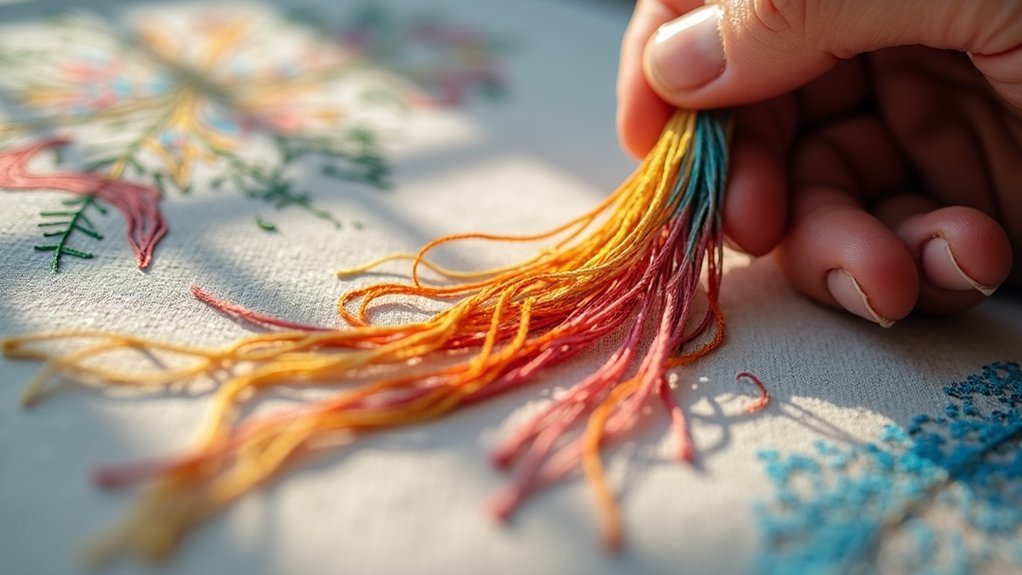
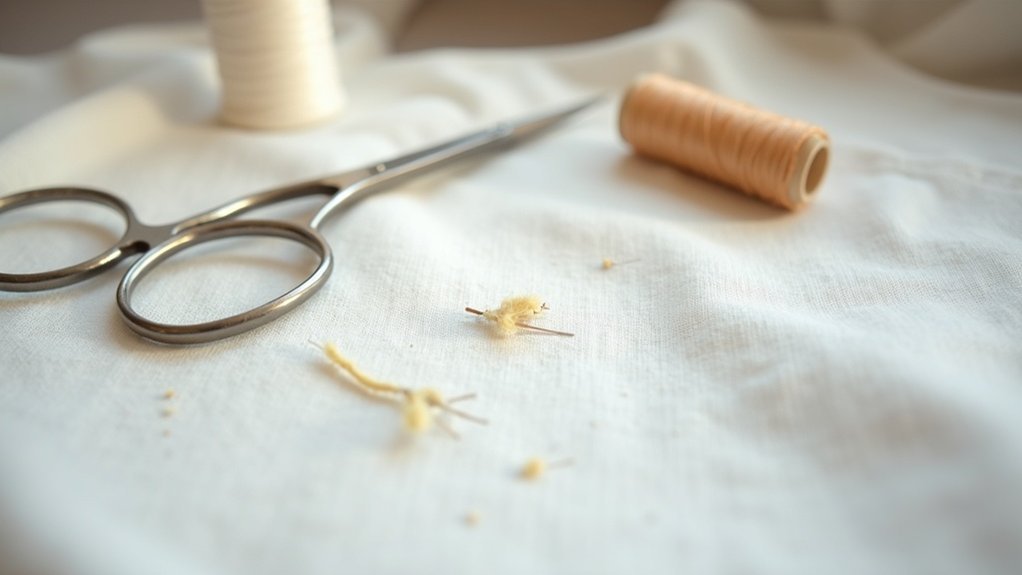
To fix holes from embroidery needles, start by stabilizing the fabric with lightweight fusible interfacing on the wrong side. Secure it in an embroidery hoop, then trace a design over the hole for guidance. Use a satin stitch or backstitch to cover the hole, ensuring you match the thread color for a seamless finish. Trim any excess threads with embroidery scissors for a polished look. By exploring different techniques, you can enhance both the repair and the fabric’s appearance.
Key Takeaways
- Stabilize the area with lightweight fusible interfacing on the wrong side of the fabric to provide support around the hole.
- Secure the fabric in an embroidery hoop to keep it taut during the repair process.
- Trace a design over the hole with a fabric marking pen to guide your stitching accurately.
- Use decorative stitches like satin stitch or backstitch to cover the hole and enhance the garment’s aesthetics.
- Trim any excess threads with embroidery scissors for a clean, polished finish after the repair.
Understanding the Problem With Needle Holes
When you embroider, needle holes are an inevitable outcome, as the needle pierces the fabric to create stitches. The size of the needle you choose directly affects the hole size; larger needles create larger holes.
Be mindful of the fabric type, as tighter weaves or delicate materials can amplify the visibility of these holes. To minimize visibility, adjust your embroidery tension; improper tension can worsen the appearance of needle holes.
Additionally, employing an adequate stabilizer technique helps prevent fabric shifting, reducing the likelihood of noticeable holes during your project.
Ultimately, understanding these factors is essential for effective visible mending.
Essential Supplies for Repairing Holes
Repairing holes from embroidery needles requires specific supplies to assure a successful outcome. To effectively repair small holes, gather the following essential items:
- Embroidery thread – Choose a color that matches your fabric for seamless repairs.
- Embroidery needle – Select one suitable for your fabric type to guarantee clean stitching.
- Lightweight fusible interfacing – This provides added support to reinforce the area around the hole.
Additionally, keep embroidery scissors and a fabric marking pen handy for precision and accuracy.
With these tools, you’ll be well-equipped to repair holes and restore your fabric’s integrity.
Step-by-Step Guide to Mending Holes
To effectively mend holes from embroidery needles, start by stabilizing the fabric with lightweight fusible interfacing on the wrong side, which provides essential support for the damaged area.
Next, secure the fabric in an embroidery hoop to keep it taut. Draw or trace a design over the hole to guide your stitching.
Choose embroidery stitches like satin stitch or backstitch for covering the hole, creating a decorative patch while reinforcing the fabric.
Finally, trim any excess threads with embroidery scissors for a clean, polished look, ensuring the repair seamlessly blends with the garment’s original design.
Techniques for Decorative Repairs
To effectively repair holes while enhancing your garment, start by employing creative stitching techniques like satin stitches or back stitches to cover and outline damaged areas.
You can then embellish your repairs with floral motifs, such as lazy daisy stitches or French knots, turning the mending process into a decorative feature.
Experiment with layering these elements to not only conceal imperfections but also add unique character to your piece.
Creative Stitching Techniques
While tackling holes in fabric, creative stitching techniques can transform a potential eyesore into a unique design feature. Here are three methods you can employ:
- Satin Stitch: Use this technique to fill embroidered flowers, covering imperfections while adding depth and a 3D effect.
- Boro Effect: Employ horizontal and vertical running stitches to secure fabric around a hole, enhancing its character with traditional Japanese mending.
- Woven Mending: For larger holes, weave vertical threads over horizontal ones for a substantial patch that maintains fabric integrity.
These hand embroidery techniques not only repair but also elevate your garment’s aesthetic.
Embellishing With Flowers
Embellishing with flowers is an effective way to turn minor fabric flaws into stunning focal points. You can use techniques like satin stitch and lazy daisy stitch to cover holes while adding charm. For satin stitch flowers, outline petals with back stitch, then fill in with closely packed stitches for depth. Lazy daisy stitches are beginner-friendly, using five or six petals arranged in a circle. Enhance your designs by adding French knots in the center. Mixing thread thicknesses and colors personalizes your embroidered flowers, revitalizing garments beautifully.
| Technique | Description |
|---|---|
| Satin Stitch | Outline with back stitch, fill in |
| Lazy Daisy Stitch | Five or six petals in a circle |
| French Knots | Add to flower centers for detail |
| Color Mixing | Use various threads for uniqueness |
| Thickness Variety | Incorporate different thread weights |
Choosing the Right Fabric for Repairs
When choosing fabric for repairs, focus on quality and weave density to guarantee the integrity of your embroidery.
Lightweight materials, like cotton or linen, support designs while minimizing damage from needle holes.
Additionally, fabrics with some stretch can better absorb stitching stress, reducing the risk of tearing.
Fabric Quality Considerations
Selecting the right fabric for repairs is essential, as it greatly affects the durability and appearance of your embroidery work.
Consider these fabric quality factors to minimize needle holes:
- Durability: Choose fabrics like cotton or polyester, which resist fraying better than delicate materials like rayon.
- Weave Tightness: Opt for tighter weaves that provide support during embroidery, reducing needle damage.
- Weight Compatibility: Match the repair fabric’s weight with the original garment to guarantee a seamless, sturdy repair.
Suitable Fabric Types
For successful embroidery repairs, choosing the right fabric type is essential to guarantee durability and a seamless appearance.
Opt for tightly woven materials like cotton or denim, as they provide the support needed to withstand needle holes without compromising integrity. Avoid lightweight fabrics, such as linen, which are more susceptible to damage.
If flexibility is required, consider stretch fabrics like jersey or spandex blends, as they accommodate movement well. Steer clear of delicate fabrics, including silk or chiffon, since they can fray easily.
Always test your embroidery technique on a scrap fabric similar to your garment to ascertain compatibility.
Tips for Successful Embroidery
To achieve successful embroidery, it’s essential to pay attention to the details that can greatly impact your results.
Follow these tips to minimize needle holes and enhance your stitching:
- Use a 75/11 sharp needle for your fabric type to reduce damage and hole size.
- Layer two types of stabilizers—tear-away and cut-away—to support your fabric and prevent shifting.
- Adjust your sewing machine’s top tension slightly looser for better stitch quality, balancing it with bobbin tension.
Inspiring Examples of Embroidery Repairs
While mending fabric might seem intimidating, creative embroidery repairs can turn imperfections into stunning design features.
You can use a chain stitch to outline a Lazy Daisy flower design, transforming small holes into eye-catching elements. For larger repairs, consider the Boro effect, employing horizontal and vertical running stitches to secure and beautify the fabric.
Woven mending can create sturdy patches by interlacing threads, while simple over sew stitches work well for minor thinning areas.