To end your embroidery without bulky knots, weave your thread through 2-3 existing stitches on the back for a neat finish. You can also backstitch over the last stitch for added stability. Consider using tiny stab stitches in discreet areas, snipping the thread close to the fabric surface. For satin stitches, threading under previous stitches creates a smooth look. Mastering these techniques elevates your embroidery’s professionalism—there’s more to explore on the best ways to guarantee a flawless finish.
Key Takeaways
- Thread the needle through 2-3 existing stitches on the back for a clean finish without bulky knots.
- Use backstitching over the last stitch for added security and a professional look.
- Employ tiny stab stitches in discreet areas to secure loose threads effectively.
- Weave the thread beneath previous stitches for enhanced stability and a smooth appearance.
- Snip threads close to the fabric surface to prevent unraveling and maintain neatness.
Understanding the Importance of Secure Stitches
When you plunge into the world of embroidery, understanding the importance of secure stitches is vital for achieving a professional finish. Secure the thread properly to prevent unraveling; this guarantees your masterpiece withstands wear and washing.
As you approach ending embroidery, consider how stitches might be hidden within existing ones, creating a seamless look. Tiny stitches in inconspicuous areas anchor your work without adding bulk or unsightly knots around the back.
Techniques for Ending Threads Without Knots
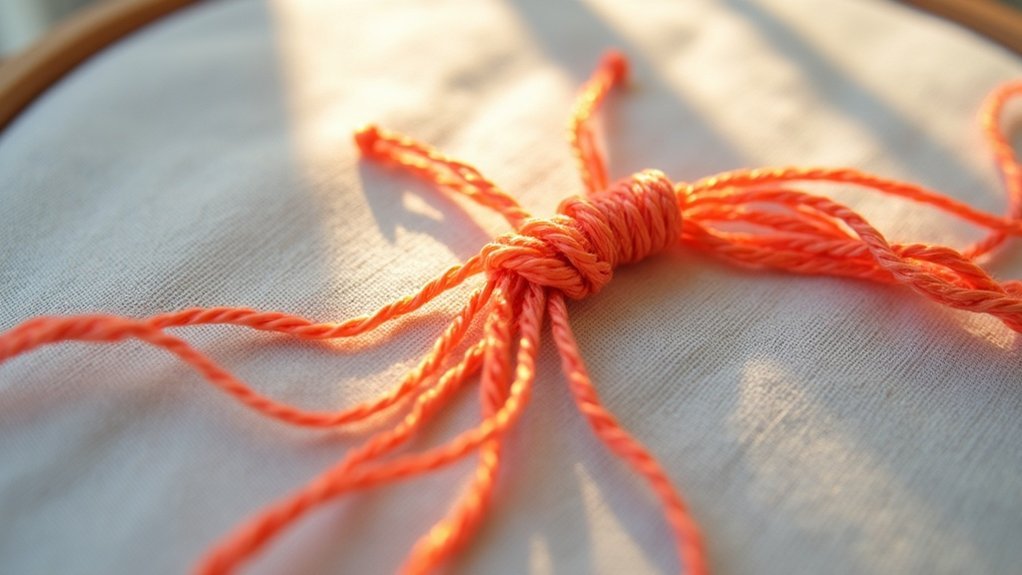
To finish your embroidery neatly, thread the needle through 2-3 existing stitches on the back, securing the end without a bulky knot.
For added stability, consider a backstitch right over your last stitch—this extra layer locks everything in place.
These techniques not only tidy up your project but also guarantee it withstands the test of time.
Secure Under Existing Stitches
Ending threads without knots can elevate the quality of your embroidery project, giving it a polished finish.
To secure under existing stitches, run your needle through 2-3 back stitches on the fabric’s reverse side. This technique anchors your threads without creating bulk.
For loose stitches, make tiny stab stitches in discreet areas, ensuring your last stitch remains firm. When switching colors, repeat this method for a consistent look throughout your work.
Finally, snip the thread close to the fabric surface to avoid any visible mess. This simple approach keeps your embroidery looking neat and professional, ready to serve others beautifully.
Backstitching for Extra Stability
While you might think that securing threads with knots is the only option, backstitching offers a reliable alternative that enhances the stability of your embroidery. By running your needle through 2-3 existing stitches on the fabric’s back, you can effectively secure your thread. When you backstitch over the last completed stitch, it guarantees a firm anchor. Tiny stab stitches in inconspicuous areas add extra security without bulk. Finally, snip the thread close to the surface for a clean finish. Here’s a quick overview:
| Step | Description |
|---|---|
| 1. Secure Stitches | Run needle through existing stitches |
| 2. Backstitching | Stitch over the last stitch |
| 3. Tiny Stab Stitches | Use in hidden areas |
| 4. Snip Thread | Cut close for a clean finish |
| 5. Enjoy Stability | Prevents unraveling during washes |
Weaving Threads for a Clean Finish
When it comes to achieving a polished finish in your embroidery, mastering thread anchoring techniques is essential.
You’ll want to secure your threads with methods like tiny stab stitches, which not only keep everything in place but also remain hidden from view.
With these invisible finish options, you can confidently snip away excess thread, leaving behind a clean, professional look.
Thread Anchoring Techniques
There’s an art to finishing your embroidery that guarantees a polished look without the bulk of knots. To secure your thread, run the needle through 2-3 existing stitches on the back of the fabric before trimming it close.
For backstitches, weave the thread beneath a few previous stitches to enhance security while keeping the front clean. Tiny stab stitches in inconspicuous areas work wonders too, anchoring the thread discreetly.
If you’re using French knots, simply stitch over the last knot for stability. Remember, the type of thread matters; some may need extra anchor stitches for durability and to prevent unraveling.
Secure Stitching Methods
To achieve a seamless finish in your embroidery, mastering secure stitching methods is essential. Start by running your needle through the back, weaving it under 2-3 existing stitches for a robust anchor.
Employ backstitching over the last stitch to bolster thread security while cleverly concealing those finishing stitches. For added stability, make tiny stab stitches in discreet areas, ensuring no visible bulk emerges.
Consider looping the thread beneath strands, pulling it through at least twice for a tight finish. Remember, maintaining consistent tension across various stitch types helps you avoid gaps, resulting in a polished, professional-looking piece.
Invisible Finish Options
Achieving a clean finish in your embroidery is not only about securing your stitches but also about how you weave those threads to create an invisible end. Start stitching by running the thread under 2-3 existing stitches for a secure finish. Enhance stability with backstitching over the last stitch. For sparse areas, tiny stab stitches can anchor threads without bulk. Use the under and through the loop method, repeating it twice for added security. Below are some techniques to take into account:
| Technique | Description | Benefits |
|---|---|---|
| Under existing stitches | Thread under 2-3 stitches | Invisible, secure finish |
| Backstitching | Stitch over the last thread | Extra stability |
| Tiny stab stitches | Small stitches in inconspicuous areas | Minimal bulk |
| Weaving through fibers | Hide thread ends in covered areas | Neat appearance |
| Under & through loop | Tie off threads securely | Prevents visible knots |
Backstitching for Added Security
While you may be tempted to simply tie off your threads with a knot, backstitching offers a far more secure and elegant solution. This technique involves sewing backward over your last stitch, anchoring threads without the bulk of knots.
To execute backstitching effectively, make two tiny stitches: the first further from the last stitch and the second closer, ensuring ideal security. This method is especially useful for securing long and short or satin stitches, preventing unraveling and maintaining your embroidery’s integrity.
Incorporating backstitching not only enhances security but also gives your piece a clean, professional finish on the back.
Tips for Different Types of Stitches
When working with different types of stitches, knowing how to secure them without creating bulky knots is essential for achieving a polished finish.
For French knots, cluster your thread to anchor securely without visible knots.
Cluster your thread for French knots to ensure a secure anchor while keeping knots hidden from view.
With lazy daisy stitches, pick up a fabric thread at the base for a tidy look.
Backstitching into your last stitch helps lock loose threads while maintaining a clean end.
Use tiny stitches in hidden spots to keep everything secure during washing.
For satin stitches, thread under 2-3 existing stitches on the back before snipping, ensuring a smooth finish without any knots.
Community Insights and Shared Experiences
Embroidery isn’t just about technique; it’s also about the shared experiences and insights from fellow crafters that can elevate your skills. Many community members recommend starting embroidery with tiny stitches in inconspicuous areas to secure the thread effectively. Backstitching over the last stitch guarantees security and prevents unraveling. You’ll find joy in making two tiny stitches before snipping close to the fabric for a neat finish. Embrace the under and through the loop method for tying off threads without visible knots.
| Technique | Benefits |
|---|---|
| Tiny Stitches | Secure the thread subtly |
| Backstitching | Enhances security |
| Under and Through Loop | Prevents visible knots |