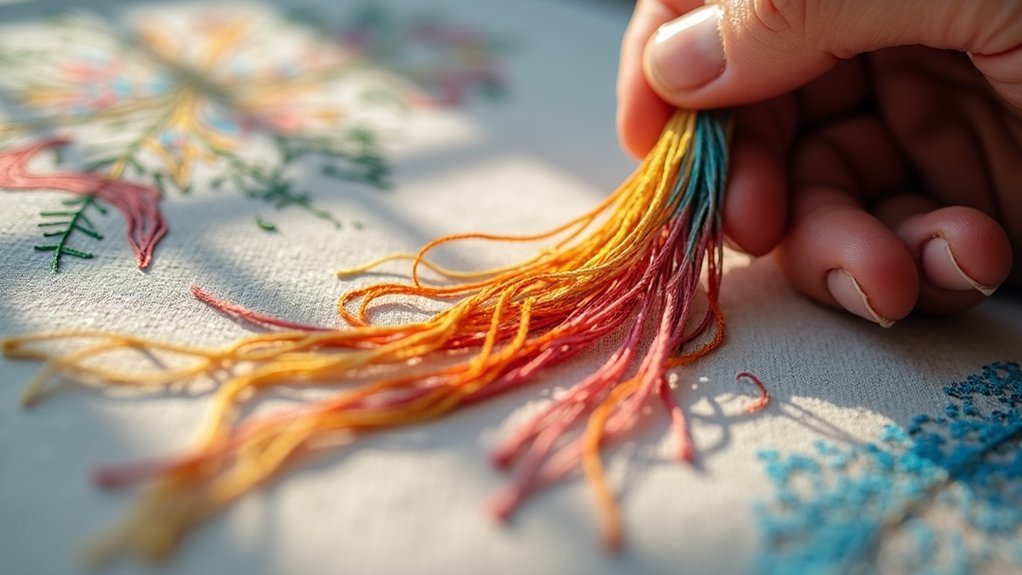

When choosing wool for crewel embroidery, consider the yarn’s ply and twist, as two-ply offers a good balance of strength and flexibility. Look for soft merino or longwool characteristics for smooth stitching. Brands like Appleton and Bella Lusso provide extensive color selections and unique textures. Prioritize sustainable and responsibly sourced options for an eco-friendly choice. Evaluating these factors guarantees a satisfying embroidery experience. Discover more insights on selecting the right materials for your project.
Key Takeaways
- Select 2-ply wool for an ideal balance of strength and flexibility in crewel embroidery projects.
- Consider the wool’s origin; English options like Appleton differ from Italian brands like Bella Lusso in texture.
- Evaluate color variety; Appleton offers over 420 shades, while DMC Eco Vita features 60+ natural dye options for sustainability.
- Test small samples of different threads to ensure comfort and compatibility with your chosen stitching techniques.
- Prioritize suppliers committed to responsible wool sourcing, ensuring ethical and sustainable practices in your embroidery materials.
Understanding Wool Characteristics for Embroidery
When selecting wool for crewel embroidery, understanding the unique characteristics of different wool types is essential.
Wool characteristics vary by breed; for instance, longwool breeds offer smooth, lustrous crewel yarn, while down-type breeds provide airy, lightweight options ideal for your projects.
The twist and ply of your wool thread also affect its texture and performance; two-ply yarns balance strength and flexibility, making them popular.
Additionally, processing methods impact softness and durability.
Consider dye processes too—synthetic dyes can alter texture compared to naturally dyed threads, which often feel more organic.
Knowing these details helps you choose the right yarn for your embroidery using specific techniques.
Comparing Top Wool Threads for Crewel Work
When comparing top wool threads for crewel work, you’ll notice distinct differences in thread composition, which can greatly impact your projects.
For instance, while Appleton offers a vast color palette, Bella Lusso’s soft merino fibers provide a smoother finish.
Evaluating stitching performance across these options will help you select the best thread for your specific embroidery techniques.
Thread Composition Differences
In the domain of crewel embroidery, understanding thread composition can greatly influence your choice of materials and the overall outcome of your project. Here’s a comparison of popular options:
| Thread Name | Composition |
|---|---|
| Appleton | 100% Wool |
| Bella Lusso | 100% Merino Wool |
| Gumnuts Poppies | 50% Silk / 50% Wool |
Appleton offers traditional qualities, while Bella Lusso provides a soft, delicate touch. DAubusson is vibrant and consistent, and Heathway’s two-ply merino enhances versatility. Choose wisely for effective wool embroidery and stunning crewel thread outcomes!
Color Variety and Availability
While selecting threads for your crewel embroidery, the color variety and availability play essential roles in achieving your desired aesthetic. Here are some options to contemplate:
- Appleton Crewel Wool: Offers over 420 shades, providing vast color choices for your projects.
- DMC Eco Vita: Features 60+ naturally dyed shades, ensuring sustainable and consistent thickness.
- Gumnuts Poppies: A silk/wool blend with a unique color variety, though hand-dyeing can complicate color matching.
- Regional Availability: Wool threads like Appleton are often stocked in Australian shops, so check local resources for options.
Finding the right threads enhances your embroidery experience.
Stitching Performance Evaluation
Selecting the right wool thread goes beyond color; it directly influences your stitching experience and the final look of your crewel embroidery.
When evaluating wool yarn, consider texture and twist. For instance, Heathway’s two-ply merino offers a smooth feel, while Simply Wool’s hairy texture can affect stitch appearance.
Appleton boasts over 420 shades but has reported inconsistencies in thickness. Bella Lusso’s longer fibers provide a softer stitch, whereas Gumnuts Poppies’ silk-wool blend enhances visual appeal.
Always test a sample to guarantee compatibility with your stitching style and avoid potential allergy issues for ideal stitching performance.
Selecting the Right Yarn for Your Project
When it comes to crewel embroidery, choosing the right yarn can greatly influence the outcome of your project. Here are some key factors to take into account:
Choosing the right yarn is crucial for successful crewel embroidery; consider ply, origin, processing, and dyeing for the best results.
- Ply Thickness: Opt for 2-ply wool for a balance of thickness and flexibility.
- Origin: Different origins, like Appleton (England) or Bella Lusso (Italy), impact texture.
- Processing: Evaluate unique spins, such as Simply Wool or Renaissance wool, for varied stitching feels.
- Dyeing Process: Think about colorfastness and sustainability; synthetic vs. natural dyes can affect your final piece.
Always test a small thread sample to guarantee comfort during your embroidery journey.
Essential Techniques for Successful Stitching
To achieve successful crewel embroidery, you’ll need to master several essential techniques that begin with selecting the right needles for your chosen yarn.
Proper fabric preparation is equally vital; pre-washing your fabric can prevent issues like puckering and guarantee even stitches.
Needle Selection Tips
Choosing the right needle for your crewel embroidery project can greatly impact both the ease of stitching and the final appearance of your work. Here are some essential needle selection tips:
- Crewel Needles: Perfect for fine threads, their elongated eyes accommodate thicker crewel wool without strain.
- Tapestry Needles: Blunt points work well on densely woven fabrics, preventing damage while slipping between threads easily.
- Chenille Needles: Ideal for textured threads, their larger eye and sharp point guarantee smooth stitching.
- Size Matters: Match needle size to wool thickness; oversized holes or difficulty stitching can occur with mismatched choices.
Always test on a scrap first.
Fabric Preparation Steps
While preparing your fabric for crewel embroidery, it’s vital to take specific steps that guarantee a smooth and successful stitching experience.
Start with thorough fabric preparation by pre-washing your ground fabric using a mild, pH-neutral detergent to prevent puckering and shrinkage. This will keep your embroidery flat and vibrant.
For precise design transfer, consider using dissolvable films, allowing clean outlines for your tapestry wool.
Additionally, practice proper hooping techniques to maintain even tension, important for achieving uniform stitches.
Finally, choose high-quality fabrics like linen or wool felt, providing an excellent foundation for your wool threads and enhancing your overall artwork.
Stitching Techniques Overview
With your fabric prepared and ready, the next step in your crewel embroidery journey involves mastering a variety of stitching techniques that bring your designs to life.
Focus on these essential techniques:
- Running Stitch: Perfect for outlines and shapes, ensuring stitches without splitting.
- Pekinese Stitch: Adds unique loops to double running stitches, enhancing visual texture.
- Filling Stitches: Keep these stitches flat and anchored by outline stitches for structure.
- Tension Management: Practice on small pieces to avoid distorting your design’s outline.
Utilizing various needle types is also vital for achieving precision in your surface embroidery.
Creative Applications and Project Ideas
When you plunge into the world of crewel embroidery, the creative applications and project ideas are virtually limitless.
Experiment with various embroidery yarns, like Appleton for its extensive shade range or Gumnuts Poppies for a luxurious blend, to create unique textures. Incorporate sustainable materials, such as DMC Eco Vita’s naturally dyed yarns, enhancing both eco-friendliness and vibrancy.
Use diverse stitches, like chain and satin, to add depth to functional textiles or decorative pieces. Pair wool embroidery with cotton bobbin thread for durability, and explore historical techniques like couching for a modern twist on traditional crewel work.
Sustainable Sourcing of Wool Embroidery Yarn
Choosing wool embroidery yarn with sustainability in mind not only enhances your projects but also aligns your crafting with ethical practices.
To guarantee you’re making responsible choices, consider these factors:
- Organic and Non-Mulesed Wool: Prioritize suppliers committed to animal welfare.
- Certifications: Look for Woolmark-certified yarn, guaranteeing quality and sustainability.
- Natural Dyes: Seek brands using eco-friendly dyes instead of synthetic chemicals.
- Local Producers: Research small-scale, eco-conscious sources that promote sustainable sourcing and connect you with the materials.
Caring for Your Wool Embroidery Creations
Sustainable sourcing of wool yarn sets the foundation for beautiful embroidery, but caring for your wool creations guarantees they stand the test of time.
Handwashing your pieces in cold or lukewarm water with a pH-neutral detergent is essential to prevent felting. After gently blotting excess water, lay flat to dry, preserving their shape.
Handwash in cold or lukewarm water with pH-neutral detergent to maintain shape and prevent felting.
Store your textiles in acid-free materials within a climate-controlled environment, checking regularly for pests. Keep them in low light and cool temperatures to minimize fiber breakdown.
To avoid color bleeding, conduct a dye test and use color-safe detergents designed specifically for wool.