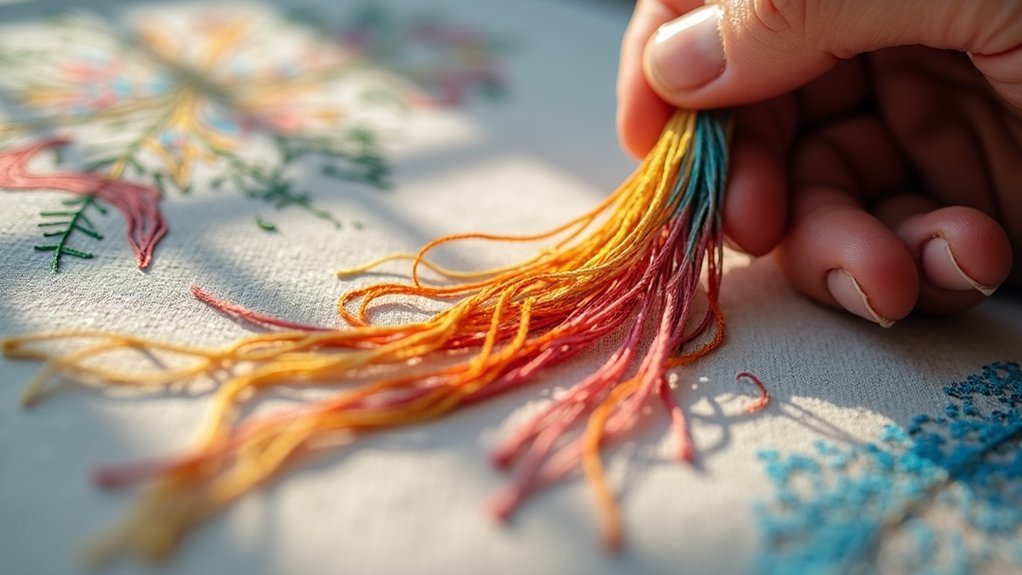

When choosing needles for silk shading embroidery, go for size 7 or 8 sharp needles for smooth stitching. If you’re working with finer threads, a size 9 or 10 needle is ideal to prevent snagging. Make sure your needles are sharp; this enhances precision and control while reducing the risk of thread breakage. Also, avoid using large needles that can disrupt your delicate work. There’s more to mastering your needle choice, so keep exploring for expert tips!
Key Takeaways
- Select size 7 or 8 embroidery needles for smooth stitching on silk shading projects.
- Use size 9 or 10 needles for fine detail work and single strands on tighter fabrics.
- Choose sharp needles to ensure precise penetration and prevent damage to silk.
- Opt for larger eye needles to accommodate multiple strands and minimize wear on threads.
- Regularly replace dull needles to maintain stitch quality and avoid snagging issues.
Understanding Needle Sizes for Silk Shading
When you immerse yourself in the intricate world of silk shading embroidery, choosing the right needle size becomes a crucial decision that can make or break your project.
Typically, size 7 or 8 embroidery needles strike a perfect balance for smooth stitching and effective fabric handling. If you’re working with a single strand of silk thread on tighter fabrics, consider a smaller size 9 or 10 needle for ease.
Selecting the Right Needle Type
When you’re selecting the right needle type for silk shading, you want to focus on both size and sharpness.
A size 7 or 8 embroidery needle is your go-to for smooth stitching, while a finer size 10 can give you the control needed for dense areas.
Needle Types Overview
Choosing the right needle type for silk shading embroidery can make all the difference in your stitching experience.
Opt for embroidery needles with a sharp point, typically sizes 10 or 12, to easily penetrate silk without damage. Their larger eye accommodates multiple strands, ensuring smooth stitching while minimizing wear.
For fine detail work, consider a size 9 or 10 to maintain precision in long and short stitches. Milliners needles, with their long shank and sharp point, excel at creating delicate shapes and curves.
Recommended Sizes for Silk
For silk shading embroidery, picking the right needle size can truly elevate your work. Typically, a size 7 or 8 embroidery needle is perfect for most projects, accommodating the thickness of silk threads while ensuring sharp precision.
If you’re using single strands of fine silk, consider a size 9 or 10 needle for a smooth passage through tightly woven fabrics. Opt for needles with a larger eye to easily thread multiple strands without fraying.
Importance of Needle Sharpness
When it comes to silk shading embroidery, sharp needles are your best friends. They slice through fabric with precision, allowing you to create those delicate, intricate stitches that make your work truly shine.
Keep an eye on needle sizes and maintain their sharpness, and you’ll elevate your stitching to a whole new level.
Benefits of Sharp Needles
While it may seem minor, the sharpness of your needle plays a significant role in the success of silk shading embroidery. Sharp needles provide precise penetration through tightly woven fabrics, ensuring clean, accurate stitches that honor your craftsmanship.
Their fine points facilitate intricate techniques like long and short stitches, essential for smooth shifts. By using sharp needles, you minimize the risk of snagging or puckering, preserving the silk’s beauty.
Additionally, they enhance control and ease of stitching, allowing you to navigate delicate designs effortlessly. Regularly replacing dull needles is important to prevent uneven stitches and maintain the integrity of your work.
Choosing Needle Sizes
Choosing the right needle size is essential for achieving the flawless results you desire in silk shading embroidery. Opt for size 7 or 8 crewel needles with sharp points to create clean holes, allowing precise embroidery stitches without harming delicate threads.
A small needle, like size 10, is perfect for dense stitching, gliding through fabric effortlessly. Remember, sharpness is critical; a dull needle leads to snagging and uneven tension, compromising your work’s beauty.
Pair size 9 or 10 needles with single strands of floss for a snug fit, ensuring each stitch contributes to the stunning silk shading effect you aim to achieve.
Maintaining Needle Sharpness
Maintaining needle sharpness is essential for achieving the exquisite results you desire in silk shading embroidery. Sharp needles create clean holes in the fabric, ensuring smoother stitching and precise thread placement. Dull needles can damage delicate silk, leading to frustration.
To preserve sharpness:
- Regularly inspect your needles for wear or damage.
- Use specialized tools like a strawberry emery to clean and maintain needle tips.
- Replace needles after a few projects or upon noticing dullness.
- Keep your workspace organized to prevent mishaps with your needles.
Accommodating Fine Threads
When diving into the world of silk shading embroidery, using the right needle is essential for accommodating fine threads.
Opt for the smallest needle, like a size 9 or 10 embroidery needle, to guarantee your fine work shines. A sharp needle allows for precise penetration into tightly woven fabrics, making it easier for your thread to pass smoothly without damaging the material.
For one strand of silk floss, a size 10 needle fits snugly, minimizing fraying.
Keep an eye on your needle for wear, replacing it as needed to maintain stitching quality and prevent thread breakage during your delicate crafting.
Testing Needle Compatibility
Finding the right needle for silk shading embroidery can make all the difference in achieving beautiful results. Testing needle compatibility is crucial for your project’s success.
Choosing the perfect needle for silk shading is essential for stunning embroidery results. Testing compatibility ensures success in your project.
Experiment with various needle sizes, typically 7 to 10, to guarantee your thread and fabric work harmoniously.
- Use a smaller size for finer threads.
- Check for a larger eye to prevent breakage.
- Test on scrap fabric for clean stitches.
- Confirm even stitching without snagging.
Common Mistakes to Avoid
Even the most skilled embroiderers can fall into traps that undermine their silk shading projects. Avoid these common mistakes to guarantee your work shines:
| Mistake | Solution |
|---|---|
| Using a needle too large | Choose a good-sized needle, like sizes 7 or 8. |
| Dull needles | Always opt for a sharp needle to prevent snagging. |
| Ignoring needle type | Understand the types of needles best for silk shading. |
| Not changing needles | Replace needles after several hours of use. |
| Overlooking thread weight | Match needle size to silk thread weight for smooth stitching. |
Maintenance and Care for Embroidery Needles
Taking care of your embroidery needles is essential for achieving flawless silk shading results. Regular maintenance not only improves performance but also extends their lifespan.
Here’s how you can keep your needles in top shape:
- Inspect embroidery needles for wear, like bent shafts or dull points.
- Clean tarnished needles with a strawberry emery for smooth stitching.
- Change needles frequently—ideally every 6–8 hours of sewing.
- Store needles in a dry, organized case to avoid rust.
Being mindful of needle size and condition prevents thread breakage and uneven stitching, ensuring that your silk shading projects shine beautifully.