Choosing the right font for your embroidery letters is vital for guaranteeing readability and design appeal. Opt for classic fonts for elegance or modern ones for everyday versatility. Confirm your text height is at least 0.25 inches and thickness is a minimum of 0.05 inches. Testing your font on actual fabric is essential, as different materials can affect legibility. Explore various font styles and techniques to achieve the perfect look for your project that makes a statement.
Key Takeaways
- Select fonts that ensure readability, with a minimum text height of 0.25 inches and thickness of at least 0.05 inches.
- Choose classic, modern, playful, vintage, or minimalistic fonts based on the project’s theme and target audience.
- Test font choices on actual fabric samples to ensure legibility and aesthetic appeal post-stitching.
- Consider the fabric type; smooth materials may accommodate thinner fonts, while textured fabrics require bolder designs for clarity.
- Document successful font tests and engage with community resources for ongoing font selection guidance.
Importance of Font Selection in Embroidery
When it comes to embroidery, font selection is more than just a stylistic choice; it’s an essential element that impacts readability and design integrity.
The right embroidery fonts not only enhance your project’s visual appeal but also guarantee clarity. Aim for a minimum text height of 0.25 inches and a thickness of at least 0.05 inches for legibility.
Different fonts perform uniquely on various fabrics; for example, sans-serif fonts shine on textured materials. Testing font choices on actual fabric is vital, as it assures the selected font maintains its integrity, ultimately contributing to production efficiency and reducing unnecessary trims.
Types of Fonts for Different Projects
When choosing fonts for your embroidery projects, consider the tone you want to convey.
Classic fonts bring elegance to formal occasions, while modern fonts offer versatility for everyday wear.
For a touch of whimsy, playful fonts can infuse fun into your designs, making them truly stand out.
Classic Fonts for Elegance
Choosing the right classic font for your embroidery project can elevate its overall elegance, especially for formal items like wedding dresses or corporate apparel.
Classic fonts like Times New Roman and Baskerville offer timeless sophistication, ensuring legibility in embroidered designs. Their refined appearance makes them ideal for conveying professionalism.
When embroidering, remember to set your text height to at least 0.25 inches and thickness to no less than 0.05 inches for best results.
Modern Fonts for Versatility
While classic fonts bring a timeless elegance to embroidery, modern fonts open up a world of versatility that can enhance your designs for any occasion.
By choosing a modern sans-serif font, you’ll benefit from:
- Versatile design options for various embroidery projects
- Sleek letterforms ensuring clean and precise stitching
- Decorative curves suitable for both casual and professional themes
- Compatibility with a wide range of fabric types
- Opportunities for unique embroidery designs through experimentation
Embrace modern fonts like Roboto or Montserrat to elevate your creations and express your creativity in every stitch.
They’re perfect for any style you want to achieve!
Playful Fonts for Fun
How can playful fonts transform your embroidery projects into vibrant statements? By using fonts like Pilcrow Rounded or Chalk Brush, you create a playful look that’s perfect for children’s apparel and lighthearted designs.
These block fonts feature rounded edges and unique letterforms, giving your custom embroidered items a friendly aesthetic. However, remember that readability is essential; even whimsical designs must be legible.
Enhance your embroidery with colorful threads or embellishments to elevate its charm. Experimenting with various playful font styles can lead to unique, memorable designs that showcase personality, making your projects truly stand out.
Readability Standards and Size Considerations
When it comes to embroidery, prioritizing readability is essential for guaranteeing your text stands out clearly.
To achieve this, keep these readability standards and size considerations in mind:
- Opt for a font size of at least 36 pt.
- Ensure the text height is no less than 0.25 inches.
- Maintain a letter thickness of at least 0.05 inches for legibility.
- Avoid thin or overly complicated calligraphy fonts.
- Consider your fabric type, as it affects how your embroidery designs appear.
Testing Fonts on Fabric
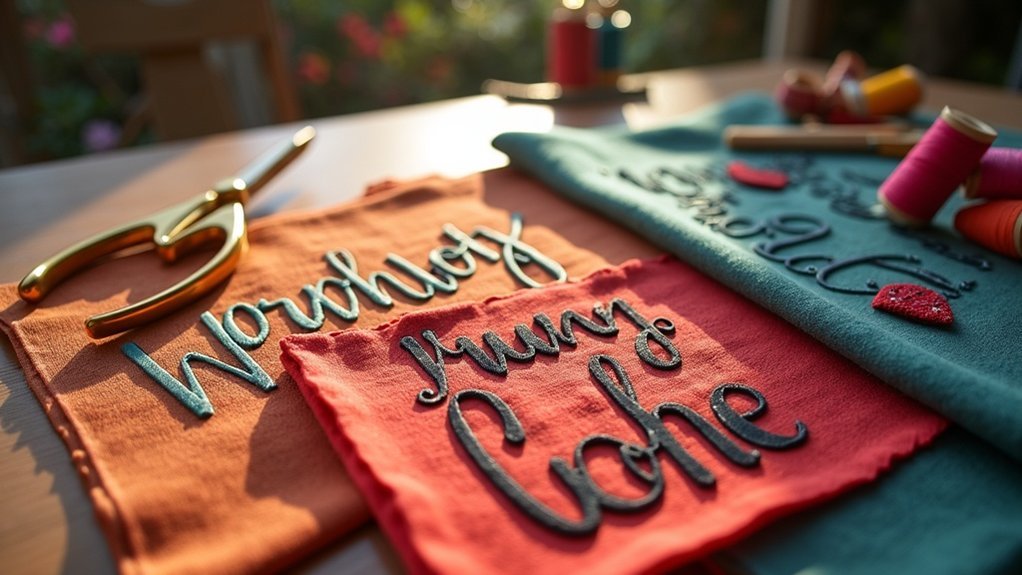
Testing fonts on fabric is essential for ensuring your chosen typeface not only looks good but also remains legible once stitched. Different fabric textures influence your font selection; smooth fabrics suit thinner decorative fonts, while textured materials call for bold designs. Always conduct a sample stitch-out on your actual fabric and stabilizer to spot potential issues. Remember, font size and stitch density can affect appearance—test decorative fonts at their minimum size for clarity. Here’s a quick reference:
| Fabric Type | Recommended Font Style | Minimum Size |
|---|---|---|
| Smooth | Decorative | 0.25 inches |
| Textured | Bold | 0.25 inches |
| Medium Texture | Mixed | 0.25 inches |
| Heavy Duty | Thick | 0.25 inches |
Adjusting Stitch Parameters for Fabric Types
Adjusting stitch parameters for different fabric types is essential to achieving a polished and professional look in your embroidery projects. Consider these key factors:
Adjusting stitch parameters for various fabrics ensures a refined and professional finish in your embroidery endeavors.
- Stitch density: Lighter fabrics need lower density to avoid puckering; heavier ones can handle more.
- Underlay stitches: Use a single layer for smooth fabrics, multiple layers for textured ones.
- Pull compensation: Increase settings for thicker or stretchy fabrics to maintain letter shape.
- Fabric types: Match stitch parameters to the specific fabric for best results.
- Test samples: Always test on actual fabric to fine-tune your adjustments before final production.
Recommended Fonts for Various Styles
When you’re choosing fonts for your embroidery projects, consider how classic elegance or modern minimalism fits your design goals.
Classic fonts like Times New Roman lend a formal touch, perfect for weddings or corporate attire, while modern options like Roboto keep things fresh and casual.
Balancing these styles can elevate your embroidery, ensuring it captures the right vibe for any occasion.
Classic and Elegant Choices
Choosing the right font for embroidery can elevate your design, especially when you opt for classic and elegant choices.
Classic fonts enhance visual appeal and suit various embroidery applications. Here are some recommended serif styles that embody sophistication:
- Times New Roman: Timeless elegance for formal attire
- Baskerville: Clarity and refinement for corporate branding
- Georgia: Stylish readability for casual pieces
- Garamond: A refined aesthetic for linens
- Book Antiqua: Perfect for accessories, adding sophistication
Selecting a classic font guarantees your embroidery serves its purpose beautifully while maintaining legibility and context in every piece.
Modern and Minimalistic Options
Classic fonts set a strong foundation for embroidery, but modern and minimalistic options can bring a fresh, contemporary flair to your designs.
Consider modern fonts like Roboto and Montserrat; their sleek letterforms deliver a clean aesthetic that enhances your embroidery designs. Minimalistic fonts, such as Gilroy and Proxima Nova, offer contrasting line weights and decorative curves, ensuring high readability.
These choices complement both casual and formal attire effectively. Remember, for ideal stitching results, select text heights of at least 0.25” and thicknesses no less than 0.05”.
Elevate your projects with these versatile, stylish fonts!
Customization and Digitization Techniques
As you explore the domain of embroidery font customization, understanding digitization techniques becomes essential for achieving high-quality results.
Understanding digitization techniques is vital for achieving top-notch results in embroidery font customization.
To create effective stitch files, consider these factors:
- Choose legible fonts with a minimum height of 0.25” and thickness of 0.05”+
- Utilize native file formats for extensive customization and easy resizing
- Reduce unnecessary trims between letters for improved efficiency
- Implement proper pathing and underlay techniques to enhance stitch quality
- Test fonts on fabric samples to validate stitching behavior
Resources for Embroidery Font Selection
When it comes to selecting the right fonts for your embroidery projects, having a range of resources at your fingertips can make all the difference. Explore embroidery-specific font styles, ensuring each has a minimum height of 0.25” and thickness of 0.05” for ideal results. Consider popular fonts like Helvetica and Times New Roman, and join the Embroidery Legacy Design Club for access to a vast library. Always test on fabric to see how they stitch.
| Font Type | Recommended Fonts | Usage Tips |
|---|---|---|
| Serif | Times New Roman | Formal designs |
| Sans-Serif | Helvetica | Clean, modern look |
| Script | Great Vibes | Elegant touches |
| Decorative | Curlz MT | Fun projects |
| Vintage | Old English Text MT | Retro vibes |