To choose the right embroidery thimble, consider the material: metal offers durability, while leather provides comfort, and silicone guarantees flexibility. A proper fit is essential—measure your finger circumference and test for comfort to avoid circulation issues. Select your thimble based on the fabric weight; heavier fabrics need sturdier options. Always prioritize comfort to enhance precision in your work. For further insights on thimble options and purchasing tips, keep going for more valuable information.
Key Takeaways
- Determine the type of thimble material that suits your needs: metal, leather, silicone, or hybrid based on durability and comfort preferences.
- Measure your finger circumference accurately and refer to a size chart for the best fit, ensuring comfort without circulation issues.
- Consider the weight of the fabric you will be using; heavier fabrics need sturdier thimbles while lighter fabrics may be better with flexible options.
- Test different thimble styles to find one that allows for precise movement and comfort during prolonged use.
- Seek recommendations and reviews from experienced users in the crafting community to inform your choice and ensure satisfaction with your selection.
Understanding Thimble Materials
When you’re choosing an embroidery thimble, understanding the materials can greatly impact your sewing experience.
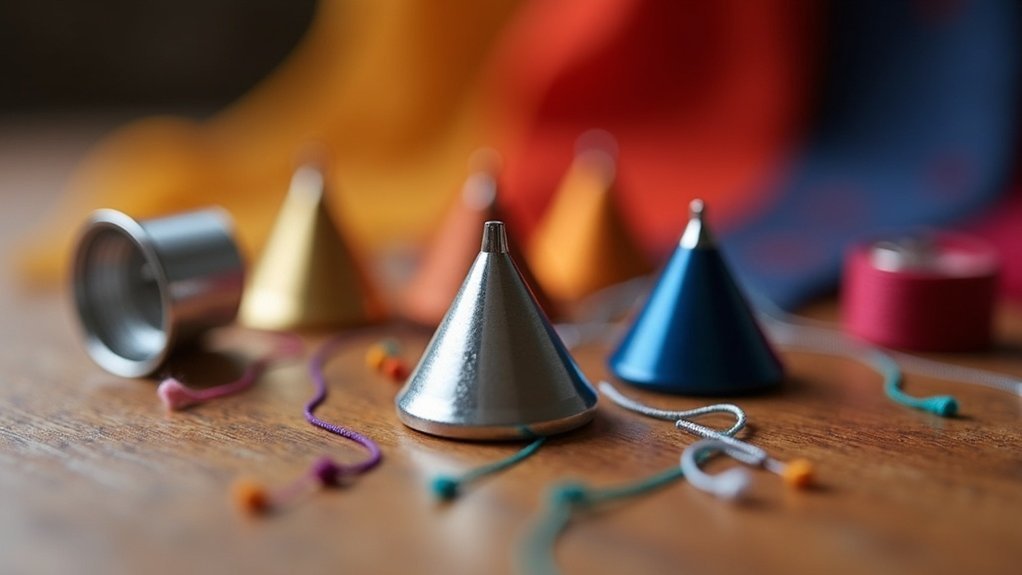
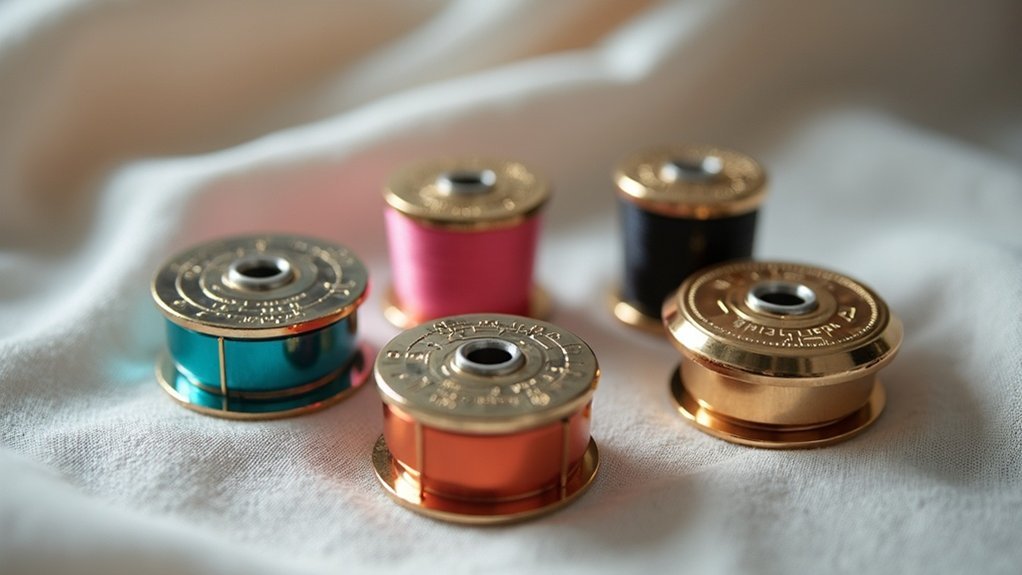
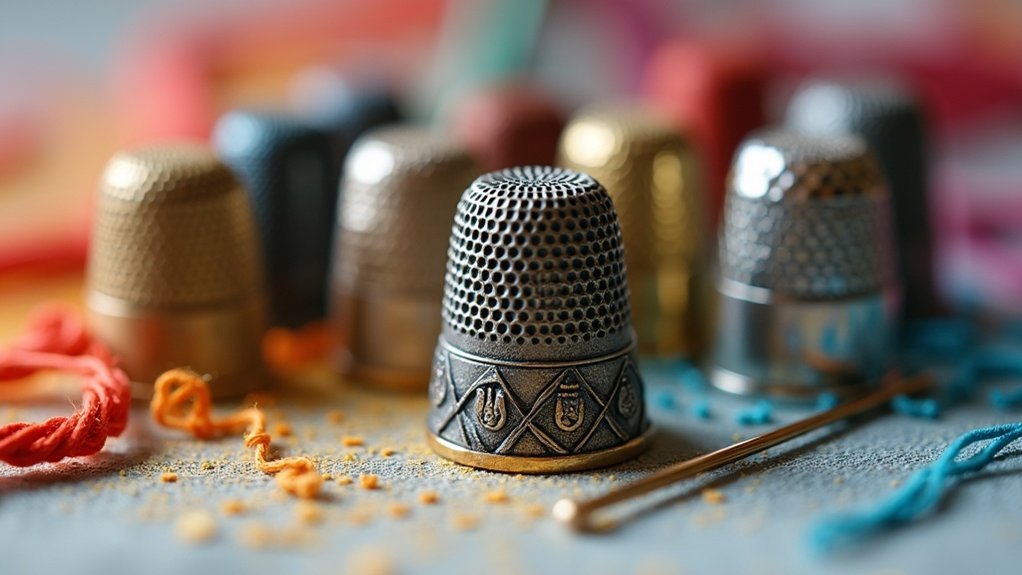
Metal thimbles are durable, often crafted from brass, and come in various designs to suit traditional sewists.
Metal thimbles offer durability and a range of designs, making them ideal for traditional sewists.
Leather thimbles, like those from Clover, offer exceptional comfort and flexibility, molding to your finger for a personalized fit.
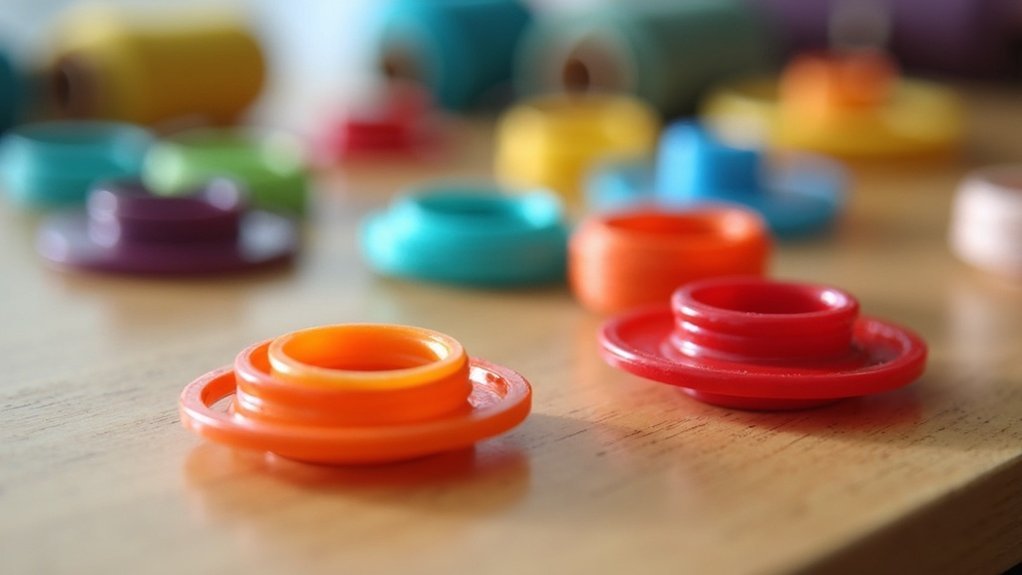
Silicone thimbles, such as those by Singer, are flexible and easy to use, accommodating different finger sizes.
The Importance of Thimble Fit
Selecting the right thimble material is important, but achieving a proper fit is equally essential for an effective embroidery experience. A well-fitted thimble should stay securely on your finger, allowing for comfortable movement without feeling tight.
To find the right size, measure the circumference of your finger with a narrow strip of paper; it should fit snugly without cutting off circulation. Leather thimbles can conform to your finger shape, enhancing comfort for long sessions.
Inconsistent fitting hinders precision, so test various thimble sizes and styles. Having multiple options on hand accommodates changes in finger size due to temperature and activity.
Types of Thimbles for Embroidery
When choosing a thimble for embroidery, consider the material that best suits your needs.
Leather thimbles offer comfort and flexibility, while metal options provide durability but may restrict movement.
Silicone and hybrid thimbles strike a balance, enhancing grip and usability, making them suitable for various stitching techniques.
Leather vs. Metal Thimbles
Two primary options for embroidery thimbles—leather and metal—each offer unique benefits that can greatly impact your stitching experience.
- Leather Thimbles: They mold to your finger over time, providing a comfort fit and enhancing flexibility for detailed embroidery projects.
- Metal Thimbles: Known for their durability, they excel in pushing needles through thick fabrics, ideal for heavy-duty tasks.
- Personal Preference: Consider what feels best for you; leather offers a softer touch, while metal provides a sturdier grip, affecting your overall comfort and performance.
Choose the one that aligns with your needs for successful embroidery.
Silicone and Hybrid Options
Numerous options exist for silicone and hybrid thimbles, each designed to enhance your embroidery experience.
Silicone thimbles boast flexibility and comfort, making them perfect for delicate tasks requiring precision. Many users appreciate their excellent tactile feedback, which improves control during intricate work.
On the other hand, hybrid thimbles combine a metal core with a silicone outer layer, offering both durability and enhanced grip. Their lightweight design helps reduce finger fatigue, allowing for longer stitching sessions without discomfort.
When choosing, always prioritize a proper fit to guarantee effective use and avoid slippage while you create beautiful embroidery pieces.
How to Measure Your Finger for Size
To measure your finger for thimble size, you’ll need a narrow strip of paper to wrap snugly around the base of your fingernail.
Cut the paper at the point where the ends meet and measure the length in millimeters to find your finger circumference.
For accuracy, refer to a graphical size chart to confirm your thimble fit and consider having multiple sizes for varying conditions.
Finger Measurement Techniques
When measuring your finger for thimble size, start by using a narrow strip of paper to wrap around the base of your fingernail, marking where the ends meet.
Cut the paper at the marked point and measure the length in millimeters to determine your finger circumference. A snug fit is vital, so ascertain the thimble doesn’t cut off circulation.
Consider measuring multiple fingers for different thimbles, as sizes can vary. Finally, utilize a graphical size chart to match your measurement with the appropriate thimble size.
- Wrap paper around the finger
- Measure in millimeters
- Refer to size charts
Sizing Tools Needed
Choosing the right tools for measuring your finger size is essential for a proper thimble fit. To determine your thimble size, use a narrow strip of paper to measure circumference around the base of your fingernail. Cut where the ends meet and measure the length in millimeters. For accurate thimble fitting, guarantee it snugly fits the middle finger of your dominant hand.
| Finger Size (mm) | Thimble Size |
|---|---|
| 50-52 | Size 5 |
| 53-55 | Size 7 |
| 56-58 | Size 9 |
Confirming Thimble Fit
How can you guarantee the perfect fit for your thimble? To ascertain you choose the right size, follow these steps for accurate finger measurement:
- Use a narrow strip of paper to wrap around the base of your fingernail, cutting it where the ends meet. Make sure it’s snug but not too tight.
- Measure the length of the paper in millimeters to determine your finger circumference.
- Refer to a size chart, as thimble sizes typically range from Size 5 to Size 13.
Consider having multiple thimbles to accommodate any variations in finger size during sewing tasks.
Tips for Comfortable Thimble Use
Finding the right embroidery thimble can greatly enhance your comfort during long stitching sessions. Prioritize fit; a snug thimble shouldn’t cut off circulation. Test different materials like leather or silicone for added flexibility and comfort compared to traditional metal thimbles. Be mindful of your sewing habits: heavier fabrics may need sturdier thimbles, while lighter ones benefit from more flexible options. Always wear your thimble for at least 15 minutes to verify it suits your needs. Regular cleaning is essential to maintain grip and comfort.
| Material | Benefits |
|---|---|
| Leather | Flexibility, comfort |
| Metal | Durability, precision |
| Silicone | Lightweight, grip |
Exploring Alternative Thimble Solutions
Have you considered alternative thimble solutions when traditional options feel uncomfortable? Exploring creative substitutes can enhance your sewing experience.
Explore alternative thimble solutions to enhance your sewing experience and find comfort beyond traditional options.
Here are three effective options:
- Sticky dot thimbles: These adhere directly to your finger, providing protection without bulk.
- DIY options: Use glove fingers or liquid bandage as effective, comfortable substitutes.
- Open-sided thimbles: Ideal for those with longer fingernails, offering flexibility and comfort.
Additionally, thimble tape molds to your finger and can be reused, while silicone thimbles deliver a snug fit.
With these alternatives, you can find the perfect solution to suit your needs.
Where to Purchase Quality Thimbles
When you’re ready to invest in quality thimbles, exploring various purchasing options can greatly enhance your sewing experience. Consider shopping at Thimbles For You for a wide selection of high-quality thimbles and sewing tools. Local craft stores like Hobby Lobby often carry comfortable silicone thimbles in various sizes. Look for reputable brands like Clover, known for their durable leather thimbles. Additionally, platforms like Etsy offer unique thimbles tailored to your aesthetic preferences. Don’t forget to read community reviews for insights on the best thimble styles.
| Source | Type of Thimble | Notable Features |
|---|---|---|
| Thimbles For You | Various | Wide selection |
| Local Craft Stores | Silicone thimble | Comfort, flexibility |
| Clover | Leather thimble | Molds over time |
| Etsy | Unique/Vintage | Personal selection |
| Community Reviews | Recommendations | Insights on styles/materials |
Personalizing Your Thimble Experience
Although personalizing your thimble experience may seem secondary to the embroidery process, selecting the right thimble can considerably enhance your comfort and efficiency.
To guarantee the best fit for your sewing needs, consider these factors:
- Fabric Type: Choose a thimble suited to your fabric; heavier fabrics might need a sturdier option, while lighter ones allow for a Dritz leather thimble or silicone.
- Finger Measurement: Measure your finger accurately to find a comfort thimble that fits securely without being tight.
- Personal Preferences: Explore thimble materials and styles to determine what enhances your dexterity and precision, including finger pads.