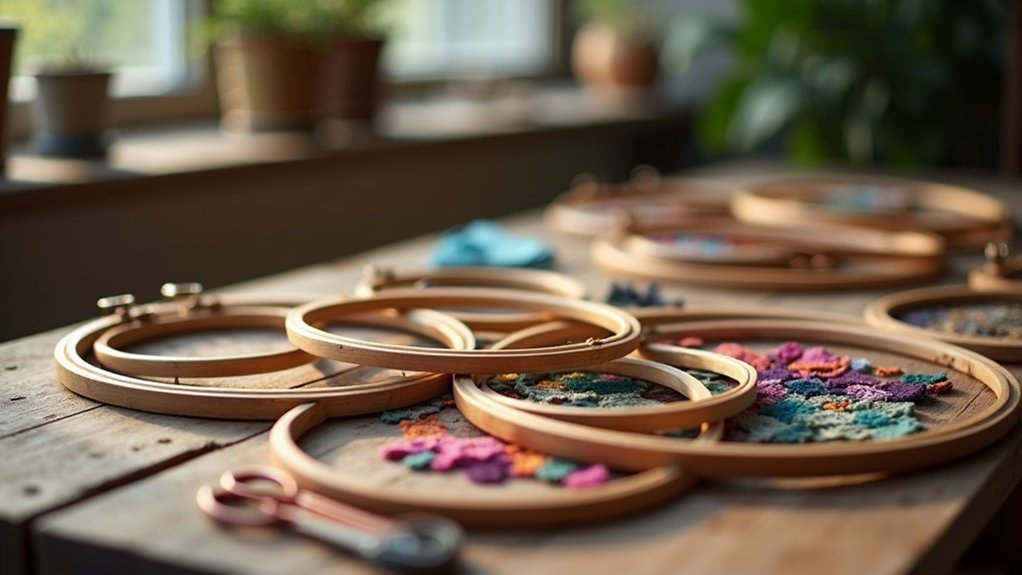
Choosing the right embroidery hoops and frames is essential for your stitching success. Start by evaluating the size you need; select a hoop at least one inch larger than your design. Consider material—wood is durable, while plastic is budget-friendly. For ease of use, opt for spring tension hoops or a flexi hoop for secure hold. Make sure your selected frame enhances your technique. Curious about the best options for your next project? There’s more to explore!
Key Takeaways
- Choose the hoop size one inch larger than your design for optimal tension and ease of use.
- Select a material based on your experience level; wooden hoops are durable, while plastic is budget-friendly.
- Consider the type of tension; screw tension offers customization, while spring tension allows for quick setups.
- Match the frame type to your project size; larger projects benefit from Evertite stretcher bars or Millennium frames.
- Regularly check and adjust tension to avoid puckering, ensuring your fabric remains taut throughout your work.
Understanding Different Types of Embroidery Hoops
When it comes to choosing the right embroidery hoop, you’ll find a variety of options that cater to different needs and preferences.
You’ll encounter types like screw tension hoops for adjustable tension, spring tension hoops for ease, and flexi hoops that hold tightly but can be tricky.
Explore various embroidery hoops, including screw tension for adjustability, spring tension for convenience, and flexi hoops for a secure yet challenging hold.
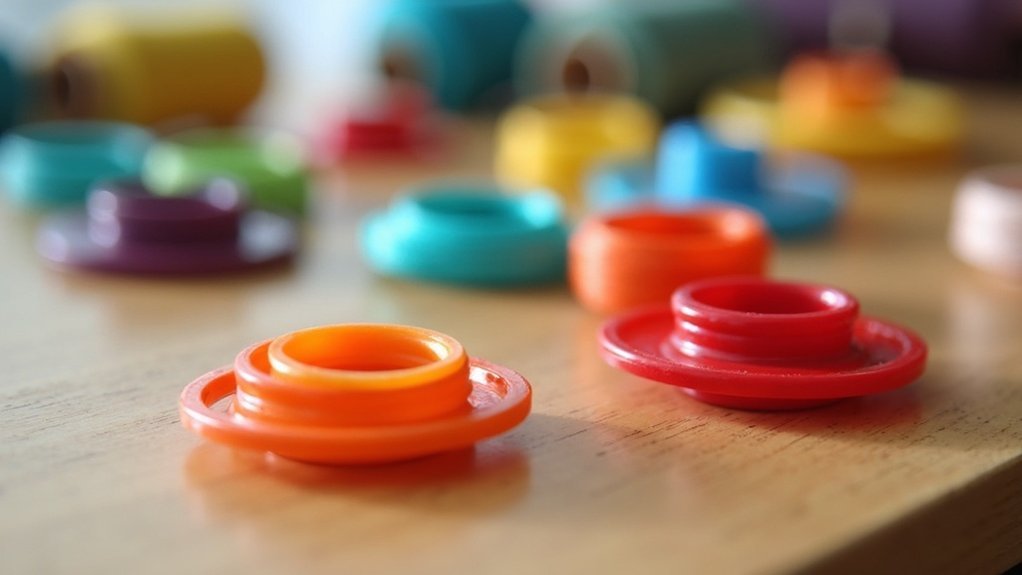
Plastic hoops are affordable and great for beginners, while wooden hoops offer smoother edges and durability for seasoned embroiderers.
Remember that hoop size should be one inch larger than your design for proper tension.
Using a hoop enhances stitch consistency and prevents fabric puckering, especially for techniques like sashiko.
Choose wisely!
Key Features to Consider When Choosing a Frame
As you commence on selecting the perfect frame for your embroidery projects, several key features can greatly influence your decision.
Consider the material; wood frames offer durability and smooth edges, while plastic frames are budget-friendly for beginners.
Evaluate the size, guaranteeing it’s about one inch larger than your design for proper tension.
The tension adjustment method matters too; screw tension hoops allow for customizable tightness, whereas spring tension hoops enable quick setup.
Prioritize ease of use and portability, especially for larger projects.
Finally, confirm compatibility with your stitching techniques, as frames enhance your ability to maintain consistent fabric tension.
Comparing Popular Frame Types for Various Projects
When you’re choosing a frame for your embroidery projects, understanding the different types available is key.
Each frame type, whether it’s a screw tension hoop or an Evertite stretcher bar, offers unique advantages based on size and material, impacting how you stitch.
Consider your design’s dimensions and fabric type to select the best frame that suits your needs and enhances your stitching experience.
Frame Types Overview
Choosing the right frame type for your embroidery project can greatly impact your stitching experience and the final outcome.
For smaller projects, embroidery hoops—available in screw tension, spring tension, and flexi types—hold fabric securely.
If you’re working on larger projects, Evertite stretcher bar frames offer adjustable tension and reuse, making them cost-effective.
Slate frames guarantee consistent tension but require significant setup time, ideal for dedicated pieces.
Alternatively, Millennium frames combine the best of scroll and slate options, providing taut fabric while being lightweight.
Consider your project size, fabric type, and stitching technique to select the perfect frame type.
Size Considerations
Selecting the right size for your embroidery frame is just as important as the type you choose. Proper size considerations guarantee your projects turn out beautifully. Here are some guidelines:
- Small frames (3-5 inches): Perfect for beginners and intricate designs.
- Medium frames (6-8 inches): Versatile for a range of sizes and projects.
- Large frames (9 inches and above): Ideal for larger pieces.
- Evertite stretcher bars (8-14 inches): Adjustable for better tension maintenance.
- Fabric size: Confirm it’s at least 3 inches larger than your frame for secure clamping.
Choosing wisely will help you maintain tension and enjoy your stitching experience!
Material Impact on Functionality
Understanding how the material of your embroidery frame impacts functionality can make a significant difference in your stitching experience.
Wooden hoops, especially those with brass hardware, offer excellent durability and a smooth edge, perfect for delicate fabrics. In contrast, plastic hoops are budget-friendly for beginners but may lack the same grip.
Spring tension hoops provide consistent tension, suitable for various techniques, though they mightn’t hold as tightly for intricate designs. Additionally, Flexi hoops are great for framing finished pieces but can be tricky during stitching.
Finally, Q-snaps are lightweight, maintaining tension effectively, making them a favorite among cross stitchers.
Assessing Your Project Requirements for the Ideal Frame
When choosing the perfect frame for your project, start by considering the size of your design; a hoop should be at least one inch larger than your artwork for the best tension.
Next, think about the technique and fabric type you’re using, as heavier materials might call for sturdier frames while lighter fabrics work well with plastic or wooden hoops.
Project Size Considerations
Finding the right embroidery hoop or frame is essential for achieving stunning results in your projects.
Consider the following project size factors:
- Use 4 to 5-inch hoops for smaller projects like quick monograms.
- Larger designs need frames of 9 inches or more for effective handling.
- Ascertain the hoop is about one inch larger than your design to maintain tension.
- Choose a frame that allows at least 3 inches of extra fabric to secure it properly.
- For long-term projects, consider stretcher bars or slate frames to ascertain consistent tension and prevent distortion.
These considerations will help you achieve the best results!
Technique and Fabric Type
Choosing the right frame or hoop for your embroidery project hinges on two key factors: technique and fabric type. If you’re working on smaller projects, using a hoop can provide ease of movement. For heavier fabrics, sturdier frames like Evertite stretcher bars are vital to maintain fabric taut. Consider how often you’ll need to reposition; hoops allow for quick adjustments. Make certain your frame accommodates the desired tension without sagging, essential for neat stitches. Here’s a quick guide to help you choose:
| Fabric Type | Recommended Frame Type |
|---|---|
| Lightweight | Plastic/Wooden Hoops |
| Medium Weight | Standard Embroidery Hoops |
| Heavier Fabrics | Evertite Stretcher Bars |
Tips for Effectively Using Embroidery Hoops and Frames
An effective embroidery project hinges on how well you use your hoops and frames.
To achieve stunning results, keep these tips in mind:
- Choose a hoop at least one inch larger than your design for easy manipulation.
- Pull the fabric tight but not overstretched, ensuring even tension like a drum.
- Regularly check and adjust tension to avoid puckering or distortion.
- When using frames, secure fabric evenly from the center outwards.
- Use twill tape around the inner ring for added friction and protection, especially on delicate materials.
These practices will elevate your embroidery experience and enhance your designs beautifully!
Product Recommendations for Beginners and Professionals
Whether you’re just starting out or you’ve honed your skills over the years, selecting the right embroidery hoops and frames can greatly impact your projects.
For beginners, using plastic embroidery hoops like the Susan Bates Super Grip Lip offers affordability and ease, perfect for smaller projects. If you prefer durability, consider wooden hoops from Hardwicke Manor.
For advanced embroidery, Evertite frames provide adjustable tension and accommodate various project sizes, while slate frames excel in stability for larger, intricate designs.
Always choose a hoop at least one inch larger than your design to maintain proper tension and avoid distortion during stitching.