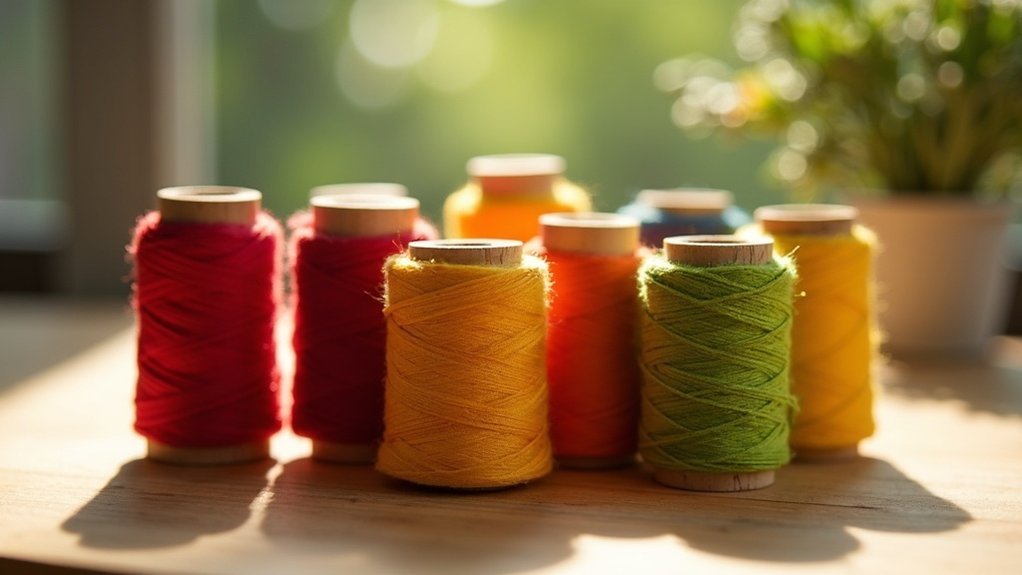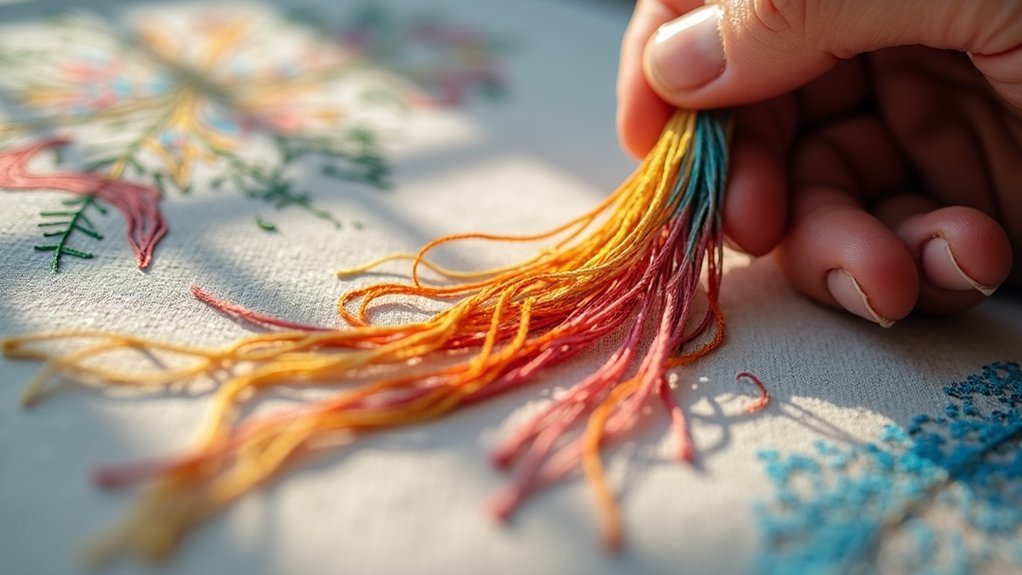
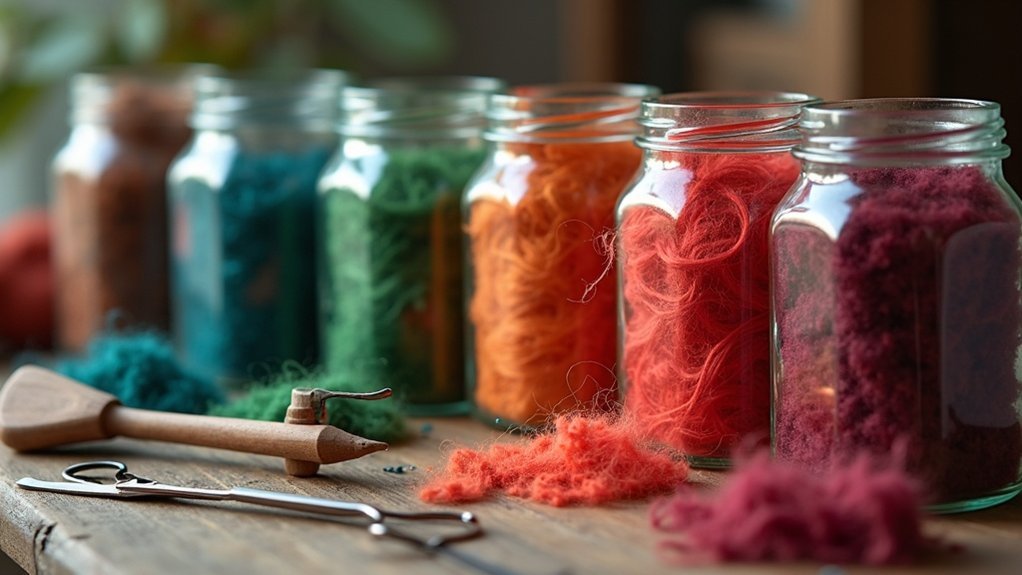
To care for your wool threads in embroidery, gently wash them in warm soapy water, avoiding overhandling. Rinse thoroughly in cool water and air dry them flat on a towel. Store your threads in a cool, dry place using acid-free materials while avoiding plastic. For conditioning, beeswax enhances durability, while alternatives like Thread Magic leave no residue. Keep an eye out for pests and moisture to maintain thread integrity. Explore more techniques to keep your threads in top shape.
Key Takeaways
- Wash wool threads gently in warm water with pure or wool soap, rinsing thoroughly to remove all soap residues.
- Lay washed threads flat on a towel to air dry, avoiding direct heat or hot irons.
- Store threads in a cool, dry place using acid-free tissue paper or cotton bags to prevent moisture buildup.
- Regularly inspect stored threads for pests and use cedar blocks or lavender sachets for natural deterrence.
- Consider using beeswax or Thread Magic for conditioning to enhance durability and reduce tangling during embroidery.
Proper Washing Techniques for Wool Threads
When you care for wool threads in embroidery, using the right washing techniques is essential to maintain their quality and durability.
Start by washing your embroidery threads in warm tap water with pure or wool soap. Avoid overhandling; instead, gently soak and rinse the threads in a flat tray.
Wash embroidery threads in warm water using pure or wool soap; gently soak and rinse without overhandling.
Rinse thoroughly in cool water until all soap is removed, ensuring no residue affects the natural fibres.
After washing, lay your wool threads flat on a white fluffy towel to dry, avoiding direct heat. Always air dry and never use a hot iron, as this can damage the threads’ appearance.
Drying and Storage Recommendations
To guarantee the longevity of your wool threads in embroidery, it’s important to follow proper drying and storage practices.
Here are three key recommendations:
- Store your wool threads in a cool, dry place to prevent moisture buildup that can lead to mold and deterioration.
- Wrap them in acid-free tissue paper or cotton bags, avoiding synthetic materials that trap moisture.
- Regularly inspect your stored threads for pests; using cedar blocks or lavender sachets can help deter them without causing stains.
Thread Conditioning Options
While many stitchers rely on various thread conditioning options to enhance their embroidery experience, it’s vital to understand how these products interact with wool threads. Beeswax is a popular choice, strengthening threads and reducing tangling, but it may also make them sticky. Alternatives like Thread Magic and dampening with water can straighten threads without coatings. Ultimately, your choice of thread conditioner should reflect personal preference and the specific embroidery threads you’re using.
| Conditioners | Pros | Cons |
|---|---|---|
| Beeswax | Strengthens, reduces tangling | Can be sticky |
| Thread Magic | No residue, easy to use | May not suit all threads |
| Water | Straightens without coating | Temporary solution |
Benefits of Using Beeswax
Using beeswax offers several benefits for your wool threads in embroidery, particularly by enhancing their durability.
When you coat your threads with beeswax, you can expect:
Coating your threads with beeswax significantly enhances their durability and performance during embroidery.
- Reduced Friction: Beeswax minimizes friction, preventing fraying during stitching.
- Abrasion Protection: It guards against wear, making it ideal for heavy projects like goldwork.
- Historical Strength: Pure beeswax has maintained thread integrity for centuries, ensuring your work remains intact.
Just remember, using pure beeswax is essential; impurities can affect both performance and appearance.
While beneficial for specific embroidery types, consider its impact on decorative threads before applying it broadly.
Preventative Measures Against Damage
When you store wool threads, it’s crucial to choose the right environment to prevent damage and prolong their lifespan. Keep them in a cool, dry place, away from direct sunlight to avoid fading.
Wrap your threads in acid-free tissue paper or use cotton bags, steering clear of plastic to prevent moisture buildup. Avoid harsh chemicals like bleach, which can weaken fibers.
Regularly inspect for moth damage, using preventive measures like lavender sachets or cedar blocks to deter pests.
Finally, limit exposure to moisture and humidity, as excess dampness can lead to mold and render your wool threads unusable.