
To master blackwork embroidery shading, focus on creating depth with gradual color shifts and varying thread thicknesses. Experiment with different patterns, ensuring each color stands out while blending harmoniously. Use finer threads for lighter areas and thicker ones for darker shades. Opt for lighter fabrics to enhance shading visibility and always mark your center for consistent design placement. Keep exploring to reveal more tips and techniques that will elevate your embroidery skills even further.
Key Takeaways
- Master depth and dimension by experimenting with thread thickness and incorporating multiple colors or shades for visual interest.
- Choose distinct patterns for each color to ensure clarity and harmony in your blackwork designs.
- Focus on gradual transitions in shading by blending different shades and varying thread thicknesses for added depth.
- Utilize five colors with a single pattern to achieve seamless color shifts and enhance viewer engagement.
- Select appropriate fabrics, like 14 count Aida, and use the correct needle size to optimize shading techniques.
Understanding Blackwork Embroidery Shading Techniques
When you immerse yourself in the world of blackwork embroidery shading techniques, you’ll discover that mastering depth and dimension can elevate your designs dramatically.
By experimenting with various thread thicknesses, you can create stunning contrasts within your blackwork patterns. Consider using multiple colors or different shades of one color to enhance visual interest. Incorporating yellow shading, for instance, adds an unexpected pop that catches the eye.
Always aim for clarity in your intricate designs, ensuring each element harmonizes beautifully. Regularly sampling these techniques allows you to refine your skills and bring joy to the pieces you create for others.
Selecting Patterns for Effective Shading
Selecting the right patterns for effective shading in blackwork embroidery is vital, as it can transform your piece from ordinary to extraordinary.
Choose distinct patterns for each color or shade to create visual interest. Don’t hesitate to experiment with varying thread thicknesses within a single pattern, enhancing depth and texture.
Select unique patterns for each shade to enhance visual intrigue and explore different thread thicknesses for added depth.
Combining multiple shading methods, like using five different colors with one pattern, adds dynamism. Pay attention to the balance of diagonals against horizontal and vertical lines, as they significantly impact composition.
Make sure your patterns remain distinct yet harmonious, maintaining clarity and enriching the visual storytelling of your embroidery.
Gradual Transitions: Creating Depth and Dimension
To create stunning depth and dimension in your blackwork, focus on mastering gradual shifts in shading.
By blending different shades and varying thread thicknesses, you’ll enhance the visual richness of your piece.
Keep experimenting with patterns and textures, and watch your design come alive with intriguing detail!
Techniques for Gradual Shading
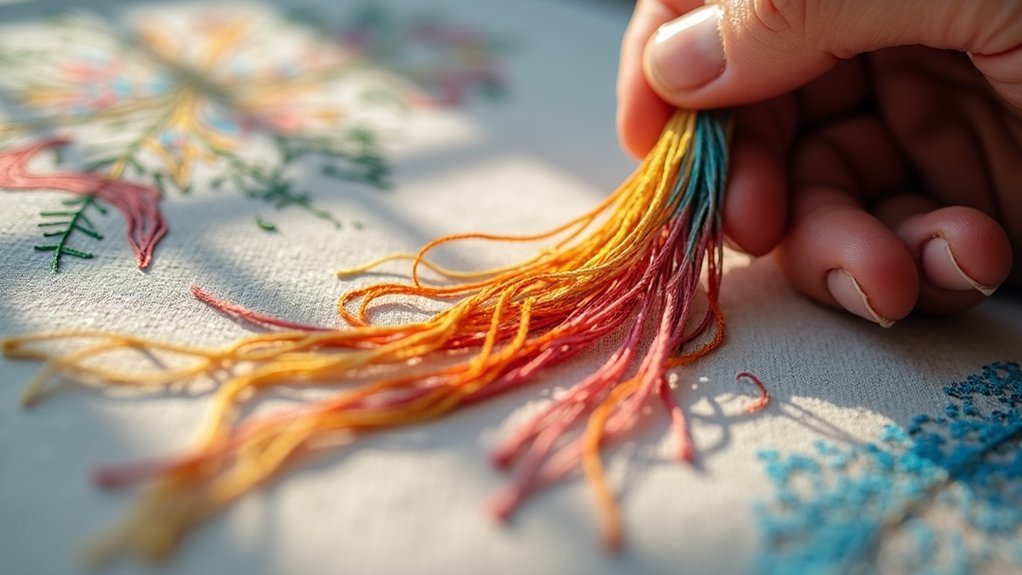
As you explore the art of blackwork embroidery shading, mastering techniques for gradual shifts is essential for creating depth and dimension in your designs. Use varying thread thicknesses—finer threads for lighter sections and thicker for darker areas. Incorporate multiple shades of the same color, stitching patterns that flow smoothly. Experiment with additional stitches and layered techniques to build rich textures. Regularly assess your work from a distance to guarantee that the shading is effective.
| Technique | Description |
|---|---|
| Varying Thread Thickness | Use fine threads for light areas, thick for dark. |
| Multiple Shades | Stitch with shades to enhance visual flow. |
| Additional Stitches | Layer stitches for deeper tones. |
| Distance Assessment | Check work from afar for effective shading. |
Importance of Color Transition
While you might think blackwork embroidery is solely about intricate patterns, the importance of color shifts can’t be overstated, as they’re essential for creating depth and dimension in your designs.
By using five colors with a single pattern, you can achieve seamless color changes that enhance visual interest. Furthermore, employing varying thread thickness and density during shading adds distinct yet harmonious elements.
Consider incorporating a striking yellow for contrast, enriching the overall aesthetic. Gradual changes in shading not only elevate your work but also invite viewers to engage more deeply with your artistic expression, making each piece truly enchanting.
Tips for Working With Different Fabrics
Choosing the right fabric is essential for achieving beautiful blackwork embroidery shading, especially when you want your designs to pop. Start with 14 count Aida for a balanced feel; it makes shading techniques easier.
Use a size 24 tapestry needle with even weave fabrics to glide smoothly without distorting. When shading, experiment with two strands of black thread for outlines and one strand for delicate geometric patterns.
Lighter fabrics enhance shading visibility, while darker ones need pronounced contrasts. Don’t forget to press your fabric and mark the center before starting to keep your shading consistent and aligned throughout the design.
Enhancing Visual Appeal With Contrast and Texture
To truly elevate your blackwork embroidery, incorporating strong contrasts in thread thickness and stitching density can make all the difference.
Elevate your blackwork embroidery by embracing contrasts in thread thickness and stitching density for stunning results.
Here are a few techniques to enhance visual appeal:
- Use multiple shades of a single color to create rich shifts.
- Experiment with various stitch patterns and orientations to depict diverse textures.
- Incorporate broken stitch sections for dynamic variety.
Documenting Your Progress and Learning Through Practice
As you dive deeper into the world of blackwork embroidery, documenting your progress becomes an invaluable tool for growth and mastery.
Sketching or photographing your projects allows you to reflect on your shading techniques and identify areas for improvement. Create a visual record of different patterns and thread thicknesses to understand how they impact shading effects.
Keep a journal to track your experiences and regularly review past projects, helping you see your skill evolution. Experiment with various shading approaches, and record your findings to encourage creative exploration.
This practice not only enhances your technique but also enriches your artistic journey.