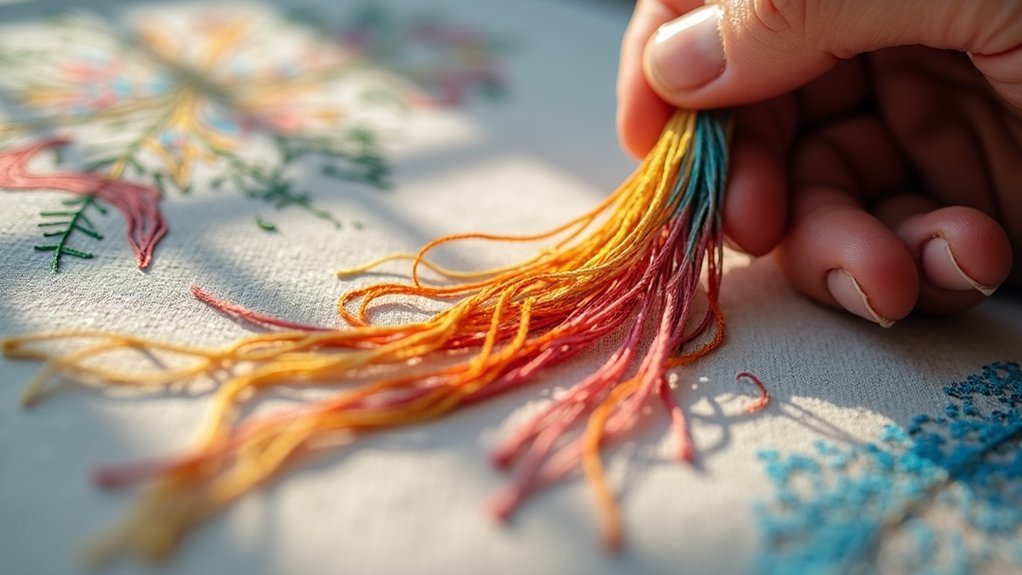
Yes, you can use embroidery thread for sewing, but it’s crucial to understand its unique characteristics. Unlike regular thread, embroidery thread is thinner and designed mainly for decorative purposes, which makes it less durable for structural seams. You’ll need to adjust your machine’s tension and use a size 75/11 embroidery needle for best results. Plus, testing on scrap fabric helps prevent issues. There are more important tips to contemplate for successful projects ahead.
Key Takeaways
- Yes, embroidery thread can be used for sewing, but it’s primarily designed for decorative stitching rather than structural seams.
- Use a size 75/11 embroidery needle for smoother stitching when working with embroidery thread.
- Adjust your sewing machine tension to accommodate the thinner and shinier nature of embroidery thread.
- Sew at slower speeds to maintain control and prevent tangling or fraying of the thread.
- Always test on a scrap piece of fabric before starting to ensure compatibility and desired results.
Understanding Machine Embroidery Thread
When you plunge into machine embroidery thread, you’ll find that it’s specifically crafted for high-speed embroidery machines, typically from rayon or polyester.
This 40-weight thread is thinner than regular sewing thread, making it ideal for decorative stitching rather than structural seams.
When using embroidery thread, it’s essential to adjust the tension on your machine to prevent issues like puckering or thread breakage.
While polyester thread offers vibrant colors and finishes, remember it’s not suitable for high-stress seams due to its lower strength.
Embrace decorative purposes with this thread, enhancing your projects with visual appeal and artistry.
Key Differences Between Embroidery Thread and Regular Sewing Thread
Although both embroidery thread and regular sewing thread serve essential roles in textile projects, they exhibit distinct characteristics that cater to different applications.
Embroidery thread, typically made from rayon or polyester, is designed for high-speed embroidery machines and features a glossy finish ideal for decorative stitching.
In contrast, regular sewing thread, often composed of cotton or polyester, is focused on strength and durability with a matte appearance.
While embroidery thread is perfect for embellishments, it’s not intended for structural seams due to its lower strength and higher risk of fraying, making the choice between them vital for your projects.
Practical Considerations for Using Embroidery Thread in Sewing
Using embroidery thread in sewing requires careful attention to several practical considerations to secure successful results.
Here are key points to keep in mind:
- Use a size 75/11 embroidery needle for thicker thread.
- Adjust your sewing machine’s tension settings for ideal results.
- Sew at slower speeds to avoid tangling and guarantee precision.
- Always test on scrap fabric before starting your project.
- Pair with a bobbin thread that’s one weight lighter to reduce bulk.
Advantages and Disadvantages of Embroidery Thread for Sewing Projects
While embroidery thread can elevate the aesthetic quality of your sewing projects, it comes with both advantages and disadvantages that you should consider.
The extensive color range and high sheen are excellent for decorative elements on lightweight fabrics. However, embroidery thread is thinner and prone to fraying, which can lead to seam failure in high-stress areas during garment construction.
Additionally, while polyester offers some durability, rayon isn’t recommended. When selecting the appropriate thread, be mindful of these limitations.
Using the thread requires careful handling and adjustments to machine tension for effective results, ensuring you balance beauty with functionality.
Tips for Successful Use of Embroidery Thread in Regular Sewing
When incorporating embroidery thread into your regular sewing projects, it’s crucial to understand how to adapt your techniques for the best results.
Here are some tips to help:
- Use a size 75/11 embroidery needle for smoother stitching.
- Adjust tension settings, as embroidery thread often needs different tension than regular thread.
- Sew at a slower speed to maintain control and prevent tangling.
- Test on a scrap piece of fabric before starting to verify compatibility.
- Choose a lighter bobbin thread (like 60-weight) to reduce bulk in sewing seams.
These strategies will enhance your sewing experience with embroidery thread.
Engaging With the Sewing Community and Sharing Experiences
Joining local sewing groups can enhance your skills and provide a platform for exchanging tips on using embroidery thread.
Sharing your creative projects online not only showcases your work but also invites feedback and ideas from others in the community.
Engaging with fellow enthusiasts fosters collaboration and inspires innovation in your sewing practice.
Join Local Sewing Groups
Engaging with local sewing groups can greatly enhance your sewing journey, as these communities offer a platform for sharing experiences and tips among enthusiasts.
By joining, you can:
- Discover various thread types, including embroidery thread.
- Participate in workshops focused on using machine embroidery techniques.
- Discuss successes and challenges with fellow sewers.
- Gain insights on adjusting machine settings for different projects.
- Get inspired during show-and-tell sessions, showcasing beautiful creations.
These connections not only foster learning but also encourage you to experiment creatively, making your sewing experience more enriching and fulfilling.
Share Creative Projects Online
How can sharing your creative projects online enhance your sewing journey? Engaging with the sewing community allows you to share your experiences using embroidery thread, fostering collaboration and inspiration.
By posting photos and descriptions of your projects, you not only showcase your work but also provide valuable insights that can help others. Many platforms feature dedicated hashtags and groups, making it easy to connect with like-minded individuals.
Participating in themed challenges can push your creative boundaries and encourage exploration of new techniques. Ultimately, documenting and sharing your journey contributes to a collective knowledge base, enriching the entire sewing community.