
For perfectly finished embroidery projects, check out these top seven pressing cloths: OESD Perfect Embroidery Press Cloth, Bear Thread Applique Pressing Sheet, June Tailor Eze-View, Dritz Clothing Care 82442, June Tailor Pressing Cloth, Tegeme Pressing Cloth for Ironing Silk Organza, and Dritz Clothing Care 82443 Non-Stick Pressing Cloth. Each cloth offers unique benefits, from heat resistance to easy maintenance, helping you achieve a professional look. You’ll want to explore their features further for the best choices.
OESD Perfect Embroidery Press Cloth
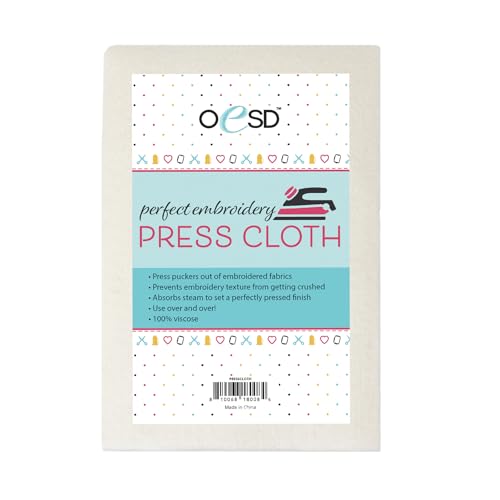
If you’re an avid embroiderer looking to enhance the quality of your projects, the OESD Perfect Embroidery Press Cloth is a must-have tool. Measuring 20 x 20 inches and weighing 3.2 ounces, this premium cloth presses out puckers and prevents your embroidery texture from being crushed. It absorbs steam, ensuring a flawless finish every time. Easy to use, just cover your right-side-up project with the cloth while pressing. It’s reusable and perfect for bulky seams in quilt blocks. With a stellar rating of 4.8 out of 5 stars, it’s a valuable addition to your sewing essentials.
Best For: Avid embroiderers looking to achieve a flawless finish on their projects with minimal effort.
Pros:
- Presses out puckers from embroidered fabrics effectively, enhancing the overall appearance.
- Absorbs steam for a perfect, long-lasting finish without crushing embroidery texture.
- Reusable design makes it a cost-effective addition to any sewing toolkit.
Cons:
- May be too large for smaller projects, requiring careful handling to avoid excess fabric.
- Limited to ironing applications, not suitable for other sewing techniques.
- Some users may find it less effective with very delicate fabrics that require special care.
Bear Thread Applique Pressing Sheet 13in x 17in, White
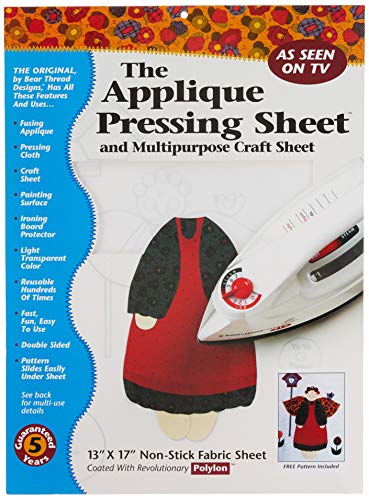
The Bear Thread Applique Pressing Sheet, measuring 13in x 17in, is the perfect choice for anyone who frequently works with fusible appliqué designs. This double-sided sheet is made from ultra high-temperature fabric and features a revolutionary non-stick surface, ensuring even heat distribution while preventing color bleeding. Weighing just 5 ounces, it’s easy to handle and clean. With included instructions and a free applique pattern, you’ll find it versatile for various projects, from quilt piecing to T-shirt quilts. Highly rated by users, it protects your iron and board from sticky residue, making your crafting experience smoother and more efficient.
Best For: Anyone who frequently works with fusible appliqué designs and wants a reliable, high-quality pressing surface.
Pros:
- Durable double-sided ultra high-temperature fabric ensures longevity and effectiveness.
- Non-stick surface prevents sticky residue, protecting your iron and ironing board.
- Versatile for various projects, including quilt piecing, T-shirt quilts, and more.
Cons:
- Size may be limiting for larger projects or designs.
- Requires careful cleaning to maintain its non-stick properties.
- Limited warranty information available, which may concern some users.
June Tailor Eze-View 24-by-14-Inch 100% Cotton Press Cloth

For anyone who works with delicate fabrics, the June Tailor Eze-View 24-by-14-Inch Press Cloth is an essential tool. Made from 100% cotton, it prevents shine on your fabrics, making it perfect for steam or dry ironing. You can even dampen it for added moisture during pressing. Its semi-sheer design allows you to see your work while protecting it, ensuring flawless results. Weighing just 0.3 ounces, it’s lightweight and easy to manage. While some users mention the edges could be finished better, its effectiveness in preventing damage makes it a favorite among crafters and quilters alike.
Best For: This product is best for individuals who frequently work with delicate fabrics and require a reliable pressing cloth to prevent shine and damage.
Pros:
- Prevents shine on fabrics, ensuring a flawless finish.
- Lightweight and easy to handle, making it user-friendly for various sewing projects.
- Semi-sheer design allows visibility while pressing, enhancing precision.
Cons:
- Edges are not hemmed, which may lead to fraying over time.
- Some users feel the product is overpriced for its size and features.
- Alternative DIY options could provide better value for those on a budget.
Dritz Clothing Care 82442 Pressing Cloth, 11-Inch x 28- Inch , White
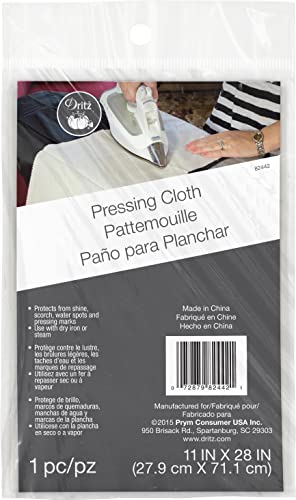
Crafted from 100% cotton, the Dritz Clothing Care 82442 Pressing Cloth is an ideal choice for sewists who prioritize fabric protection while ironing. Measuring 11 by 28 inches, it effectively guards against shine, scorch, water spots, and pressing marks. You can use it with both dry and steam irons, making it versatile for various projects. Many users appreciate its durability and performance, particularly when handling sticky substances. While some desire a larger size for easier handling, this pressing cloth remains a top choice, earning a solid 4.5-star rating from over 600 reviews. Spot cleaning is recommended to maintain its quality.
Best For: Sewists and crafters who need reliable fabric protection while ironing delicate materials.
Pros:
- Protects garments from shine, scorch, and water spots.
- Versatile use with both dry and steam irons.
- Durable and effective for handling sticky substances in sewing projects.
Cons:
- Some users desire a larger size for easier handling.
- A few concerns about washing and potential unraveling due to pinked edges.
- Some buyers regret not fully understanding the product’s specifications before purchase.
June Tailor Pressing Cloth, 16×16, White

If you’re a quilter or crafter working on t-shirt projects, the June Tailor Pressing Cloth is an essential tool for you. Measuring 16×16 inches and made of 100% cotton, this cloth protects your iron and t-shirt graphics from heat damage. Its translucent fabric lets you see the design while pressing, ensuring you avoid melting or distorting any motifs. Weighing just 0.6 ounces, it’s lightweight yet effective for various fabric types, including appliqué. With a solid 4.5-star rating from users, it’s a reliable choice for achieving smooth, professional-looking results in your sewing projects.
Best For: Quilters and crafters who need to protect t-shirt graphics while pressing fabric.
Pros:
- Provides excellent protection for iron surfaces and graphics during pressing.
- Translucent material allows for visibility of designs, preventing accidental damage.
- Lightweight and easy to use, suitable for a variety of fabric types.
Cons:
- Some users feel it is overpriced for its size.
- Best suited for small projects, limiting its use for larger tasks.
- May not be as durable for extensive, heavy-duty use compared to larger pressing cloths.
Tegeme Pressing Cloth for Ironing Silk Organza (2 Pcs)
Product not found or API error.
The Tegeme Pressing Cloths are an essential addition for anyone who works with delicate fabrics like silk organza. Measuring 20 x 30 inches, these two pieces provide a thin, silky barrier that protects your garments from scorch and shine marks while allowing heat to penetrate effectively. Their sheer design lets you see what you’re ironing, enhancing your confidence during the process. While some users raise concerns about durability, many appreciate their effectiveness, especially on sheer fabrics. Whether you’re a sewing enthusiast or looking for a thoughtful gift, these pressing cloths can elevate your ironing experience markedly.
Best For: The Tegeme Pressing Cloths are best for sewing enthusiasts and anyone who regularly irons delicate fabrics like silk organza.
Pros:
- Protects delicate fabrics from scorch and shine marks during ironing.
- Sheer design allows visibility while ironing, enhancing confidence.
- Ideal for steam ironing, making it easier to handle hard-to-press areas.
Cons:
- Some users report concerns about the fabric’s durability and stretchiness.
- Mixed reviews regarding the effectiveness of the material claims.
- A few customers find the cloths to be flimsy and less reliable than expected.
Dritz Clothing Care 82443 Non-Stick Pressing Cloth, 18 x 18-Inch , White

For anyone who values precision in their sewing and crafting projects, the Dritz Clothing Care 82443 Non-Stick Pressing Cloth is an essential tool. Measuring 18 x 18 inches, this sturdy cloth made from 100% PTFE allows you to see your fabric while protecting it from rust and water deposits. It’s perfect for delicate fabrics, paints, and glues. Although some users find it a bit small for larger projects, its effectiveness in preventing scorching makes it a favorite among crafters. Just remember to spot clean it—you won’t want to toss it in the washing machine!
Best For: Anyone involved in sewing, crafting, or ironing delicate fabrics who seeks protection and visibility while pressing.
Pros:
- Effective in preventing scorching and protecting fabrics from damage during ironing.
- Versatile usage for various crafts, including projects with paints and glues.
- Lightweight and easy to handle, making it convenient for travel and on-the-go crafting.
Cons:
- Size may be too small for larger projects, limiting its versatility.
- Not suitable for machine washing, requiring care and maintenance.
- Some users prefer cotton alternatives for texture and handling differences.
Factors to Consider When Choosing an Embroidery Pressing Cloth
When you’re choosing an embroidery pressing cloth, consider factors like size, material, and heat resistance. These elements can greatly impact your project’s success and ease of use. Always think about how well the cloth will work with your specific fabric and design needs.
Size and Dimensions
Choosing the right size for your embroidery pressing cloth is essential for achieving the best results in your projects. You’ll find options ranging from smaller sheets around 13 x 17 inches to larger cloths measuring up to 24 x 30 inches. A versatile 20 x 20 inch cloth offers ample space for various designs and bulky seams, especially in quilting. If you’re working on larger garments or quilt sections, consider longer pressing cloths like 11 x 28 inches, which allow continuous pressing without repositioning. Keep in mind the type of projects you’re completing; larger cloths are ideal for quilts, while smaller sizes work well for individual garments or appliqué projects. Select the size that best fits your needs for superior results.
Material Composition
Material composition plays an essential role in the effectiveness of your embroidery pressing cloth. You’ll find options like 100% cotton, which offers breathability and excellent steam absorption, making it a popular choice. Cotton pressing cloths help prevent shine on fabrics and protect delicate surfaces without leaving any residue. Alternatively, synthetic materials like PTFE provide non-stick properties, ensuring smooth pressing. High-temperature fabrics are another great option, promoting even heat distribution and preventing color bleeding. Keep in mind the thickness and weight of the cloth, as thicker materials offer better protection against scorching and help eliminate puckers. Ultimately, choose a material that aligns with your project’s specific needs, considering the fabric type and desired finish for the best results.
Heat Resistance Level
Heat resistance is an important factor to take into account for your embroidery pressing cloth, as it directly impacts your project’s success. You’ll want a material that can withstand high temperatures without melting or damaging your fabrics. Look for pressing cloths made from 100% cotton or non-stick PTFE, as these options offer excellent heat resistance and durability for repeated use. A quality pressing cloth should also absorb steam effectively, preventing scorching and preserving the integrity of your embroidered designs. Make sure it can handle heat from both steam and dry irons, which is vital for achieving a smooth finish on various fabrics. Always check the manufacturer’s specifications for heat resistance ratings to find the best temperature range for safe usage.
Usability and Maintenance
When selecting an embroidery pressing cloth, it’s essential to take into account usability and maintenance to guarantee a smooth sewing experience. Look for cloths that are user-friendly and easy to care for, such as those that can be machine washed or spot cleaned. These features will help prolong their lifespan. Opt for reusable options, as they withstand repeated use without losing performance. Consider the weight and thickness; thicker cloths offer better protection and durability during pressing tasks. Additionally, check for moisture absorption and heat resistance, which enhance usability across various projects. Finally, confirm the dimensions meet your project needs—larger sizes can accommodate bulky seams and larger designs more effectively.
Compatibility With Projects
Selecting the right embroidery pressing cloth can make a significant difference in the outcome of your projects. First, consider the type of project you’re working on; some pressing cloths cater specifically to bulky seams in quilt blocks, while others are better for delicate fabrics. Look for cloths that effectively absorb steam, as this is vital for a flawless finish. Confirm the size matches your project dimensions; larger cloths offer better coverage for extensive designs. Also, check if the cloth is reusable and durable, especially if you plan to tackle multiple projects. Finally, evaluate the material; some fabrics protect against shine and scorching, preserving the quality of your embroidered designs.
Non-Stick Properties
Choosing the right embroidery pressing cloth can greatly enhance your pressing experience, especially when it comes to non-stick properties. Non-stick cloths prevent fabrics from adhering, allowing for smooth pressing without the risk of sticking or damaging delicate surfaces. Look for materials like Polytetrafluoroethylene (PTFE), which enhance non-stick capabilities and guarantee effective heat distribution while protecting your garments from scorch marks. These cloths are particularly useful for projects involving appliqué or embellishments, as they help avoid residue buildup from adhesives. Remember, the effectiveness of non-stick properties can vary by material, so choose a cloth with robust technology for consistent results. Proper care, like spot cleaning instead of machine washing, will prolong the life of your non-stick pressing cloth.