To achieve flawless stitching in your embroidery, consider using the Pocket Guide to Stabilizers for quick tips, the detailed Embroidery Machine Essentials Guide for foundational knowledge, and the Animal Embroidery Workbook for project inspiration. Don’t forget the Embroidery Tool Kit for precise placement. Invest in a Set of 4 Hoops compatible with your machine for versatility. Understanding factors like stabilizer compatibility will enhance your results. Keep exploring for more insightful tools and resources to elevate your embroidery skills!
Pocket Guide to Stabilizers: Sewing Reference Guide

If you’re new to machine embroidery and looking for a practical resource, the “Pocket Guide to Stabilizers” is an excellent choice. This handy 4×6 guide fits perfectly in your purse, making it easy to reference while fabric shopping. It covers essential stabilizers like tear-away, cut-away, wash-away, and specialty options. You’ll find clear explanations and tips on selecting the right stabilizer for your projects, whether you’re working with hand-painted or lighter fabrics. Users love its portability and clarity, making it a must-have for both beginners and experienced embroiderers alike. Grab your guide and elevate your embroidery skills today!
Best For: Beginners in machine embroidery and anyone needing a quick reference guide for stabilizers while shopping for fabric.
Pros:
- Portable size allows for easy carrying in a purse.
- Clear explanations and tips help users select the right stabilizers for various projects.
- Positive user feedback highlights its effectiveness as a handy reference guide.
Cons:
- Some users expected more focus on clothing stabilizers.
- Limited depth on advanced techniques for experienced embroiderers.
- May not cover all types of stabilizers available on the market.
Embroidery Tool Kit, Machine Embroidery Placement Tools

The Embroidery Tool Kit, featuring Machine Embroidery Placement Tools, is the perfect choice for both novices and seasoned professionals who want to streamline their embroidery process. With 15 placement tools, you’ll spend more time stitching and less time reworking. The Angle Finder™ guarantees accurate design rotation, while the centering rulers help measure and mark with ease. Use Target Rulers™ and adhesive centering rulers for precise hoop placements. Plus, the Target Sticker™ sheets let you mark designs without residue. Enjoy effortless precision in your embroidery projects, making complex layouts a breeze. This kit is your key to flawless stitching every time!
Best For: This product is best for both novice and seasoned embroidery professionals looking to enhance their stitching accuracy and efficiency.
Pros:
- Precision placement with tools that require no learning curve.
- Versatile options including rulers and stickers for various design placements.
- Time-saving features that reduce rework and improve embroidery quality.
Cons:
- Some users report flimsy materials that may not endure heavy usage.
- A few reviews mention a lack of instructions for optimal use.
- Customer feedback indicates that while effective, some tools may require careful handling.
Embroidery Machine Essentials Guide

New machine embroiderers will find the “Embroidery Machine Essentials Guide” an invaluable resource, packed with practical advice and insights. This extensive book covers the basics, including needles, threads, and stabilizers, making it essential for beginners. You’ll learn the importance of choosing the right stabilizer, as using the wrong one can ruin your designs. It also offers clear, step-by-step instructions for hooping techniques, ensuring accurate design placement. With troubleshooting tips and a glossary of terms, it serves as a handy reference. Whether you’re new or experienced, this guide helps you avoid costly mistakes and improves your embroidery skills.
Best For: New machine embroiderers looking for a comprehensive guide to enhance their skills and avoid mistakes.
Pros:
- Thorough Coverage: Offers detailed information on needles, threads, stabilizers, and hooping techniques.
- User-Friendly: Includes step-by-step instructions and troubleshooting tips, making it accessible for beginners.
- Additional Resources: Comes with a CD-ROM featuring six embroidery designs to practice with.
Cons:
- CD-ROM Age: Some users noted that the CD’s contents may be outdated.
- Limited Advanced Techniques: Primarily focuses on basics, which may not satisfy more experienced embroiderers seeking advanced strategies.
- Physical Format: As a printed book, it may be less convenient than digital resources for quick reference.
Animal Embroidery Workbook: Step-by-Step Techniques & Patterns for 30 Cute Critters

Looking to immerse yourself in the world of embroidery? The “Animal Embroidery Workbook” is your perfect guide, featuring step-by-step techniques for 30 adorable critters like foxes, sloths, and pandas. Whether you’re a beginner or advanced, you’ll find clear instructions and helpful diagrams that make learning enjoyable. Each project is categorized by difficulty, letting you progress at your own pace. Plus, the extensive library of YouTube tutorials supports visual learners. With essential materials listed, you’ll be well-equipped to tackle each design. Jump in, and watch your embroidery skills flourish with this thorough resource!
Best For: The “Animal Embroidery Workbook” is best for crafters of all skill levels looking to develop their embroidery skills through fun and engaging animal-themed projects.
Pros:
- Clear step-by-step instructions and diagrams make learning accessible and enjoyable.
- Projects are categorized by difficulty, allowing for gradual skill development.
- Extensive library of YouTube tutorials supports visual learners and enhances understanding.
Cons:
- Some users have reported issues with the physical condition of the book upon delivery, such as bent covers.
- Occasional shipping issues may affect the overall experience for some buyers.
- While the content is highly regarded, some may find the investment in tools necessary for projects to be a drawback.
Embroidery Machine Basics for Beginners

For beginners enthusiastic to plunge into the world of machine embroidery, “Embroidery Hooping Guides” is an invaluable resource. This book introduces you to essential topics like thread types, stabilizers, and fabrics, offering over 100 practical tips to enhance your skills. While it’s not an all-encompassing tutorial, it serves as a handy reference for both newbies and seasoned users. You might find the straightforward language easy to follow, although some readers wish for more visuals. Keep in mind that while the compact format is helpful, you may want additional resources for deeper learning and specific machine instructions.
Best For: Beginners looking to get started with machine embroidery and those seeking a handy reference guide.
Pros:
- Provides over 100 practical tips that enhance embroidery skills.
- Written in straightforward language, making it easy to follow.
- Compact format serves as a useful reference for both beginners and experienced users.
Cons:
- Lacks comprehensive tutorials and detailed instructions for specific machines.
- Some readers noted redundancy in tips and issues with proofreading.
- Limited visuals, which may hinder understanding for visual learners.
The Sewing Machine Embroiderers Bible

Embroidery enthusiasts, whether you’re just starting out or brushing up on your skills, will find “The Sewing Machine Embroiderers Bible” to be an invaluable resource. This book offers clear, step-by-step instructions that simplify various machine embroidery techniques. It encourages you to explore your machine’s capabilities while providing practical troubleshooting tips. With well-organized sections on downloading designs and selecting stabilizers, you’ll gain confidence in your stitching. Users rave about its accessibility and detailed information, making it a must-have reference. Although some technology may feel outdated, the foundational knowledge it provides is essential for any embroiderer looking to enhance their craft.
Best For: Beginners and experienced embroiderers looking to enhance their skills and understanding of machine embroidery techniques.
Pros:
- Clear, step-by-step instructions that simplify machine embroidery techniques.
- Well-organized sections covering essential topics like downloading designs and selecting stabilizers.
- Encourages experimentation and provides practical troubleshooting tips to build confidence.
Cons:
- Some information may be based on outdated technology.
- Limited guidance on advanced techniques for seasoned users.
- Not all users may find the same level of detail relevant to their specific machines.
Set of 4 Hoops for Brother Embroidery Machine
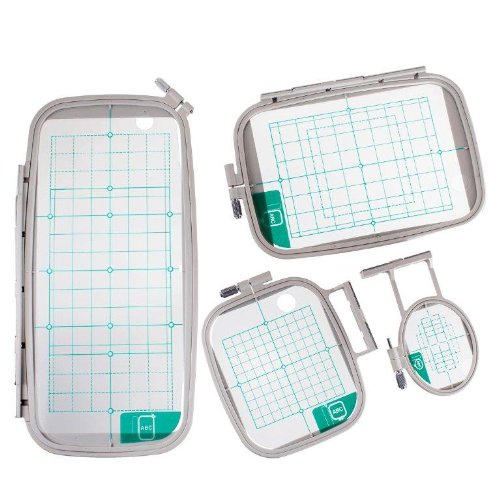
Crafted specifically for users of Brother and Babylock embroidery machines, the Set of 4 Hoops is perfect for those who seek versatility in their projects. This set includes a 5×12 Jumbo Hoop, a 5×7 Large Hoop, a 4×4 Medium Hoop, and a 1 1/2×2 Oval Pocket Hoop, each with a handy template. Users rave about the compatibility with models like the PE800 and the quality that rivals original hoops. With ergonomic designs for easy attachment and an adjustable screw for tension, these hoops make your stitching experience smooth and enjoyable. Upgrade your embroidery game with this essential set!
Best For: This product is best for embroidery enthusiasts who own Brother or Babylock machines and require versatile hoop sizes for various projects.
Pros:
- High compatibility with multiple Brother and Babylock models, ensuring ease of use.
- Ergonomic design with an adjustable tension screw for precise control and effortless attachment.
- Cost-effective alternative to brand-name hoops without compromising on quality.
Cons:
- Limited to specific Brother and Babylock models, which may not suit all users.
- Some users may prefer the original brand hoops for brand loyalty or performance reasons.
- The smaller hoop sizes may not be suitable for larger design projects without repositioning.
Factors to Consider When Choosing an Embroidery Hooping Guide
When choosing an embroidery hooping guide, you’ll want to contemplate several key factors. Hoop size, stabilizer compatibility, and design placement accuracy can greatly affect your project’s outcome. Plus, don’t forget to take into account the fabric type and compare different hooping techniques for the best results.
Hoop Size Selection
Selecting the right hoop size is essential for achieving the best results in your embroidery projects. You’ll want to choose a hoop that accommodates the dimensions of your design, ensuring proper placement and avoiding misalignment during stitching. Larger hoops, like the 5×12, work great for intricate or expansive designs, while smaller ones, such as the 4×4, are perfect for compact patterns and monogramming. Consider the fabric too; thicker materials may need a larger hoop to prevent distortion or tension issues. Don’t forget compatibility with your embroidery machine, as different models require specific hoop sizes. Using a variety of hoop sizes enhances your versatility, letting you tackle both small and large designs effectively.
Stabilizer Compatibility
Choosing the right stabilizer is essential for ensuring your embroidery project turns out beautifully. The type of stabilizer you select—be it tear-away, cut-away, wash-away, or heat-away—directly affects the quality of your design. Each type serves specific purposes based on fabric and design complexity. For instance, lightweight fabrics need lighter stabilizers to avoid bulkiness, while intricate designs may require specialized stabilizers for ideal thread tension and stitch definition. Additionally, understanding how stabilizers interact with your hoop size and shape can further enhance your embroidery experience. By matching the stabilizer’s weight and type to your fabric, you’ll prevent puckering or distortion, ensuring professional results every time you stitch. Choose wisely for flawless outcomes!
Design Placement Accuracy
Achieving design placement accuracy is essential for producing professional-looking embroidery, as even a slight misalignment can distort your entire project. To enhance this accuracy, consider using centering rulers and angle finders. These tools help you pinpoint the fabric’s center and determine the correct orientation for your design. Adhesive centering rulers can provide stable positioning on various surfaces, reducing the chance of shifting during embroidery. Additionally, target stickers offer a residue-free way to mark exact placements, giving you a clear reference while hooping. Remember, consistent practice with these techniques and tools will elevate your embroidery accuracy, enabling you to successfully complete intricate designs that truly stand out.
Fabric Type Consideration
When contemplating fabric type, it’s essential to understand how different materials impact your hooping technique. Lightweight fabrics like chiffon may need a cut-away stabilizer for support without compromising their delicate nature. In contrast, heavier fabrics such as canvas require a sturdier hoop and a tear-away stabilizer to maintain shape and prevent puckering. If you’re working with stretchy fabrics like knits, you’ll need a specific hooping method that allows for movement, often using a cut-away stabilizer. Don’t forget to reflect on the fabric’s grain and weave; aligning the hoop parallel to the grain enhances your embroidery’s appearance and durability. Choosing the right approach for each fabric type makes a significant difference in achieving flawless results.
Hooping Techniques Comparison
While selecting the right hooping technique, it’s important to take into account various factors that can impact your embroidery results. First, verify your designs are accurately positioned to avoid distortion and misalignment. Using centering rulers and target stickers can simplify this process. Also, consider the hoop size; options like 4×4, 5×7, and 5×12 provide versatility for different projects. Next, pay attention to hooping tension—too tight may damage the fabric, while too loose can cause puckering. Finally, utilizing templates will help maintain consistent positioning across multiple projects, saving time and boosting efficiency. By weighing these factors, you’ll enhance your embroidery experience and achieve flawless stitching every time.