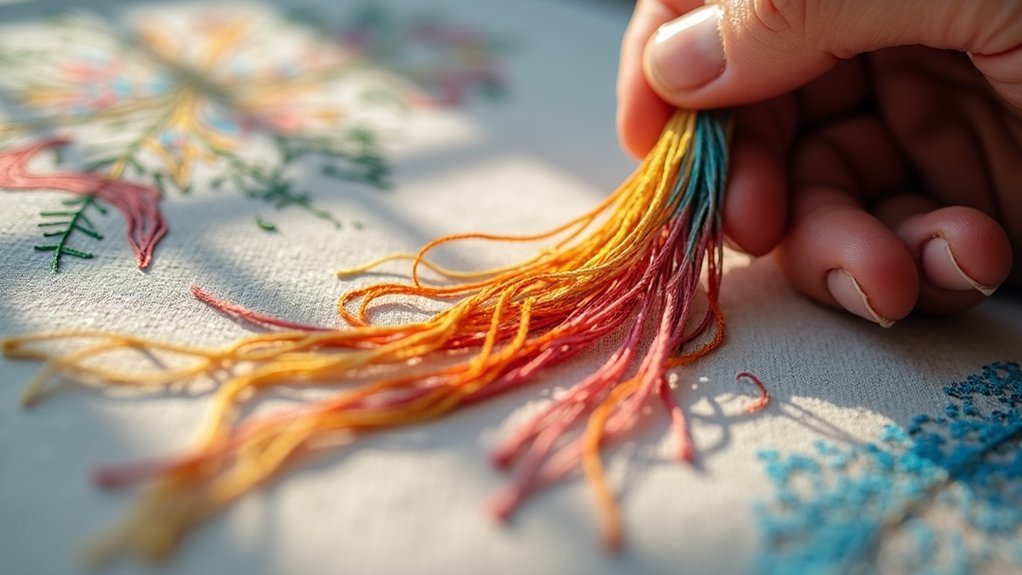

When choosing the best embroidery stumpwork wires, consider options like The Beadsmith Flex-Rite Beading Wire for flexibility and durability. Look for wires made from stainless steel for strength or aluminum for lightweight designs. A 0.5 mm diameter wire balances flexibility and support, ideal for intricate work. Don’t overlook kink resistance, as it simplifies stitching and enhances your overall experience. Stick around to discover expert picks and reviews that’ll guide your projects even further!
The Beadsmith Flex-Rite Beading Wire (30 Ft)

If you’re looking for a reliable and versatile option for your embroidery stumpwork projects, The Beadsmith Flex-Rite Beading Wire is an excellent choice. This 21-strand, nylon-coated stainless-steel wire offers strength and flexibility, making it perfect for stringing beads in necklaces and bracelets. With a diameter of .014 inches and a length of 30 feet, it provides ample material for various DIY creations. Users appreciate its durability and ease of use, boasting an impressive average rating of 4.6 stars. Whether for personal or business use, this professional-grade wire is sure to enhance your crafting experience.
Best For: Jewelry makers and crafters looking for a strong, flexible beading wire for stringing beads in necklaces and bracelets.
Pros:
- Durable and kink-resistant due to micro-wire technology.
- Suitable for both personal and professional jewelry making.
- Clear nylon coating enhances aesthetics while providing protection.
Cons:
- Some users report breakage during specific projects.
- May not be ideal for heavy or larger beads.
- Limited warranty information available.
Raised Embroidery: Techniques and Projects

For beginners enthusiastic to plunge into the world of raised embroidery, the book “Raised Embroidery: Techniques and Projects” offers a solid foundation in essential techniques. While it only includes three projects—an ice cream cone brooch, a pencil design, and a potted herbs cover—you’ll find the techniques well-explained and easy to follow. The clear layout and numerous pictures cater to visual learners, helping you grasp concepts quickly. However, if you’re seeking a variety of projects or full-size templates, you might feel slightly disappointed. Still, this compact guide is perfect for those starting their journey into raised embroidery design.
Best For: Beginners eager to learn raised embroidery techniques and start creating their own designs.
Pros:
- Clear and easy-to-follow instructions with a well-executed layout.
- Numerous pictures enhance understanding, catering to visual learners.
- Provides a solid foundation for those new to the craft of raised embroidery.
Cons:
- Limited to only three projects, which may not satisfy those seeking variety.
- Templates for projects require enlargement, which can be inconvenient.
- Experienced practitioners may find the book lacking in advanced projects and innovative designs.
Japanese Motifs in Stumpwork & Goldwork Embroidery Book

Japanese Motifs in Stumpwork & Goldwork Embroidery is perfect for embroidery enthusiasts seeking to elevate their skills while exploring the beauty of Japanese family crests. Jane Nicholas’s stunning illustrations and clear writing make this book a joy to use. You’ll find a wealth of inspiring ideas for your goldwork projects, suitable for all skill levels. Readers rave about the book’s beautiful content and excellent technique explanations, helping you build your confidence and creativity. With a perfect blend of artistry and instruction, this book will certainly enhance your embroidery journey and leave you very pleased with your creations.
Best For: Embroidery enthusiasts looking to enhance their skills while exploring Japanese family crests through intricate designs.
Pros:
- Beautiful full-color illustrations that inspire creativity.
- Clear and well-crafted writing that makes techniques accessible to all skill levels.
- Positive feedback from readers highlights the book’s combination of artistry and instructional quality.
Cons:
- May not cater to those seeking advanced or niche techniques outside of goldwork.
- Limited focus on other embroidery styles beyond stumpwork and goldwork.
- Some readers may find the projects time-consuming or challenging if they lack prior experience.
Stumpwork Figures

Stumpwork Figures is an essential resource for crafters enthusiastic to explore the intricate art of creating three-dimensional embroidered figures. With 64 color pages filled with clear photos and step-by-step instructions, you’ll find it suitable whether you’re a beginner or an advanced crafter. The book offers 10 patterns for figures, emphasizing various elements like arms and faces. Readers appreciate the clarity of the tutorials, making it easy to follow along. While some desire more styles and better facial expressions, the artistic value and calming nature of stumpwork shine through, inspiring your creativity in this unique fiber art form.
Best For: Crafters of all skill levels looking to learn and create intricate stumpwork figures.
Pros:
- Clear and detailed step-by-step instructions with ample color photos.
- Suitable for beginners as well as advanced crafters, providing a wide range of patterns.
- Inspiring artistic value that promotes creativity and a calming crafting experience.
Cons:
- Some readers desire more variety in styles and additional pictures.
- Facial expressions in the figures may not meet expectations, requiring crafters to improve them.
- Limited resources in the market for stumpwork figure-making, especially within certain cultural contexts.
RSN Essential Stitch Guides: Stumpwork – large format edition (RSN ESG LF)

Immerse yourself in the world of Stumpwork with the RSN Essential Stitch Guides: Stumpwork – large format edition (RSN ESG LF), perfect for those keen to expand their embroidery skills. This excellent resource boasts clear images and instructions, making it easy for you to grasp new techniques even if you’re new to Stumpwork. While some techniques may not be overly creative, the guide’s visuals complement the written instructions beautifully. You’ll appreciate the high-quality work showcased within. Despite a few delivery hiccups, this book is a great investment for any embroidery enthusiast keen to advance their skills.
Best For: This book is best for embroidery enthusiasts looking to enhance their skills in Stumpwork, especially those who appreciate clear visuals and step-by-step instructions.
Pros:
- Excellent visuals and clear instructions make learning easy.
- High-quality work showcased within the guide serves as great inspiration.
- Good value for money, providing a wealth of techniques and information.
Cons:
- Some techniques may not be very creative or innovative.
- May be more suited for advanced embroiderers than beginners.
- Delivery issues reported, with instances of the book arriving damaged.
Stumpwork Dragonflies (Milner Craft Series)
Product not found or API error.
For those looking to elevate their embroidery projects, “Stumpwork Dragonflies” from the Milner Craft Series is an ideal choice. This book guides you in creating stunning 3-D dragonflies using various threads, perfect for integrating into embroidery, cross-stitch, and more. Jane Nicholas offers clear instructions, making it accessible for both beginners and experienced stitchers. You’ll appreciate the beautiful photographs that showcase intricate designs and inspire your creativity. While some sections may require good English skills, the thorough nature of the book guarantees you’ll find valuable techniques. Crafting dragonfly pieces can even lead to delightful projects like charity auction brooches.
Best For: Experienced embroiderers looking to create intricate 3-D dragonfly motifs in their projects.
Pros:
- Clear instructions provided by Jane Nicholas make the book accessible for various skill levels.
- Beautiful photography showcases the stunning designs and inspires creativity.
- The book offers a variety of stitching options, enhancing the crafting experience.
Cons:
- Some sections may require good English skills for full comprehension of advanced techniques.
- The extensive text in certain areas could be overwhelming for beginners.
- Fewer illustrations in some parts may not adequately guide visual learners.
Stumpwork Butterflies & Moths (Milner Craft Series)

If you’re an embroiderer with a basic understanding of needlework techniques, “Stumpwork Butterflies & Moths” by Jane Nicholas is an excellent choice for expanding your skills. This beautifully illustrated book offers clear instructions and numerous diagrams, guiding you through stunning projects. With detailed insights about butterflies and moths, it serves as both a practical guide and an appealing coffee table book. While you may find some discrepancies in size and color, Nicholas encourages your creativity. The superb stitching quality and amazing photography make this book a standout in the Milner Craft Series, perfect for enhancing your embroidery repertoire.
Best For: Embroiderers with a basic understanding of needlework techniques looking to enhance their skills through detailed projects.
Pros:
- Clear instructions and numerous diagrams make the projects easy to follow.
- Beautiful illustrations and superb stitching quality enhance the aesthetic appeal.
- Provides interesting insights about butterflies and moths, making it a great coffee table book.
Cons:
- Total beginners may find the content challenging without prior knowledge.
- Some discrepancies in the size and color of butterfly representations may confuse readers.
- Non-English speakers might face a language barrier with the text.
Factors to Consider When Choosing Embroidery Stumpwork Wires
When choosing embroidery stumpwork wires, you need to take into account several key factors. Think about the wire material, diameter, and flexibility to guarantee it suits your project. Also, don’t overlook the coating options and the length of wire you’ll need for your designs.
Wire Material Types
Choosing the right wire material for your stumpwork projects is crucial, as it directly affects the outcome of your embroidery. You’ll typically find stumpwork wires made from stainless steel or aluminum. Stainless steel is great for its strength and kink resistance, ensuring your designs stay intact. On the other hand, aluminum is lightweight and easy to manipulate, making it suitable for intricate work. Some wires come coated with nylon, enhancing their look and preventing fraying, which is essential for clean edges. Also, consider tensile strength; higher strength means the wire can handle tension without breaking. Finally, think about corrosion resistance, especially if your projects might face moisture or outdoor conditions—this will enhance the longevity of your work.
Diameter Considerations
After selecting the right wire material, the next important factor to contemplate is the diameter of the wire. Typically ranging from 0.2 mm to 1.0 mm, the diameter you choose impacts your design’s intricacy and structural support. For intricate designs, a 0.5 mm wire strikes a balance between flexibility and strength. It’s essential to match the wire diameter with the weight of your threads to maintain proper tension and support for your stitches. Thicker wires offer greater stability for larger motifs but can be challenging to manipulate, especially for beginners. Additionally, if you’re using delicate stitches, a thinner wire may be best to avoid bulkiness in your finished piece, ensuring a polished look in your embroidery.
Flexibility and Strength
While selecting embroidery stumpwork wires, it’s important to take into account both flexibility and strength, as these factors greatly influence your project’s success. A flexible wire allows you to create intricate designs and curves, conforming easily to your desired shapes without breaking. On the other hand, strength is vital for supporting the weight of embroidered elements, preventing sagging or deformation in your work. Pay attention to tensile strength, as a higher rating means better durability. Additionally, choose kink-resistant wires to maintain smoothness, minimizing unwanted bends during embroidery. The right balance of flexibility and strength enhances your crafting experience, enabling you to achieve both detailed designs and robust structures in your projects.
Coating Options
When selecting embroidery stumpwork wires, considering the coating options is essential for enhancing your project’s durability and ease of use. Coatings like nylon or polyester boost the wire’s resistance to wear and corrosion, ensuring your work lasts longer. Nylon-coated wires offer a smooth finish that minimizes friction, making stitching easier and preventing snagging on your fabric. Plus, these coatings can improve flexibility, which is great for intricate designs. Keep in mind that the thickness of the coating affects the overall diameter of the wire, so choose accordingly. Ultimately, opting for coated wires can considerably enhance your embroidery experience by providing both durability and functionality in your creative projects.
Length of Wire
Choosing the right length of wire for your stumpwork projects is essential, as it directly influences the complexity and overall success of your designs. Generally, the wire length you’ll need depends on the number and intricacy of the figures you’re creating. Standard lengths typically range from 30 inches to several yards, offering flexibility. However, keep in mind that longer wires can be harder to manage during detailed stitching. It’s wise to have extra length for adjustments, as stumpwork often requires bending and shaping that can use additional wire. Always measure the required length for each project, as precise measurements can enhance the stability and outcome of your finished piece, ensuring your embroidery looks its best.
Kink Resistance
After determining the right length for your stumpwork wire, it’s important to contemplate kink resistance. This property is essential for maintaining the wire’s shape and integrity during your crafting process. Kink-resistant wires, often utilizing micro-wire technology, greatly reduce the chances of unwanted bends or breaks. When selecting your wire, look for higher strand counts in beading wire; more strands can distribute tension better, enhancing flexibility and kink resistance. This will lead to a more durable finished project, minimizing issues that arise from wire damage. Ultimately, opting for kink-resistant wire makes your crafting experience smoother, letting you focus on creating intricate stumpwork designs without the frustration of wire manipulation. Choose wisely, and enjoy your projects!
Ease of Use
Selecting the right embroidery stumpwork wire can greatly enhance your crafting experience, especially when ease of use is a priority. Look for wires that are flexible and kink-resistant, as they make intricate stitching much simpler. A suitable tensile strength is essential too; you want a wire that withstands manipulation without breaking. Wires that are easy to thread and secure allow for quick adjustments while you work on various designs. Additionally, choose wires with a clear or color-coordinated finish to blend seamlessly with your materials and minimize distractions. Finally, consider the diameter—thinner wires are great for detailed work, while thicker wires provide more support for larger designs. These factors will guarantee a smoother crafting process.
Professional vs. Hobbyist
When it comes to embroidery stumpwork wires, understanding whether you’re a professional or a hobbyist can greatly impact your choice. Professionals typically need high-quality, durable wires that can handle frequent use, while hobbyists might prefer more affordable options for occasional projects. Wire thickness is essential; finer wires suit detailed work for professionals, whereas thicker wires are easier for hobbyists to manage. Flexibility and strength are crucial for intricate designs, but hobbyists often prioritize ease of use. Additionally, professionals may require a broader selection of specialized wires, while hobbyists usually stick to basic supplies. Finally, professionals often choose lighter, more flexible wires to achieve sophisticated designs, while hobbyists might not focus on weight and stiffness as much.