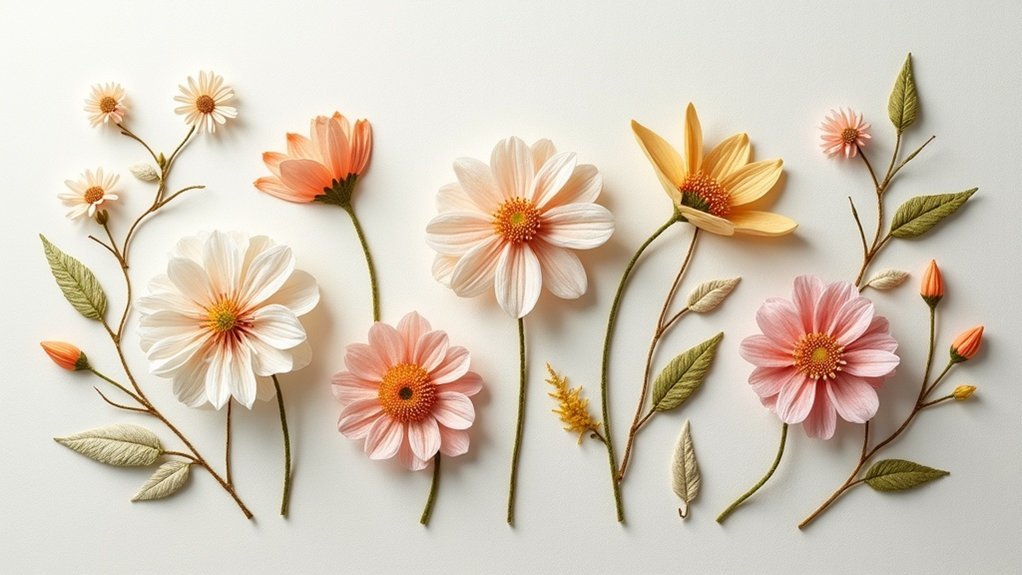
To identify stumpwork embroidery characteristics, look for its unique three-dimensional elements, such as raised stitches and wired shapes that create depth. Notice the use of various thread types, from thicker raised threads to finer ones for intricate detailing. Examine the intricate stitching techniques, including padded satin and bullion knots, which enhance texture. Common motifs often reflect nature and carry symbolic meanings. As you explore, you’ll uncover more about the historical context and influences behind this enthralling craft.
Key Takeaways
- Look for raised stitches like padded satin or raised stem band, which create a three-dimensional effect.
- Identify the use of wired shapes that add intricate detailing to leaves and other elements.
- Check for layered threads and materials that enhance depth and texture within the composition.
- Observe motifs reflecting nature, such as flowers and insects, often symbolizing deeper meanings.
- Note the variety of thread types used, including textured and metallic threads, contributing to the overall visual appeal.
Understanding the Three-Dimensional Elements
When you explore stumpwork embroidery, you’ll quickly notice how the three-dimensional elements elevate the art form beyond traditional flat stitching.
Raised stitches, such as raised chain, bullion knots, and French knots, create a tactile experience that captures attention. By layering threads or materials, you achieve a dynamic representation of nature, where flowers and leaves appear lifelike.
Incorporating wired shapes further enhances these designs, allowing for intricate detailing. Additionally, slips—details embroidered on a separate piece of fabric—are appliquéd onto the main composition, enriching the overall texture and depth, resulting in an enchanting work that serves both aesthetic and emotional purposes.
Exploring Thread Varieties and Textures
The three-dimensional aspects of stumpwork are greatly influenced by the choice of thread varieties and textures.
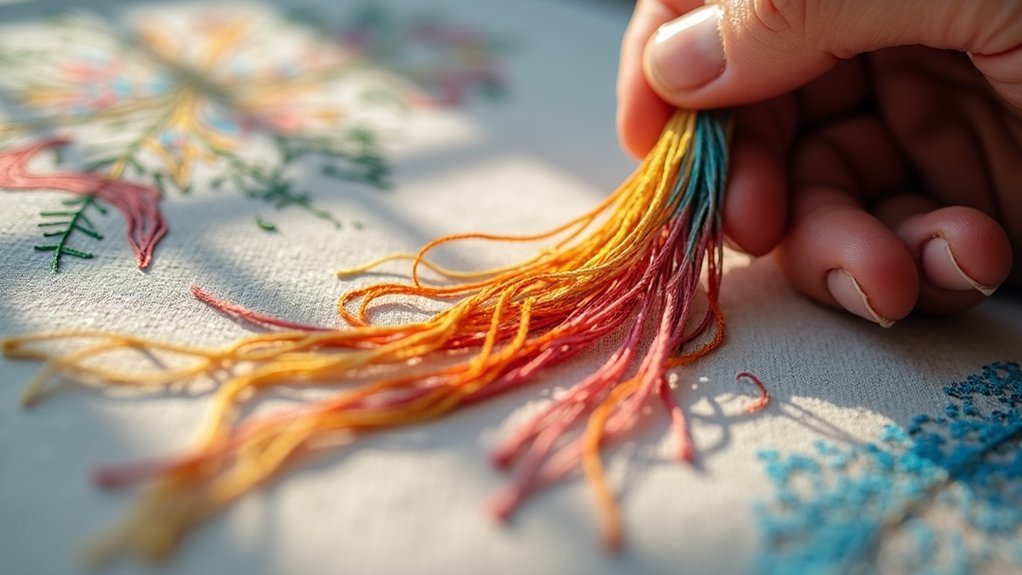
You’ll find that different thread types, such as stranded cotton, perlé, and metallic threads, each contribute unique textures and visual effects. Thicker threads work well for raised stitches and embellishments, while finer threads are perfect for intricate details.
Incorporating textured threads like bouclé adds depth, enhancing the overall quality. Specialty threads, including silk or rayon, offer a luxurious sheen, highlighting specific elements.
Analyzing Intricate Stitching Techniques
Although many embroidery techniques rely on flat stitches, stumpwork’s intricate stitching techniques elevate its artistry by creating enchanting three-dimensional forms.
Key raised stitches, like padded satin stitch and raised stem band, add depth and dimension. Techniques such as padding with layered threads or materials enhance this effect markedly.
Incorporating wire allows you to shape elements like leaves and wings, giving them naturalistic qualities. Additionally, French knots and bullion knots contribute texture and visual interest, making each piece truly unique.
Common Motifs and Themes in Stumpwork
Stumpwork embroidery is renowned for its vivid motifs and themes that capture the essence of nature and human experience. Common themes often showcase flora and fauna, like flowers and insects, reflecting a deep appreciation for the environment.
These motifs frequently carry symbolic meanings, with butterflies representing transformation and blooms signifying seasonal changes. The incorporation of raised elements, such as wired shapes and padded stitches, adds depth and movement, enhancing visual storytelling.
Historical pieces, like caskets and samplers, further illustrate these intricate designs, inviting viewers to engage with their narratives through a rich tapestry of vibrant colors and varied textures.
Historical Context and Aesthetic Influences
Emerging in the 1600s, stumpwork embroidery reflects the artistic environment shaped by affluent patrons who surrounded themselves with opulent textiles and ornate furnishings.
Young women practiced various stitches on samplers, exploring raised embroidery techniques that showcased their skills. This craft intertwined symbolism with motifs, as biblical characters and regal animals conveyed loyalty during Charles I’s reign.
Popular designs, like flowers and fruit, not only appealed aesthetically but also held deeper meanings.
Professional embroiderers enhanced stumpwork’s allure by creating pattern books, standardizing techniques and motifs.
This rich historical context reveals how art, culture, and personal expression merged in this intricate craft.