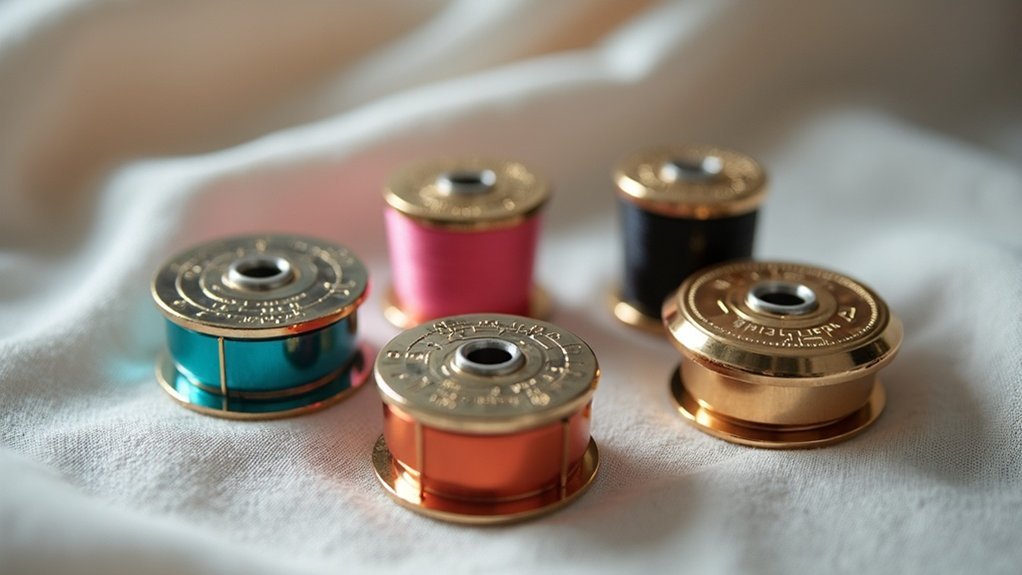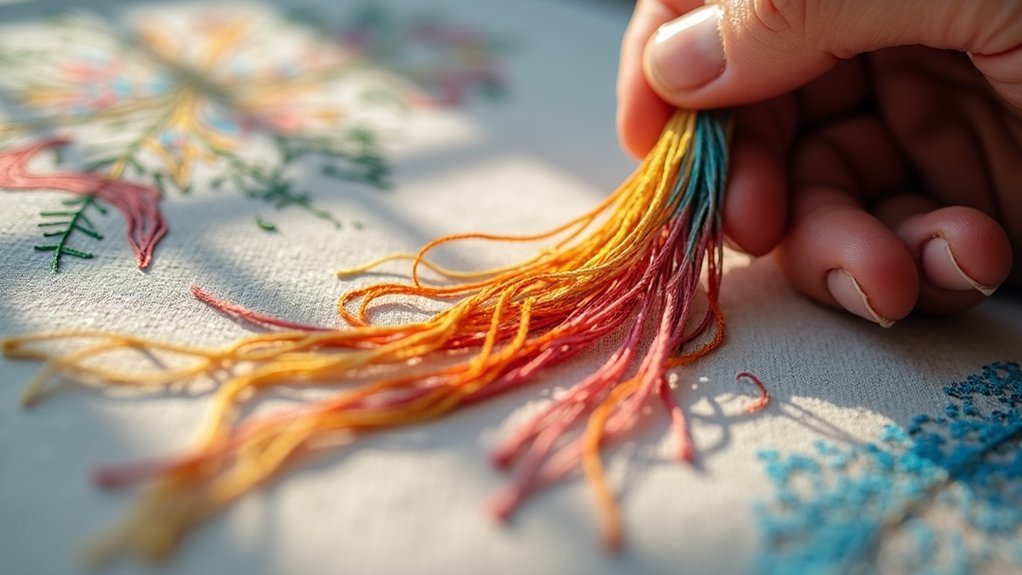

To identify goldwork embroidery, look for metallic threads that shimmer and create intricate designs. Notice the primary stitching technique, couching, which secures these threads without passing them through the fabric. Pay attention to the padding, often made from felt, which adds depth and dimension. Examine the craftsmanship in the uniformity of stitches and the choice of fabric, both contributing to the luxurious visual and textural qualities. Discover more insights into these fascinating features as you explore further.
Key Takeaways
- Look for the use of metallic threads, such as real gold or synthetic foil, in the embroidery design.
- Check for the couching technique, which secures metallic threads onto the fabric without passing them through.
- Observe the presence of padding materials like felt, adding depth and dimension to the design.
- Examine the uniformity of couching stitches, reflecting the artisan’s skill and attention to detail.
- Notice the reflective quality and shimmering appearance of the threads, enhancing the overall visual impact.
Understanding Metallic Threads
When you explore goldwork embroidery, understanding metallic threads is crucial, as they form the foundation of your design’s visual impact.
You’ll encounter various options, from luxurious real gold to cost-effective synthetic foil. Key types include passing thread, which combines fine metal with a silk core, and Japan thread, offering a gold-like appearance at a fraction of the cost.
Pearl purl adds unique texture with its coiled design, enhancing your work’s dimension.
Quality sourcing from trusted suppliers guarantees you select the right materials, impacting both aesthetics and durability, essential for any dedicated embroidery artist aiming to serve others beautifully.
Key Stitching Techniques
While mastering key stitching techniques is essential for successful goldwork embroidery, couching stands out as the primary method for securing metallic threads. This technique allows you to create intricate designs without passing goldwork threads through the fabric.
Couching is the essential technique in goldwork embroidery, allowing for intricate designs without threading through the fabric.
Here are four important aspects to take into account:
- Couching Stitch: Secures fine metal threads with precision.
- Surface Couching: Provides a flat, textured finish.
- Underside Couching: Enhances depth by securing padding underneath.
- Padding Techniques: Use materials like felt to create dimension.
These traditional methods highlight the reflective qualities of goldwork, enabling textile artists to explore creativity effectively.
The Role of Padding in Goldwork
Padding plays an essential role in goldwork embroidery, as it creates the necessary depth and dimension that elevates metallic threads off the fabric surface.
By using materials like felt or soft string, you provide a stable foundation for couching metal threads, allowing for intricate designs. This technique not only highlights the reflective qualities of the metal but also enhances durability, preventing threads from flattening over time.
Proper application of padding greatly influences your design’s final appearance, creating a sculptural effect that captures attention and maximizes the interaction of light with the embroidered surface, ensuring your work is both stunning and lasting.
Craftsmanship and Attention to Detail
Craftsmanship and attention to detail are essential in goldwork embroidery, as they directly influence the overall quality and impact of the finished piece.
To appreciate this intricate art form, consider these aspects:
- Metal Threads: The careful selection of real gold versus imitation threads, adding depth.
- Couching Stitches: Uniformity in spacing and tension showcases the artisan’s skill.
- Padding Techniques: Techniques like felt padding enhance dimensionality, enriching visual appeal.
- Reflective Qualities: The choice of fabric complements the shine of metal threads, enhancing the artwork’s aesthetic.
These elements collectively define the excellence of goldwork embroidery.
Visual and Textural Qualities
Goldwork embroidery captivates with its striking visual and textural qualities, making it a standout in the domain of textiles.
The use of metal threads—often real gold or silver—creates a reflective appearance that shimmers as light interacts with it. This interaction enhances the visual effects, giving goldwork its unique allure.
The couching stitch secures these threads, while padding techniques add depth, resulting in intricate patterns with a dimensional quality.
This combination of texture and light creates a luxurious feel, inviting you to explore the craftsmanship behind each piece of gold embroidery, where every stitch serves a purpose and enhances beauty.