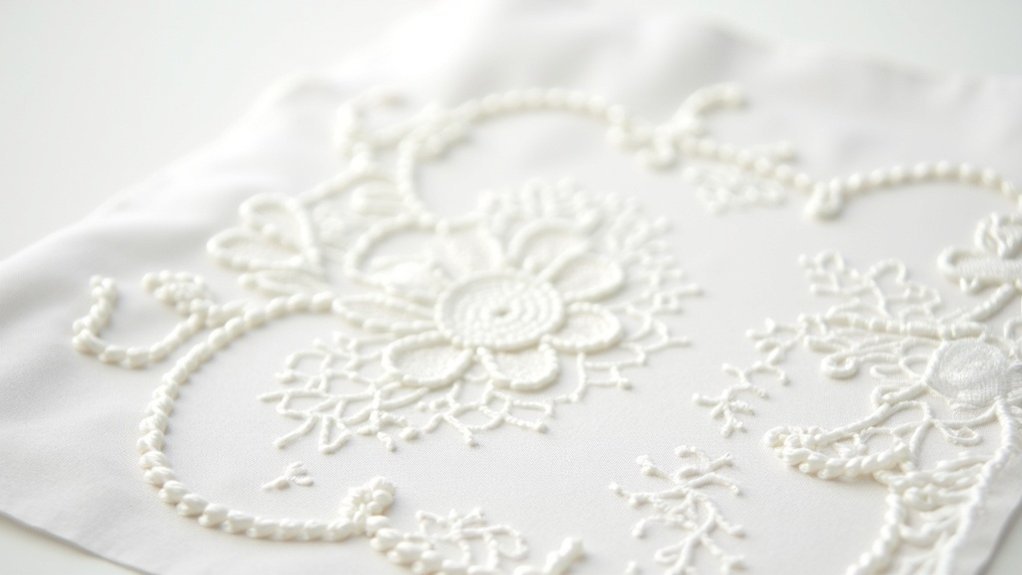
To identify whitework embroidery characteristics, look for intricate designs created with white thread on light fabrics. Notice the texture achieved through various stitches like satin stitch, chain stitch, and French knots. Assess the ground fabric; linen is preferred for dense stitching, while cotton options can provide versatility. Observing the types of threads used, such as coton a broder, can also offer insight into the piece’s quality. Further exploration reveals more about its historical significance and distinctive techniques.
Key Takeaways
- Whitework embroidery features intricate designs created exclusively with white thread, emphasizing texture and detail.
- Common stitches include satin stitch, chain stitch, and French knots, showcasing a variety of textures.
- High-quality linens or cotton fabrics are used as ground fabrics, enhancing the embroidery’s visual impact.
- Techniques like pulled thread and drawn thread work add complexity and dimension to the embroidery.
- The embroidery often displays a polished, elegant appearance, reflecting historical craftsmanship and cultural significance.
Understanding the Basics of Whitework Embroidery
Whitework embroidery stands out for its unique ability to transform a simple fabric into a canvas of intricate designs using just one color: white. This technique emphasizes texture through various embroidery stitches, such as satin stitch and French knots, which can bring floral motifs to life.
The preferred fabric, typically linen, supports dense stitching while cotton options like sateen offer versatility. You’ll find that different threads, including coton a broder and pearl cotton, impact the final visual effect.
Techniques like cutwork embroidery and drawn thread work further enhance the complexity, making whitework both accessible and enchanting for those wanting to serve others through creativity.
Recognizing Key Techniques and Stitches
When exploring the intricacies of whitework embroidery, you’ll notice that key techniques and stitches play a vital role in defining its aesthetic appeal.
Essential stitches like the chain stitch, stem stitch, and satin stitch work together to create intricate patterns on fine linens. Techniques such as pulled thread work and drawn thread work manipulate fabric threads, enhancing texture without introducing color.
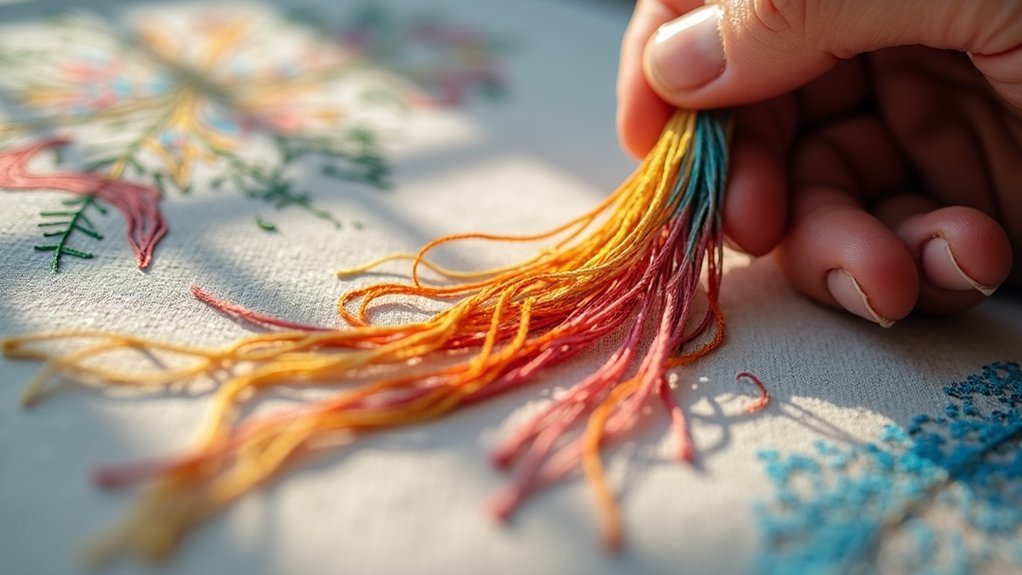
Using high-quality embroidery floss, particularly coton a broder, guarantees the sheen and durability needed for detailed work. Mastering these elements allows you to create stunning pieces that showcase the elegance and artistry inherent in whitework embroidery.
Identifying Ground Fabrics Suitable for Whitework
The choice of ground fabric plays a significant role in the success of whitework embroidery, impacting both the technique and overall appearance of your work.
Linen is typically the preferred ground fabric due to its close weave, which effectively supports dense stitching. For fine whitework, consider shadow work linen, handkerchief linen, or cambric, as these provide a delicate base for intricate designs.
Medium-weight linen suits more robust styles, ensuring durability. Cotton options like sateen work well for Mountmellick embroidery, while cotton twill complements rustic styles.
Selecting the right ground fabric enhances the visual impact and longevity of your whitework masterpiece.
Examining Thread Choices for Whitework
Selecting the right thread for whitework embroidery is essential to achieving the desired texture and visual appeal. Coton a broder stands out as the go-to choice, celebrated for its sheen and non-divisible nature, perfect for textured designs.
You’ll find that thread weights vary; thicker threads, numbered lower, allow for diverse textures and effects. Regular stranded cotton, pearl cotton, and cotton floche offer unique attributes, enhancing your surface embroidery.
Choosing cotton threads is vital for laundered projects, as they withstand washing better than synthetics. Experimenting with these thread choices helps you develop a distinct style while creating stunning visual impacts in your whitework.
Exploring Patterns Used in Whitework Embroidery
Patterns used in whitework embroidery are defined primarily by texture, often employing a single color of thread that seamlessly blends with the fabric.
You’ll find that common motifs include floral designs, geometric shapes, and intricate traditional elements. By utilizing various stitch techniques, such as drawn thread work and cutwork, you can create depth and interest within your designs.
Techniques like broderie anglaise and pulled work enhance the overall aesthetic, offering a beautiful interplay of textures.
Experimenting with these patterns not only hones your skill but also allows for creativity, making your whitework embroidery a truly personal expression.
Assessing the Historical Context of Whitework Techniques
Understanding the evolution of whitework embroidery techniques reveals how this art form has been shaped by cultural and historical influences over centuries.
Originating in ancient cultures, whitework’s historical significance surged in the Middle Ages when artisans shifted from colored threads to innovative needle lace and cut work. This change marked a pivotal moment, allowing for intricate designs that defined the 15th century.
By the mid-19th century, advancements in fabric production led to delicate materials tailored for white embroidery, revitalizing interest in these techniques.
Each method, including pulled work and drawn work, reflects the skill and cultural practices of its time.