
To identify Hungarian Matyó embroidery, look for intricate floral motifs, especially peonies and roses, often sewn in vibrant colors like red, black, and yellow. These colors carry specific meanings, representing joy and energy in the craft. Pay attention to popular stitching techniques like satin and flat-stitch, which showcase detailed designs. The craftsmanship reflects the cultural heritage of the Matyó community in Mezőkövesd. For more insights into its uses and significance, continue exploring the topic.
Key Takeaways
- Look for intricate floral motifs, particularly peonies and roses, which are signature elements of Matyó embroidery.
- Identify vibrant color palettes, where bold colors like red, yellow, and black convey specific themes and emotions.
- Check for common stitching techniques, including satin stitch and flat-stitch, that enhance the detail of the designs.
- Observe the application of embroidery on clothing, particularly women’s dresses and men’s vests, as well as home décor items.
- Note the cultural significance and historical context, as Matyó embroidery represents the heritage of the Roman Catholic Matyó community in Hungary.
Historical Background of Matyó Embroidery
While exploring the historical background of Matyó embroidery, you’ll uncover a rich narrative that spans approximately 200 years, rooted in the traditions of the Roman Catholic Matyó community in Mezőkövesd, Hungary.
Emerging in the 19th century, Matyó embroidery began on bedspreads and shifted to clothing and decorative items. The skilled female embroiderers, known as “írósasszonyok,” were essential in preserving this craft, passing techniques through generations.
Characteristic floral motifs, especially the peony rose, embody the vibrant culture of the region.
UNESCO recognized Matyó embroidery as an Intangible Cultural Heritage of Humanity in 2012, underscoring its importance in cultural heritage preservation.
Key Characteristics of Matyó Patterns
Matyó patterns stand out for their intricate floral motifs and vibrant color palettes, making them a hallmark of Hungarian textile art.
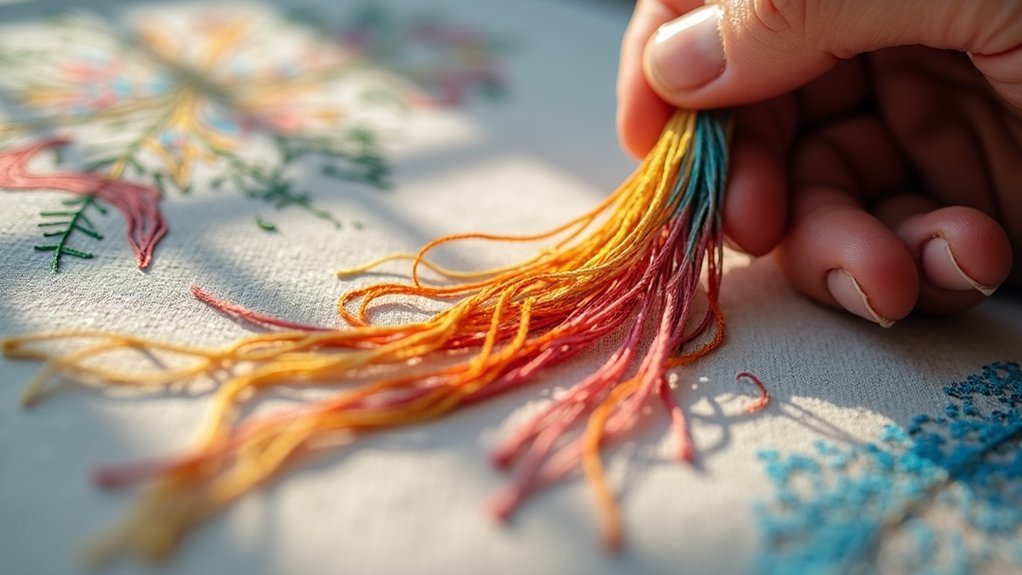
You’ll notice the detailed satin stitch embroidery techniques used to create smooth, eye-catching designs, often featuring peonies, roses, and geometric shapes. These motifs are typically rendered in bold colors, enhancing their visual appeal and cultural significance.
Matyó embroidery adorns various textiles, from clothing to ceremonial items, showcasing its versatility.
Each color carries meaning—black for earth, red for joy, and green for mourning—inviting you to appreciate not just the artistry, but the rich stories woven into every piece.
Common Color Palette Used in Matyó Embroidery
In Matyó embroidery, the vibrant color palette serves as a language of emotion and meaning, with each shade carefully chosen to convey specific themes.
For instance, red symbolizes joy, while black reflects the earth’s bounty, creating a powerful contrast on fabric.
Understanding these colors not only enhances your appreciation of the art form but also reveals the cultural significance behind the intricate floral motifs.
Symbolic Color Meanings
When exploring the rich tapestry of Matyó embroidery, you’ll quickly notice that each color carries deep symbolic meanings, reflecting the culture and emotions of the community.
Understanding these colors enhances your appreciation of the artistry. Here are three key symbolic meanings:
- Black represents the earth and harvest, symbolizing life and stability.
- Red denotes joy and happiness, often appearing in floral motifs to evoke positivity.
- Yellow signifies summer and the Sun’s creative energy, adding warmth.
These colors work together to tell stories, grounding Matyó embroidery in tradition while serving as a vibrant expression of communal values.
Commonly Used Shades
The vibrant color palette of Matyó embroidery is a demonstration of the artistry and cultural heritage of the region.
You’ll notice the prominent use of red, green, yellow, blue, and black, each shade deeply intertwined with cultural significance. Red exudes joy, while green—introduced post-World War I—reflects mourning. Yellow captures the Sun’s warmth, and blue conveys sadness. Black grounds the designs, symbolizing life and stability.
These colors come alive through intricate floral motifs, particularly peony roses, showcasing the meticulous techniques that define Matyó embroidery.
Understanding these commonly used shades enriches your appreciation of this remarkable cultural expression.
Popular Techniques and Stitches
Matyó embroidery showcases a rich array of popular techniques and stitches that define its intricate aesthetic.
You’ll notice how each technique enhances the embroidered art, creating stunning visuals.
Here are three key techniques to explore:
- Satin Stitch: This technique forms detailed floral and geometric designs, highlighting skilled craftsmanship.
- Flat-Stitch: A foundational method that emphasizes the vibrant floral motifs central to Matyó’s character.
- Solid Embroidery: This approach creates bold patterns, allowing the colors to stand out against traditional fabrics.
These techniques not only reflect cultural heritage but also connect to nature, enriching the embroidered art’s narrative.
Typical Motifs and Designs
Colors and shapes come alive in Hungarian Matyó embroidery, where typical motifs and designs play a vital role in its identity. The vibrant floral motifs, especially the peony rose, reflect the art of embroidery’s cultural essence. You’ll notice a rich palette featuring red, green, yellow, blue, and black against contrasting fabrics. Geometric shapes harmonize with stylized plants, forming balanced patterns that enhance visual appeal.
| Motifs | Characteristics |
|---|---|
| Peony Rose | Intricate detailing, vibrant colors |
| Geometric Shapes | Symmetrical patterns, balanced designs |
| Stylized Plants | Representational, culturally significant |
| Color Combinations | Red, green, yellow, blue, black |
Traditional Uses of Matyó Embroidery
When you think about Matyó embroidery, consider how it enhances both clothing and home décor.
Traditionally, this vibrant art form adorns blouses and skirts worn during cultural celebrations, while also bringing life to tablecloths and wall hangings in homes.
Each piece not only serves a practical purpose but also reinforces a sense of identity and cultural pride within the Matyó community.
Clothing and Costumes
Traditional clothing and costumes adorned with Matyó embroidery serve as vibrant symbols of cultural identity and heritage.
These embroidered clothes reflect Hungarian Folk Art, showcasing intricate designs that tell stories of community values and history.
You’ll find:
- Women’s dresses, known as “terítő,” richly embellished with floral motifs, especially the peony rose.
- Men’s vests, featuring bold colors and flat-stitch techniques that highlight craftsmanship.
- Festive garments often crafted from black cloth or white linen, enhancing the striking embroidery.
Each piece not only serves as art but also as a means of cultural transmission, celebrating a rich tradition.
Home Decor Items
Matyó embroidery transforms ordinary home decor items into vibrant expressions of cultural identity and artistry. When you adorn your tablecloths, napkins, and pillow covers with this embroidery, you embrace the rich heritage of the Matyó community.
The bold reds, yellows, and greens on white backgrounds not only enhance your space but also showcase intricate floral motifs, reflecting the artistry of this Intangible Cultural Heritage. Using flat-stitch techniques, these textiles vividly represent nature and geometry, making them visually striking.
Incorporating Matyó embroidered items during special occasions deepens your connection to Hungarian folk traditions and celebrates the craftsmanship that defines this unique culture.
Cultural Significance of Matyó Embroidery
The vibrant patterns of Matyó embroidery serve as an essential expression of the cultural identity of the Matyó community in Mezőkövesd, Hungary. Recognized on the cultural heritage list by UNESCO, this richly embroidered art form reflects years of tradition and craftsmanship.
Here are three key aspects of its cultural significance:
- Symbol of Pride: Worn during celebrations, it embodies community pride and heritage.
- Artistic Techniques: The flat-stitch method showcases intricate designs, passed through generations.
- Economic Impact: Provides income to local artisans, fostering community cohesion and collaborative craftsmanship.
How to Care for Matyó Embroidered Items
Caring for Matyó embroidered items requires a thoughtful approach to guarantee their beauty and longevity.
Start by hand washing these treasures in cold water with mild detergent to protect the intricate embroidery and prevent color bleeding. Avoid wringing or twisting; gently press out excess water, and lay them flat to dry.
When ironing, always do so on the reverse side with a low heat setting to preserve the stitches.
Store your items in a cool, dry place away from sunlight to prevent fading.
Regularly inspect for wear and promptly repair any loose threads to maintain their exceptional craftsmanship.