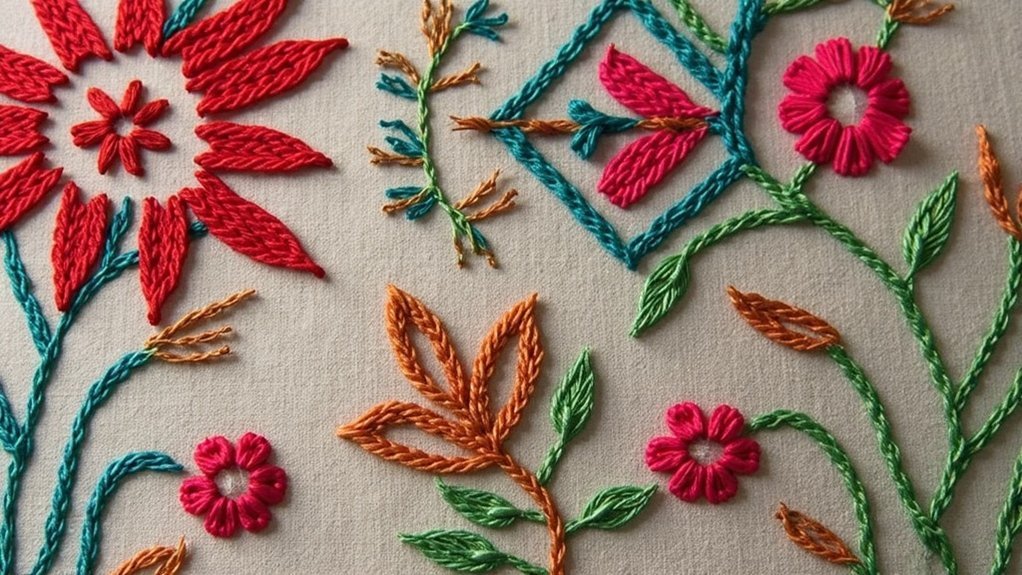
To identify Palestinian tatreez embroidery, look for vibrant motifs and intricate patterns that reflect the maker’s cultural identity. Common symbols include cypress trees from Gaza and eight-pointed stars from Bethlehem. Techniques like cross-stitch and satin stitch enrich the design. Regional variations also stand out, with Hebron featuring mountain motifs, while Gaza’s use curvy patterns. Each piece narrates a story, weaving together heritage and community ties. There’s even more to discover about these beautiful textiles and their significance.
Key Takeaways
- Look for unique motifs like cypress trees, eight-pointed stars, and the tree of life that represent specific cultural meanings and regional identities.
- Identify the stitching techniques used, such as cross-stitch, satin stitch, and tishrim, which showcase the craftsmanship in tatreez.
- Observe regional variations in color and design; Gaza features curvy patterns and earthy tones, while the West Bank often has angular designs and vibrant colors.
- Note the social narratives conveyed through the embroidery, reflecting the maker’s village, social class, and marital status embedded in each piece.
- Recognize tatreez as a living archive of Palestinian heritage, preserving collective memory and cultural identity through intricately designed thobes.
Understanding the Cultural Significance of Tatreez
When you explore the world of tatreez, you’ll discover that this traditional Palestinian embroidery is more than just a craft; it’s a vibrant expression of cultural identity.
Each stitch tells a story, reflecting the maker’s village, social class, and marital status. Through colorful motifs, tatreez preserves the collective memory of Palestinian heritage, serving as a connection to the past.
This craft, passed down through generations, enables older women to impart knowledge to younger girls, ensuring cultural continuity.
Recognized by UNESCO, tatreez embodies resilience, asserting Palestinian identity and showcasing the rich tapestry of symbols that define their cultural heritage.
Common Motifs and Their Meanings
Tatreez is a vibrant tapestry of symbols, each motif carrying deep meanings rooted in Palestinian culture. Common motifs like cypress trees symbolize the Gaza region, while eight-pointed stars trace back to Bethlehem, representing unique identities.
The tree of life emerges as a powerful symbol of hope amidst cultural erasure, while geometric tatreez patterns reflect the landscape and social status of the maker. Regional variations add richness; bright red threads and palm trees flourish in Ramallah, contrasting with Hebron’s mountain motifs.
Post-colonization designs, like missiles, serve as symbols of resistance, illustrating the ongoing struggles faced by Palestinians through the art of tatreez.
Techniques and Stitches Used in Tatreez
Exploring the intricate world of tatreez reveals a rich tapestry of techniques and stitches that breathe life into each piece. You’ll find common embroidery techniques like cross-stitch, satin stitch, and long and short stitch, each serving as a visual language for cultural heritage. Geometric motifs represent the Palestinian landscape, while bold colors convey the identity of different regions.
| Technique | Description |
|---|---|
| Cross-Stitch | A foundational stitch in tatreez art. |
| Satin Stitch | Adds depth and elegance to designs. |
| Tishrim | A unique patchwork technique. |
| Tashreem | Connects forms and motifs beautifully. |
Each stitch tells a story worth sharing.
Regional Variations in Embroidery Styles
The unique embroidery styles across Palestine reflect a vibrant tapestry of regional identities, each telling its own story through the needle and thread.
Palestinian embroidery weaves together regional identities, narrating rich stories through intricate patterns and vibrant colors.
You’ll notice distinct characteristics in various areas:
- Motifs: Gaza features the cypress tree, while Hebron celebrates mountain motifs and grape leaves.
- Color Palettes: Northern regions often use reds and blues, contrasting with the earthy tones of the south.
- Design Styles: West Bank tatreez showcases angular designs, whereas Gaza’s is known for its curvy patterns.
These regional variations encapsulate Palestinian heritage, weaving together history and culture into a rich art form that honors local identity.
The Role of Tatreez in Palestinian Identity and Heritage
Embroidery serves as a powerful thread weaving together the fabric of Palestinian identity and heritage.
For Palestinian women, the art of embroidery isn’t just a craft; it’s a symbol of identity, reflecting their origins and social narratives. Each stitch tells stories of resilience, particularly in refugee camps, where motifs adapt to express displacement.
Passed down through generations, this Intangible Cultural Heritage binds communities, as elders teach younger girls the intricate patterns of their Palestinian tradition.
With needle and thread, these women preserve their history, ensuring that every thobe remains a living archive, echoing the strength and beauty of their culture.