
To adapt historical embroidery patterns, start by scanning designs at a minimum of 300 DPI for clarity. Use machine embroidery digitizing software to convert motifs, selecting the right stitch types for bold lines and delicate details. Choose fabrics that mimic historical materials, like cotton or silk, and make certain you use stabilizers suited to your fabric type. Maintain original design elements and techniques to preserve authenticity, and you’ll soon discover more about unique stitching practices.
Key Takeaways
- Scan historical patterns at a minimum of 300 DPI to ensure detail retention for machine adaptation.
- Utilize embroidery digitizing software to convert hand-drawn designs into machine-readable files.
- Choose appropriate stitch types for clear outlines and intricate details in the pattern.
- Test designs on scrap fabric to adjust stitch quality and ensure the final outcome meets expectations.
- Preserve original design elements and techniques to maintain historical authenticity during adaptation.
Understanding Historical Designs and Their Context
As you explore the world of historical embroidery patterns, it’s essential to recognize how these designs reflect the cultural and artistic influences of their time.
Historical patterns, particularly in Renaissance embroidery and Opus Anglicanum, showcase artistry and material usage through the lavish use of silk and metal, signifying wealth.
These embroidery designs often incorporate spiritual and cultural motifs, serving as visual storytelling elements on garments.
The strategic placement of embroidery on clothing enhances both aesthetic appeal and practicality, revealing contextual influences that shaped medieval and Renaissance fashion.
Understanding these aspects enriches your appreciation of historical garment embroidery and its significance.
Finding and Accessing Vintage Patterns
When searching for vintage embroidery patterns, free digital repositories are invaluable resources that can greatly broaden your options.
Platforms like the Antique Pattern Library and community-driven sites such as the Flickr Hoop Love Group not only provide access to historical designs but also foster a collaborative atmosphere for sharing ideas.
Free Digital Repositories
Exploring the world of vintage embroidery patterns opens up a treasure trove of creativity and inspiration, especially through free digital repositories.
Here are three key resources to contemplate:
- Antique Pattern Library: Access a vast collection of historical embroidery designs dating back to the 18th century.
- Community-driven platforms: Platforms like the Flickr Hoop Love Group offer over 8,000 vintage iron-on transfers from the late 1800s to the 1970s.
- LoveCrafts: Discover nearly 400 free embroidery patterns inspired by vintage designs.
As you explore these digital archives, always verify the usage rights to verify compliance with copyright.
Community Pattern Sharing
Finding and accessing vintage embroidery patterns has never been easier, thanks to the rise of community-driven platforms that foster collaboration among enthusiasts. Resources like the Antique Pattern Library offer invaluable historical patterns, including digitized files from the 18th century.
Engaging with online communities enhances your search, as members actively share scans and tips, broadening your personal collection. However, it’s essential to reflect on ethical considerations in pattern sharing, respecting original vendors’ rights and sharing files without alterations.
Adapting Patterns for Modern Machine Use
To successfully adapt historical embroidery patterns for modern machine use, you must first guarantee the pattern is scanned at a minimum of 300 DPI.
Ensure historical embroidery patterns are scanned at a minimum of 300 DPI for optimal machine adaptation.
Next, utilize machine embroidery digitizing software to convert hand-drawn motifs into machine-ready files.
Focus on these key aspects:
- Select appropriate stitch types: Use satin stitches for bold lines and running stitches for finer details.
- Edit thread colors: Manually assign a palette, as many formats like DST/EXP don’t retain them.
- Test designs on scrap fabric: This allows adjustments to underlay, pull compensation, and stitch density, ensuring quality outcomes.
Selecting Appropriate Fabrics and Stabilizers
Selecting the right fabrics and stabilizers is essential for successfully executing historical embroidery patterns, as these choices directly impact the authenticity and quality of your finished piece. Opt for natural fibers like cotton, linen, or silk to replicate historical materials. Use lightweight cutaway stabilizers for woven fabrics and tear-away stabilizers for non-stretch materials. Always pre-wash your fabrics and stabilizers to prevent unexpected shrinkage. For delicate, lightweight fabrics, consider water-soluble stabilizers for a clean finish.
| Fabric Type | Recommended Stabilizer |
|---|---|
| Cotton/Linen | Lightweight Cutaway |
| Silk | Water-Soluble |
| Canvas/Denim | Heavy Tear-Away |
Techniques for Authentic Stitching and Design
While you explore techniques for authentic stitching and design in historical embroidery, understanding the significance of traditional stitch types is vital.
To achieve authenticity, focus on these key elements:
To achieve authenticity in historical embroidery, emphasize traditional stitch types and period-appropriate materials.
- Stitch Types: Utilize satin stitch for bold outlines and back stitch for intricate details.
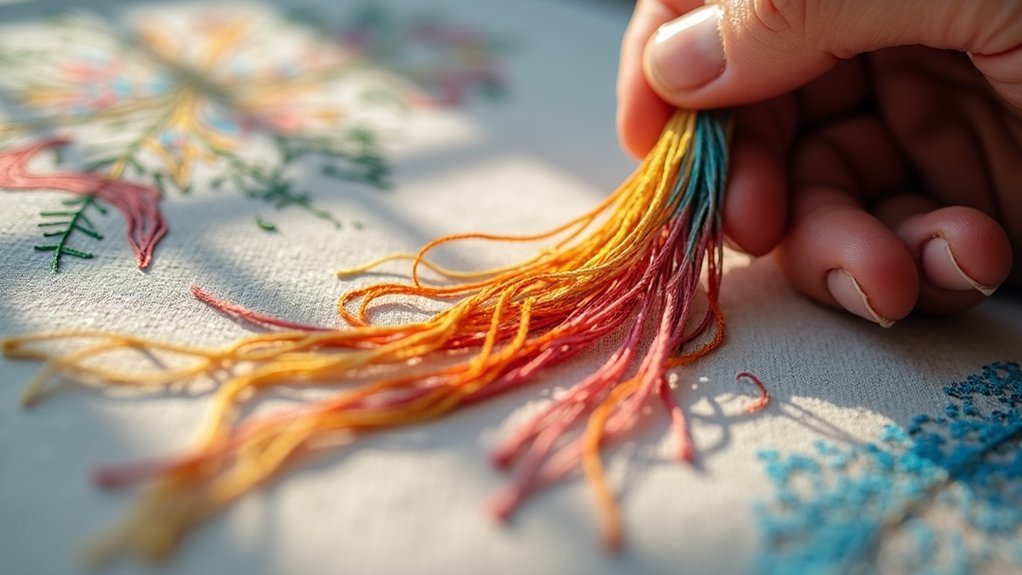
- Period-Appropriate Threads: Choose silk for a lustrous finish or cotton for a more matte appearance that reflects historical aesthetics.
- Stabilization Techniques: Employ stabilizers under delicate fabrics to prevent distortion and guarantee stitches lay flat, aligning with original patterns.
Testing on scrap fabric will help you fine-tune thread tension and stitch density for a true historical feel.
Preserving the Integrity of Vintage Patterns
When you adapt historical embroidery patterns, keeping the original design elements intact is essential for authenticity.
Ethical restoration practices not only honor the craftsmanship of the past but also guarantee that the vintage patterns retain their intended character and beauty.
Maintaining Original Design Elements
To successfully adapt historical embroidery patterns, it’s crucial to preserve the original design elements that define their character and authenticity.
Focus on these key aspects:
- Stitch Types: Retain the original stitch types and techniques to maintain authenticity.
- High-Resolution Scans: Use scans at a minimum of 300 DPI to capture intricate details accurately.
- Color Palette: Emulate the original’s texture by matching thread weights and materials.
Ethical Restoration Practices
As you explore the domain of ethical restoration practices for vintage embroidery patterns, understanding the balance between preservation and accessibility becomes essential.
Community curators meticulously clean scans of original designs, enhancing clarity while preserving line integrity. It’s vital to respect vendors’ rights regarding sharing and altering digitized files, adhering to ethical standards.
When distributing cleaned scans, be mindful of legal implications, ensuring designs are in the public domain or that permissions are secured. Documenting the restoration process fosters transparency, providing context for future users.
Engaging in collaborative digitization projects helps share the workload, keeping vintage patterns accessible for generations to come.