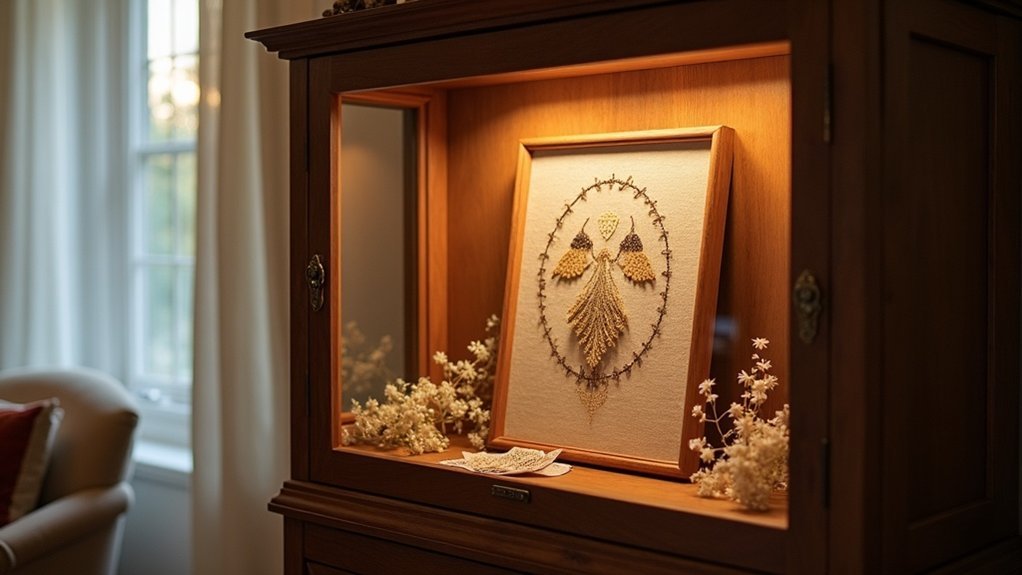
To display your embroidery away from pests, start by selecting a well-ventilated area away from direct sunlight and exterior walls. Use protective framing with UV-filtering glass to prevent fading and deter insects. Maintain cleanliness by dusting and vacuuming regularly. Monitor for pest activity, checking edges and corners for signs of infestations. Incorporate natural deterrents like lavender sachets or cedar chips in your storage. There’s much more you can do to guarantee your pieces remain safe and vibrant.
Key Takeaways
- Select a well-ventilated area away from direct sunlight and exterior walls to deter pests.
- Use UV-filtering glass and professional framing to protect your embroidery from fading and pests.
- Elevate displays using shelves or shadow boxes to minimize contact with potential pests.
- Regularly dust and vacuum the display area to eliminate food sources for pests.
- Implement natural pest deterrents like lavender or cedar in the storage and display areas.
Choose the Right Display Area
When you’re choosing the right display area for your embroidery, it’s essential to take into account factors that can affect its longevity and condition.
Opt for a well-ventilated space away from direct sunlight to reduce moisture and fading, which attract pests. Avoid placing your art near exterior walls or windows, as these areas often harbor moths and silverfish.
Maintain a clean, clutter-free environment to prevent dust that may invite infestations.
Finally, elevate your display using shelves or shadow boxes to deter direct contact with potential pests, ensuring your treasured piece remains safe and vibrant for years to come.
Use Protective Framing
Using protective framing is one of the most effective ways to safeguard your embroidery from pests and environmental damage.
By selecting a professional framer who specializes in archival methods, you can guarantee that the materials used won’t contribute to deterioration. Mitered corners and a sealed backing enhance pest control, keeping unwanted insects like moths and silverfish at bay.
Choosing a professional framer with archival expertise ensures materials won’t harm your embroidery, while sealed backs deter pests.
Additionally, using UV-filtering glass not only protects your art from pests but minimizes fading from light exposure, preserving vibrant thread colors.
Regularly inspecting the frame for signs of damage is essential in maintaining the integrity of your displayed embroidery.
Maintain Cleanliness
Protective framing can only do so much if the surrounding environment isn’t properly maintained. To truly protect your embroidery, you need to maintain cleanliness in your display area.
Regularly dusting both the pieces and their surroundings removes potential food sources for pests. A clutter-free environment makes your space less inviting to these unwanted guests, as they thrive in messiness.
Vacuuming frequently eliminates dust and debris that attract insects. Additionally, store your embroidery projects in sealed containers to prevent access.
Consistent cleaning routines not only safeguard your embroidery but also enhance the overall aesthetic of your display area, making it inviting and pest-free.
Monitor for Pest Activity
To protect your embroidery, you need to conduct regular inspections for signs of pest activity.
Look for small holes, webbing, or droppings that indicate potential infestations.
Catching these issues early can save your artwork from significant damage.
Regular Inspections Needed
While regular inspections of your embroidery displays may seem tedious, they’re essential for preventing pest infestations that can ruin your collection. Conduct these inspections at least once a month, focusing on edges and corners where pests often hide.
Use a flashlight to illuminate dark areas, making it easier to spot potential issues. Document your findings to track changes in pest activity, which helps you identify trends or emerging problems.
If you notice any signs of pests, take immediate action to prevent damage before it escalates into a larger infestation that threatens your valuable embroidery.
Signs of Infestation
Identifying signs of infestation is essential for safeguarding your embroidery collection from potential damage. Look for small holes or frayed edges, which may indicate pests like moths or beetles. Monitor for larvae or pupae in hidden areas, and check for droppings or cast skins near your embroidery items. Unusual odors or dust can signal a problem, especially in undisturbed areas. Using sticky traps can help you catch insects and identify pests affecting your embroidery.
| Signs to Look For | Possible Pests | Actions to Take |
|---|---|---|
| Small holes | Moths, Beetles | Inspect items closely |
| Larvae or pupae | Moths | Clean storage areas |
| Droppings or skins | Silverfish, Cockroaches | Use traps |
| Unusual odors | Various pests | Ventilate and clean |
Incorporate Natural Deterrents
Natural deterrents play an essential role in protecting your embroidery from pests like moths and silverfish. Incorporating elements such as lavender, cedar, or peppermint creates an aromatic barrier that repels these destructive insects.
You can place sachets of dried lavender or cedar chips in your storage areas for added protection and a pleasant scent. Additionally, mix essential oils with water to lightly spray around display areas, effectively deterring pests without harming your embroidery.
Regularly replacing these natural deterrents guarantees their ongoing effectiveness, enhancing your overall strategy to safeguard your cherished pieces from pest damage while maintaining a welcoming environment.
Consider Professional Pest Control
When it comes to protecting your embroidery from pests, evaluating potential risks is essential.
Hiring qualified professionals can lead to customized protection plans that specifically address the vulnerabilities of your textile pieces.
With their expertise, you’ll be better equipped to maintain a pest-free environment for your valuable artwork.
Assessing Pest Risks
Pest activity can pose a significant threat to your cherished embroidery pieces, making regular assessments essential for early detection.
Consider engaging professional pest control services for thorough inspections and tailored preventive measures. Their expertise can help you identify risks from pests like silverfish and clothing moths.
- Schedule routine evaluations to catch issues early.
- Implement Integrated Pest Management (IPM) strategies for lasting protection.
- Consult experts for advice on humidity control and sanitation.
Customized Protection Plans
After evaluating the pest risks to your embroidery, implementing a customized protection plan is a proactive step to safeguard your pieces. Professional pest control services can tailor solutions that fit your specific environment, ensuring the longevity of your valuable embroidery pieces.
| Component | Purpose | Benefits |
|---|---|---|
| Routine Inspections | Identify pest risks | Early detection of potential threats |
| Preventive Measures | Deter pests like silverfish and moths | Creates a pest-free environment |
| Educational Resources | Inform best practices | Empower you to maintain protection |
Engaging with experts integrates long-term strategies, greatly reducing future infestations.
Hiring Qualified Professionals
To effectively protect your valuable embroidery from potential damage, hiring qualified pest control professionals is essential.
These experts guarantee proper identification and management of pests that threaten your art pieces. They utilize Integrated Pest Management (IPM) strategies, which include:
- Preventative measures to reduce pest attraction.
- Targeted treatments that are safe for your fabrics.
- Seasonal adjustments to address specific pest threats.
Regular consultations with pest control professionals help maintain a pest-free environment, offering ongoing support for the long-term preservation of your embroidery.
Store Unused Embroidery Properly
Properly storing unused embroidery is essential for maintaining its integrity and preventing damage from pests.
Start by placing your pieces in airtight containers to shield them from humidity and insects like moths and silverfish. Wrap each item in acid-free tissue paper to minimize moisture and fabric damage.
To protect your embroidery, use airtight containers and wrap each piece in acid-free tissue paper.
Store these containers in a cool, dry location, as pests thrive in warm, humid environments. Regularly inspect your stored embroidery for signs of pest activity, such as frass or holes.
To further deter pests, consider adding cedar blocks or lavender sachets, leveraging their natural properties for an effective, harmless solution.