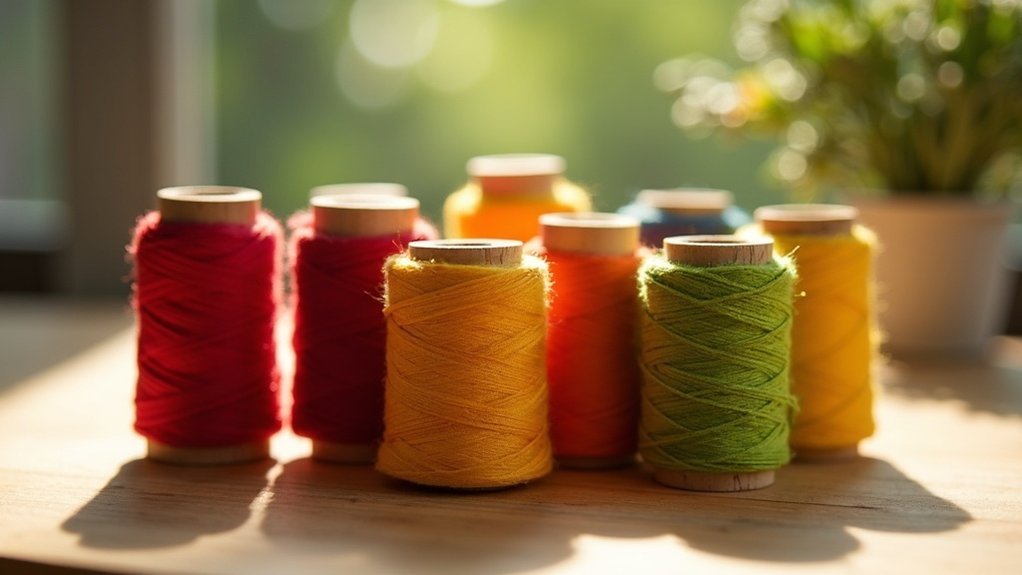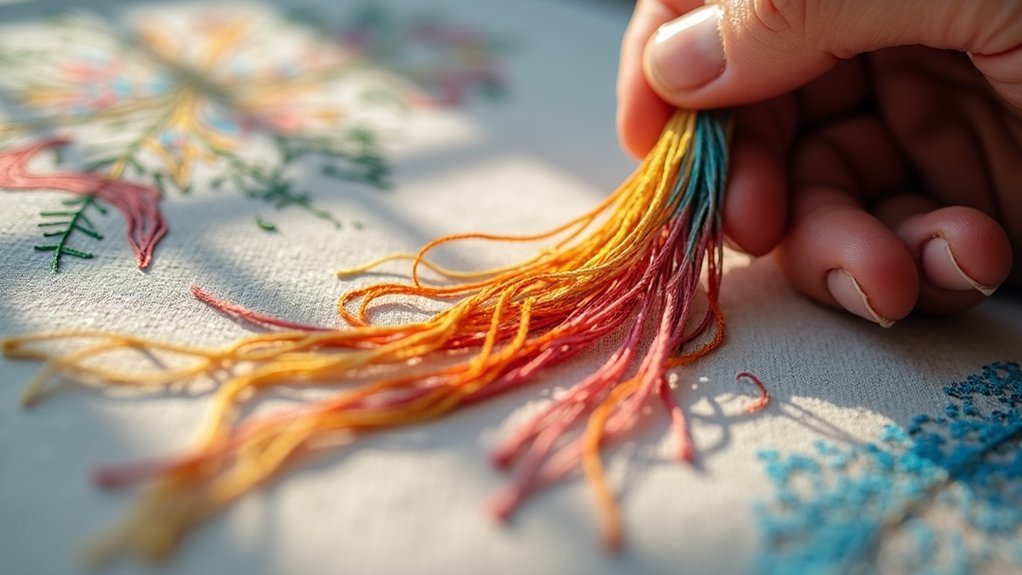

To condition rayon threads for embroidery, lightly dampen them with a moistened cotton pad. For added protection, rub beeswax along the thread to reduce fraying and enhance durability. Limit the length of the thread pulled from the spool to manage tangles more easily. Before starting your project, test these conditioning methods on scrap fabric to guarantee they don’t alter the thread’s appearance or performance. For further insights on enhancing your stitching experience, continue exploring more techniques.
Key Takeaways
- Lightly dampen rayon threads with a moistened cotton pad to manage tangling and fraying without using harsh chemicals.
- Apply beeswax to enhance durability, reduce breakage, and protect the threads from abrasion during embroidery projects.
- Limit the length of thread pulled from the spool for easier handling and improved control while stitching.
- Test conditioning methods on scrap fabric to ensure there are no unwanted changes in appearance or performance.
- Store conditioned threads in airtight containers in a cool, dry place, labeling them with conditioner type and date for tracking.
Understanding Rayon Threads
When it comes to embroidery, many enthusiasts appreciate the unique qualities of rayon threads. Known for their high sheen, these threads elevate the visual appeal of your projects.
They’re softer and more flexible than synthetic options, making rayon ideal for intricate designs and decorative stitching. However, be aware that rayon is sensitive to water; it can weaken when wet, so handle it carefully during laundering.
To maintain colorfastness, always opt for gentle detergents, avoiding bleach and strong chemicals. Additionally, remember to adjust your upper thread tension lighter than polyester to prevent breakage and guarantee smooth stitching during your embroidery endeavors.
The Role of Thread Conditioners
Thread conditioners play a pivotal role in enhancing your embroidery experience, particularly with rayon threads. While products like Thread Heaven aim to reduce tangling and fraying, many experienced stitchers argue that high-quality rayon threads perform efficiently without them.
There’s concern about the long-term effects of silicon-based conditioners on natural fibers, potentially accelerating deterioration. Traditional beeswax offers a protective solution against abrasion without compromising rayon’s integrity.
Additionally, using a damp cotton pad can effectively manage threads without the risks associated with chemical coatings. Ultimately, relying on thread conditioners may indicate issues in thread manufacturing rather than enhancing your stitching experience.
Benefits of Using Beeswax
While many stitchers seek ways to enhance their embroidery experience, using beeswax as a thread conditioner offers numerous benefits specifically for rayon threads.
Using beeswax as a thread conditioner can significantly enhance your embroidery experience with rayon threads.
Here are some advantages to take into account:
- Enhanced Durability: Beeswax strengthens rayon threads, reducing breakage.
- Minimized Fraying: It effectively prevents fraying and abrasion during your projects.
- Natural Preservation: Unlike synthetic options, beeswax protects the integrity of natural fibers.
- Improved Control: You’ll experience smoother stitching, allowing for better precision in various techniques.
Incorporating beeswax into your embroidery routine can greatly elevate your stitching experience with rayon threads.
Best Practices for Conditioning
Using beeswax can greatly enhance your embroidery experience, but adopting best practices for conditioning rayon threads is equally important.
Start by lightly dampening the rayon threads with a moistened cotton pad to reduce tangling and fraying, avoiding heavy conditioners. For specific techniques like goldwork, apply genuine beeswax to protect against abrasion.
Limit the thread length pulled from the spool; shorter lengths are easier to manage during embroidery. Always test your conditioning method on a scrap piece of fabric to guarantee it won’t alter the appearance or performance of the rayon threads, keeping your projects looking their best.
Testing and Storing Conditioned Threads
How can you guarantee your conditioned rayon threads perform at their best during embroidery? Start with these essential practices:
- Test conditioned threads on scrap fabric to check for any changes in behavior or appearance.
- Store threads in a cool, dry place, away from sunlight to maintain quality.
- Use airtight containers to protect against dust and moisture, ensuring longevity.
- Label each thread with the conditioner type and conditioning date for effective tracking.
Regularly inspect your stored threads for degradation or texture changes, as these could impact performance and indicate that the conditioning may need reevaluation.