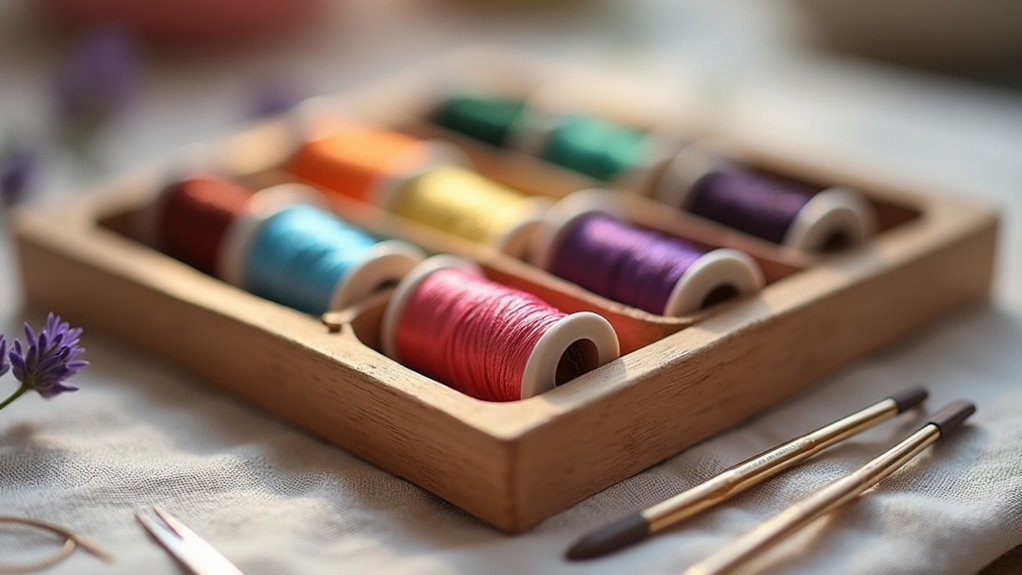
To store your silk threads for embroidery, keep them in closed cabinets to avoid dust and maintain a cool, dry environment between 18–24°C (65–75°F) with humidity under 50%. Use organized systems like DMC Stitch Bow pages for up to 195 skeins, grouping by color and separating full skeins from partials. Employ proper winding techniques and prepare threads in lengths of 12–18 inches to minimize tangles. There’s more to discover to guarantee your threads remain perfectly preserved.
Key Takeaways
- Store silk threads in closed cabinets to minimize dust exposure and maintain a cool, dry environment between 18–24°C (65–75°F).
- Use DMC Stitch Bow pages for organized storage, accommodating up to 195 skeins for easy access.
- Protect partial skeins in individual sealed bags to prevent tangling and dust accumulation.
- Group silk threads by color families and utilize color-coded labels for efficient organization and management.
- Regularly inspect threads for damage and tangling, ensuring they remain usable and in optimal condition.
Mastering Thread Storage for Effortless Embroidery
Proper storage of silk threads is essential for ensuring your embroidery projects maintain their quality and vibrancy.
Implement an effective storage system, like DMC Stitch Bow pages, to enhance thread organization. These pages can accommodate 195 skeins, allowing easy access to a variety of shades.
For long-term storage, utilize closed cabinets to minimize dust exposure and consider deep shelves to maximize space for larger collections.
Regularly inspect your silk threads for pests and maintain a climate-controlled environment with humidity below 50%.
Using acid-free materials, such as cotton bags or glass jars, will protect your silk threads from fading and damage.
Core Techniques to Prevent Tangles and Damage
To prevent tangles and damage to your silk threads, start by using proper winding techniques, such as the line spool method.
Next, guarantee you separate individual threads by gently smoothing them out before each use.
These steps are essential for maintaining thread integrity and enhancing your stitching experience.
Proper Winding Techniques
Maintaining the integrity of silk threads during storage is essential, and employing effective winding techniques is key to preventing tangles and damage.
Use the line spool method to store threads, wrapping them around a smooth, cylindrical object to keep them organized and maintain their shape. For best handling, cut your embroidery threads to 12–18 inches, with 12 inches recommended for beginners.
Avoid multi-strand pulling, as it creates friction and tangles. Regularly check the tension on your spool or bobbin to guarantee the threads remain flat and undamaged.
These practices will help you achieve clean, even stitches in your embroidery projects.
Thread Separation Methods
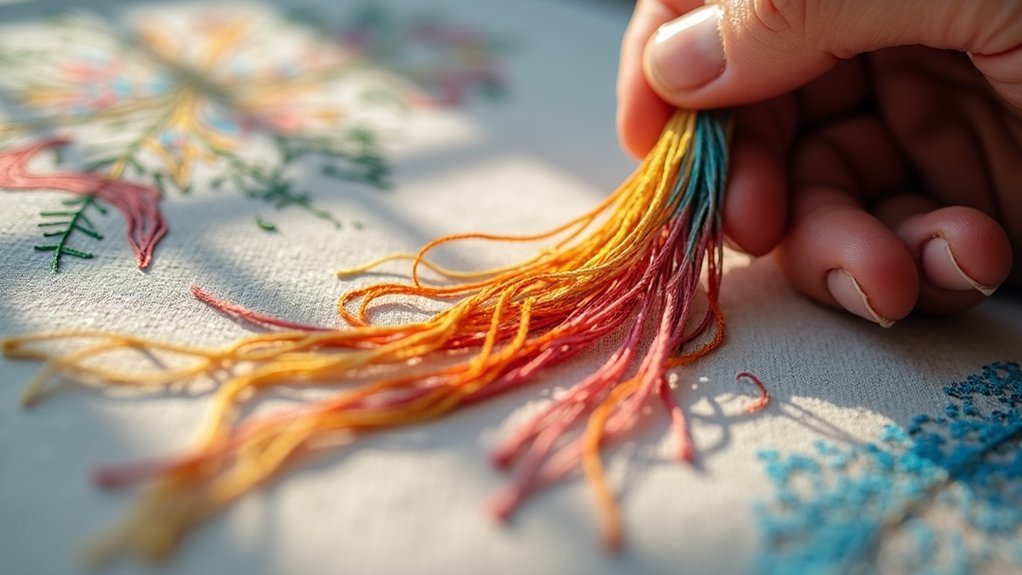
Effective thread separation methods are essential for preventing tangles and damage to silk threads. Utilize the line spool method to keep your embroidery threads organized, ensuring smooth unrolling. Implement single-thread separation techniques to reduce friction and maintain integrity. Smooth your Silk Mill silk threads by gently running your fingers along their length, eliminating twists. The railroading method will keep strands flat and parallel for neater stitches. For ideal thread storage, consider using individual sealed bags for partial skeins to keep dust out and prevent tangling.
| Method | Benefits | Application |
|---|---|---|
| Line Spool | Organized, tangle-free | Winding threads |
| Single-Thread | Reduces friction, preserves | Preparing strands |
| Railroading | Neat, consistent stitches | Stitching technique |
Comparative Analysis of Storage Systems
When choosing a storage system for your silk threads, you’ll want to contemplate the benefits of plastic versus sustainable materials.
Additionally, weigh the pros and cons of open versus closed systems, as well as vertical and horizontal storage options.
Each choice impacts the accessibility, protection, and organization of your threads, influencing your overall workflow.
Plastic vs. Sustainable Materials
While both plastic and sustainable materials offer distinct advantages for storing silk threads, the choice largely hinges on your priorities regarding preservation and environmental impact.
Plastic bobbins and containers are durable and affordable, providing effective dust-proof environments that enhance thread preservation. However, they may off-gas in humid conditions, risking thread quality over time.
On the other hand, sustainable materials like GOTS-certified cotton bags or FSC-certified wood boxes reduce waste and allow breathability, but may not offer the same level of protection.
Ultimately, weigh the benefits and drawbacks of each option to align with your values and needs for storing threads.
Open vs. Closed Systems
Choosing between open and closed storage systems for silk threads can greatly impact both accessibility and preservation. Open systems, like pegboards or clear bins, allow for easy identification of colors but expose threads to dust and UV light, potentially degrading quality.
In contrast, closed systems, such as sealed cabinets, protect silk from environmental damage, maintaining vibrancy and preventing tangling. Both options can utilize affordable plastic or sustainable materials.
When deciding, balance protection with accessibility to fit your workflow needs. Each system has its advantages and drawbacks, so assess your storage environment and preferences carefully to optimize your silk thread organization.
Vertical and Horizontal Storage
Deciding on the most effective storage system for silk threads involves considering both vertical and horizontal options.
Vertical storage, like pegboards or wall-mounted shelves, maximizes visibility and provides easy access to threads, enabling quick identification of specific colors.
In contrast, horizontal storage options, such as drawer units, allow for better organization and protection against dust and tangling.
While open vertical systems expose threads to potential damage, closed horizontal systems may complicate access.
Striking a balance between these systems guarantees that your silk threads remain organized, easily accessible, and well-protected for your embroidery projects.
Color Organization and Partial Thread Management
When organizing silk threads, grouping them by color families within drawers or binders not only enhances accessibility but also streamlines your selection process for embroidery projects.
Store partial skeins in individual sealed bags to keep them dust-free and tangle-free, ensuring usability for future projects.
Utilize a checklist system to track used thread numbers, making it easier to reorder specific colors when needed.
Color-coded labels on storage containers improve visual organization, allowing for efficient browsing.
A layered approach, separating full skeins from partials, simplifies management, keeping your workspace organized and all threads readily accessible without clutter.
Thread Preparation for Optimal Storage
To confirm your silk threads remain in peak condition for future use, it’s essential to prepare them properly before storage. Cut your threads to a length of 12–18 inches, with 12 inches recommended for beginners. Use the nail-separation method to prevent snags, and avoid multi-strand pulling to reduce friction. Organize your prepared threads into labeled bags or spools for easy access. Regularly check for damage or tangling to maintain quality.
| Step | Action | Purpose |
|---|---|---|
| Cut threads | 12–18 inches | Minimize tangling |
| Nail-separation method | Separate threads on nails | Prevent snags |
| Label bags/spools | Organize threads | Confirm easy identification |
| Regular checks | Inspect for damage | Maintain usability |
Budget-Friendly and Space-Smart DIY Solutions
While finding efficient storage solutions for silk threads can be challenging, numerous budget-friendly and space-smart DIY options are available.
Repurpose small containers like Ferrero Rocher boxes or shoeboxes to organize your threads, maximizing vertical space.
Maximize vertical space by repurposing small containers like Ferrero Rocher boxes or shoeboxes to organize your silk threads.
Create low-cost modular systems using golf tee dividers and cardboard inserts for easy identification.
Ziplock bags can store partial skeins, allowing you to hang them on pegboards or group them on metal rings.
Clear plastic containers provide visibility while protecting your threads from dust.
Finally, upcycle food containers or old clothing for custom storage solutions that keep your silk threads in breathable, dust-free environments.
Sustainable Storage and Long-Term Preservation
Finding effective storage solutions not only enhances organization but also contributes to the longevity of your silk threads.
Opt for eco-friendly materials like GOTS-certified cotton bags and FSC wood boxes that provide breathable, dust-free environments, minimizing chemical exposure. Glass jars create a chemical-free space, guaranteeing your threads remain intact.
Implement humidity control by keeping storage areas below 50% to prevent mildew. Rotate your skeins regularly, using older ones first for freshness.
Choose reusable containers and upcycle materials to organize efficiently while reducing plastic waste. These practices guarantee long-term preservation, allowing your silk threads to thrive for years to come.
Building Your Ideal Storage System
Creating an ideal storage system for your silk threads guarantees their protection and accessibility. Opt for a storage solution like closed cabinets or sealed containers to minimize dust and moisture exposure.
The DMC Stitch Bow system offers organized storage, keeping whole skeins tangle-free and easily accessible. Use clear plastic containers or ziplock bags for both full skeins and leftover pieces, ensuring easy color identification.
Implement a labeling system for bins or drawers, categorizing silk threads by color families and numbers.
Finally, maintain a cool, dry environment between 18–24°C (65–75°F) with humidity below 50% to prevent damage and fading.