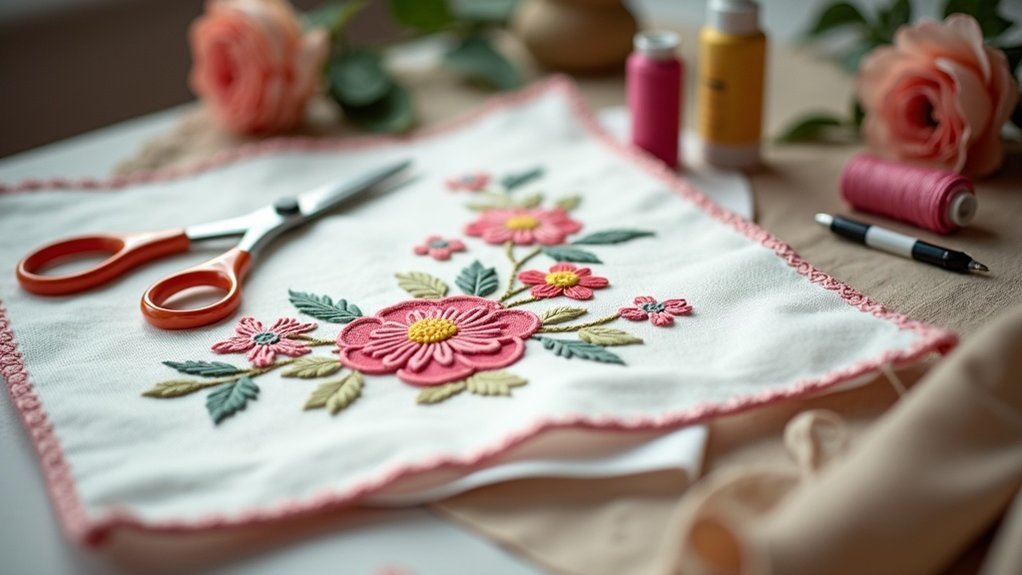
To prevent fraying edges on embroidery fabric, try several effective methods. You can deliberately fray the edges for a relaxed look or use pinking shears for zigzag cuts that minimize thread exposure. Taping edges with low-tack tape is quick, while sewing edges with a zigzag stitch or whip stitch secures them effectively. Additionally, applying a seam sealant enhances durability. Each method has its benefits, and there are more techniques to explore for a flawless finish.
Key Takeaways
- Deliberately fray the edges by pulling out a couple of threads to reduce future fraying risk before stitching.
- Use pinking shears to cut a zigzag pattern, minimizing thread exposure on woven fabrics.
- Tape the edges with low-tack tape for a quick, temporary solution to prevent fraying.
- Sew the edges using a zigzag stitch or whip stitch to secure them and prevent fraying effectively.
- Apply a seam sealant like Prym Fray Check to enhance durability and prevent fraying after sewing.
Deliberately Fray the Edges
If you’re looking to manage fraying edges on your embroidery fabric, deliberately fraying them can be a useful technique. By pulling out a couple of rows of threads along each edge, you can reduce the likelihood of further fraying during the stitching process.
This method is simple and doesn’t require additional tools, making it accessible for all skill levels. However, be cautious; while it helps manage fraying, it can lead to threads catching on frayed edges, complicating your stitching.
Consider this approach primarily for small projects where the risk of fraying is manageable and won’t compromise quality.
Use Pinking Shears
Using pinking shears can be an effective way to prevent fraying edges on your embroidery fabric, as these specialized scissors cut a zigzag pattern that minimizes thread exposure.
When you use pinking shears, remember that you’ll lose about 5mm of fabric allowance on each edge, so adjust your measurements accordingly. This method works especially well on woven fabrics, creating a sawtooth edge that stops threads from unraveling.
To guarantee a clean cut, choose high-quality pinking shears designed for fabric. However, be cautious with delicate fibers, as traditional stitching methods may be more suitable for those materials.
Tape the Edges
Taping the edges of embroidery fabric provides a quick and effective solution to prevent fraying, particularly when you opt for low-tack options like washi tape or masking tape.
This method efficiently secures edges but may leave adhesive residue, so be prepared for careful removal later. Remember to account for fabric allowance, as edges will need trimming, potentially reducing your project’s size.
Avoid strong adhesives like Sellotape, which can damage fabric upon removal. Taping is best for short-term projects or pieces that will be further finished, since it doesn’t offer the durability of stitched edges or Fray Check.
Sew the Edges
Sewing the edges of embroidery fabric effectively secures them and prevents fraying, making it a reliable method for both machine and hand techniques.
For machine sewing, use a zigzag stitch, which creates a protective barrier, or an overlock foot to trim and finish the edge simultaneously.
If you prefer hand sewing, whip stitching offers durability by securing the fabric edges together, though it may be time-consuming.
Make certain you maintain consistent stitch width and length for an even finish.
Also, prepare your fabric with a sufficient seam allowance and consider a straight stitch first for stabilization before applying your chosen edge technique.
Use a Seam Sealant Product
After securing the edges through sewing techniques, applying a seam sealant product can further enhance your embroidery fabric’s durability.
Products like Prym Fray Check and Aleenes Stop Fraying easily prevent fraying by being applied along fabric edges. They dry in about 20 minutes while remaining flexible, ensuring your fabric’s texture stays intact.
For precise coverage, use a fine tip applicator, and wash and iron the fabric beforehand for best results. Cost-effective options, such as HiTack Fray Stop Glue, make it feasible for small embroidery projects.
These non-toxic sealants can be left in place or trimmed, offering versatility in your work.