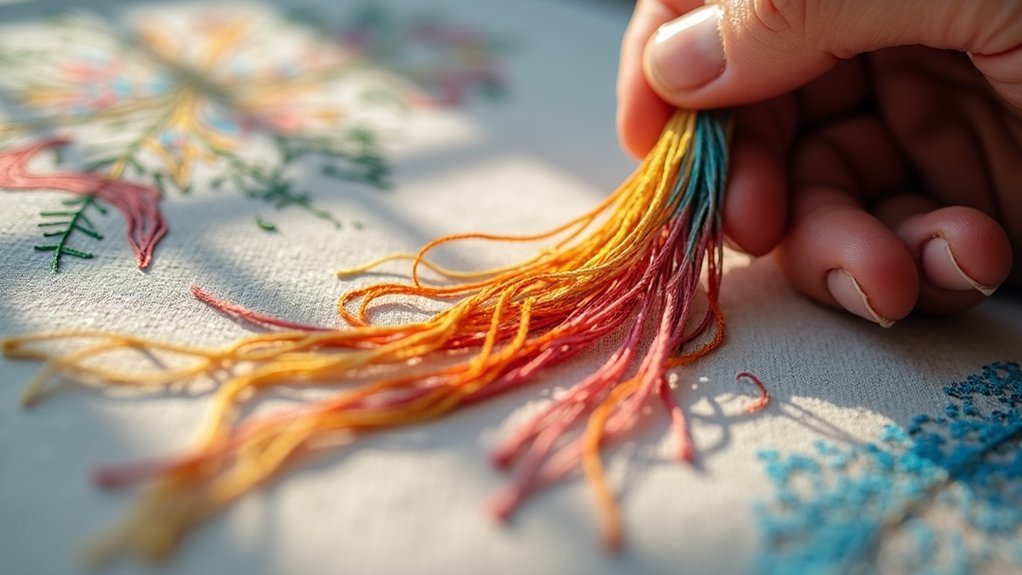
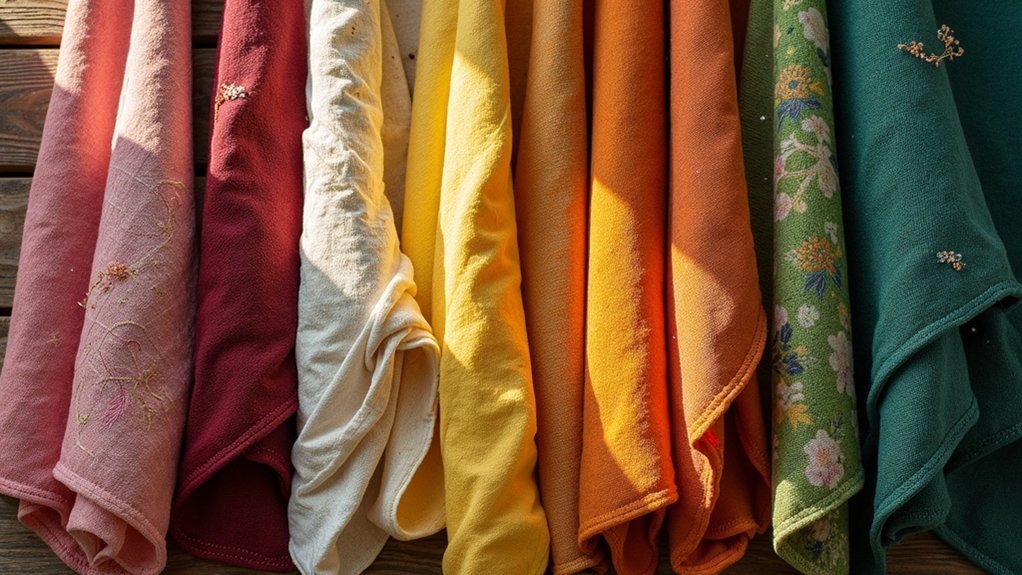
When picking embroidery fabrics by weave, consider a few key factors. Even-weave fabrics like Aida cloth provide uniform thread count, making stitch placement easier. For surface embroidery, plain weaves offer versatility. Natural fibers such as cotton and linen enhance softness, while synthetics deliver durability. Assess the fabric’s weight to match your design’s density, ensuring stability. Prepping your fabric correctly can also impact the final result. Keep exploring to uncover more tips for the best fabric choices.
Key Takeaways
- Choose even-weave fabrics like Aida cloth for counted thread work, as their uniform structure simplifies stitch placement.
- Opt for plain weave fabrics for surface embroidery, offering versatility and ease of stitching.
- Consider fabric weight; heavier fabrics support dense designs and prevent puckering, while lighter fabrics may need stabilizers.
- Select natural fibers like cotton and linen for softness and durability, while blends can balance durability and texture.
- Assess the tightness of the weave, as a tighter weave ensures smoother stitching and prevents gaps.
Understanding Fabric Weaves for Embroidery
When you choose fabrics for embroidery, understanding fabric weaves is essential, as each type significantly influences your project’s outcome.
Even-weave fabrics, like Aida cloth, offer a uniform thread count, making them perfect for counted thread work. Their grid structure simplifies stitch placement for beginners.
Even-weave fabrics, such as Aida cloth, provide a consistent thread count, making them ideal for beginners in counted thread embroidery.
In contrast, plain weave fabrics are versatile and ideal for surface embroidery, providing a smooth surface for various techniques.
Linen fabric, while rich and elegant, presents challenges due to its irregularities, affecting stitch compatibility.
Key Characteristics of Ideal Embroidery Fabrics
Selecting the right fabric goes beyond understanding weaves; it involves recognizing the key characteristics that make a fabric ideal for embroidery.
Look for fabrics with a tight weave, such as evenweave or high thread count linen, to guarantee smooth stitching and prevent gaps. Natural fibers like cotton and linen are preferred for their softness and durability, while synthetic options may compromise stitch quality.
The weight of the fabric should match the density of your design—heavier fabrics support dense stitching, while lighter fabrics might need backing for stability.
Choosing the right fabric weave directly impacts your embroidery’s appearance and ease.
Choosing Between Natural and Synthetic Fibers
While both natural and synthetic fibers have their advantages, your choice will greatly impact the quality and aesthetics of your embroidery.
Consider the following:
- Natural Fibers: Cotton and linen offer breathability and softness, enhancing visual appeal.
- Synthetic Fibers: Polyester and nylon provide durability but may be abrasive on embroidery threads.
- Textures: Natural fibers typically have a more inviting texture, while synthetics can lack warmth.
- Blends: Combining natural and synthetic fibers can balance durability and pleasant handfeel, ideal for various projects.
Ultimately, prioritize what aligns with your artistic vision and desired outcome.
Assessing Fabric Weight and Stability for Your Project
Evaluating fabric weight and stability is essential for achieving the best results in your embroidery projects, as the right combination can enhance both the execution and longevity of your designs.
Tightly woven materials like cotton twill provide a strong base for dense stitching, while medium-weight cotton suits most applications. Heavier fabrics are ideal for intricate, heavily stitched designs, preventing puckering over time.
In contrast, lighter weight fabrics may warp, requiring stabilizers or backing materials for support. Consider fabric blends for added durability, ensuring the weight aligns with your embroidery technique to guarantee a successful outcome.
Tips for Preparing Your Fabric for Embroidery
After evaluating fabric weight and stability, the next step is preparing your fabric for embroidery to confirm ideal results. Follow these tips:
- Pre-wash your fabric to remove dust, oils, and sizing, confirming it shrinks before embroidery.
- Use an embroidery hoop slightly larger than your design to maintain proper tension and minimize movement.
- Mark your designs with water-soluble pens or chalk, testing on a scrap piece first to confirm easy removal without damage.
- Prevent fraying by trimming edges with pinking shears or using a zigzag stitch before starting your project. This confirms an even-weave finish and enhances stitch quality.