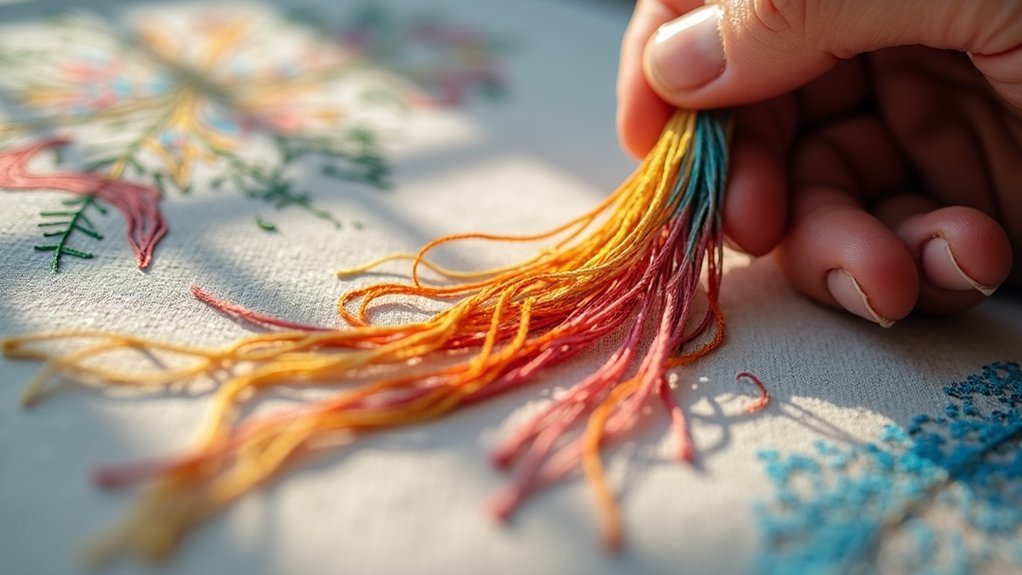
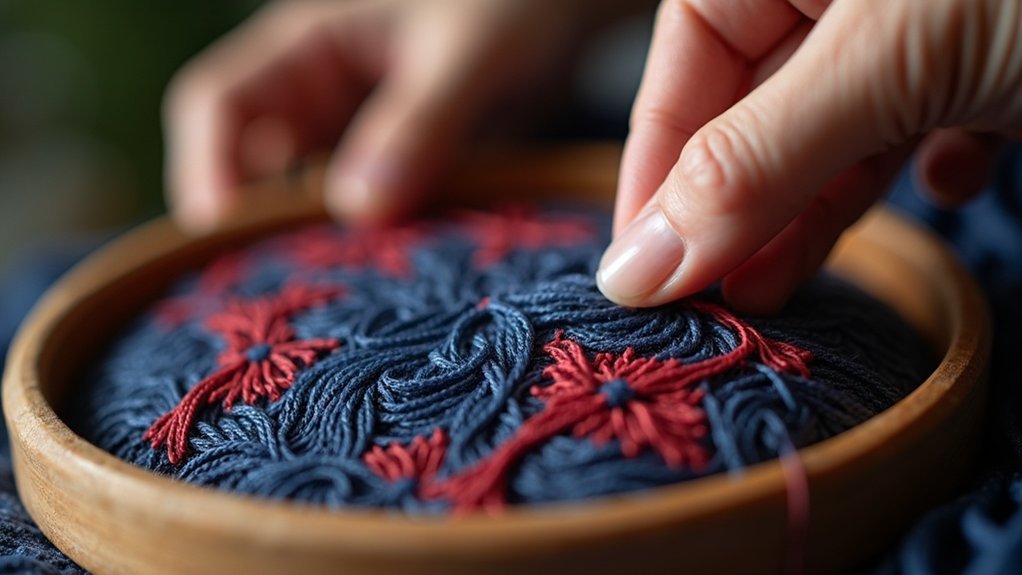
To drum-tighten fabric for embroidery, start by loosening the top screw and centering the fabric over the inner ring. Secure the outer ring and pull the fabric evenly while tightening the screw, ensuring it feels taut. The fabric should produce a drum-like sound when tapped, indicating proper tension. Continuously check for slack and distortion throughout the process. For tips on maintaining the right tension and using embroidery hoops effectively, keep exploring further.
Key Takeaways
- Loosen the top screw and center the fabric over the inner ring before securing the outer ring.
- Pull the fabric evenly while tightening the screw to achieve a taut surface.
- Ensure the fabric produces a drum-like sound when tapped, indicating proper tension.
- Continuously check for slack or creases during stitching to maintain tension.
- Use tools like twill tape to help maintain consistent tension throughout the embroidery process.
Understanding Drum-Tight Fabric
When you understand drum-tight fabric, you realize that achieving this state is essential for high-quality embroidery results.
Drum-tight fabric features a completely taut surface, ensuring an even stitching area. To keep fabric tight, pull it evenly around the hoop, securing it firmly to eliminate any creases or shadows.
Achieving drum-tight fabric is crucial; it ensures a smooth stitching surface free from creases and shadows.
The ideal tension allows the fabric to produce a distinct drum-like sound when tapped, confirming proper tightness suitable for embroidery.
Visual indicators of drum-tightness include a flat surface devoid of wrinkles or slack. This consistent tension across the hoop prevents distortion, greatly enhancing your embroidery’s final quality and overall success.
Steps to Achieve Drum-Tight Fabric
Achieving drum-tight fabric is essential for successful embroidery, and it starts with properly setting up your embroidery hoop.
Loosen the top screw, then place the fabric over the inner ring, guaranteeing it’s centered along the grain. Secure the outer ring and tighten the screw while pulling the fabric evenly around the hoop to maintain consistent tension.
The fabric should feel taut with minimal give, producing a drum-like sound when tapped. If distortion occurs, loosen the screw, tighten the fabric, and retighten.
Continuously check for slack or creases to guarantee the fabric remains flat and smooth throughout the embroidery process.
Visual Indicators of Proper Tension
After ensuring your fabric is drum-tight, it’s important to recognize the visual indicators that confirm proper tension.
Your fabric should lie completely flat, showing no slack or creases, which indicates it’s the right size for embroidery. When you tap the surface, listen for a drum-like sound, signaling appropriate tension.
Inspect the entire circumference; consistent tension is essential, so no areas should feel looser than others. Shadows on the fabric surface reveal imbalance, so aim for a smooth appearance.
Comparing images of taut versus loose fabric can help you visualize the ideal tightness needed for successful embroidery projects.
Importance of Maintaining Fabric Tension
Maintaining proper fabric tension is essential for achieving a high-quality finished piece, as it guarantees stitches are evenly spaced and free from distortion.
When your fabric is drum-tight, you’ll find stitching becomes easier and more precise, enhancing your overall experience.
Inconsistent tension can lead to visible puckering and thread breakage, undermining the durability and aesthetic of your embroidery work.
Quality of Finished Piece
When you guarantee that the fabric is drum-tight during embroidery, you greatly enhance the quality of the finished piece. Proper tension is vital for achieving a polished look. Here’s why:
- Even Stitches: Taut fabric guarantees stitches sit uniformly, enhancing appearance.
- Prevents Puckering: It eliminates distortion, safeguarding durability.
- Cleaner Lines: Tighter tension allows for better-defined details, important for intricate designs.
- Reduced Breakage: Consistent tension minimizes thread breakage and shifting, streamlining your process.
Using tools like twill tape and slate frames can help maintain this tension, supporting the longevity and beauty of your embroidery work.
Ease of Stitching
Ensuring your fabric is drum-tight directly contributes to the ease of stitching, as it allows for smooth needle movement and minimizes the risk of skipped stitches. Proper fabric tension creates a stable surface, enabling you to follow intricate designs effortlessly. Additionally, consistent tension across the hoop prevents thread bunching, leading to a clean finish. When your fabric is tightly secured, you can focus on your creativity rather than battling fabric movement.
| Benefit of Drum-Tight Fabric | Impact on Stitching | Embroidery Quality |
|---|---|---|
| Smooth needle movement | Reduces skipped stitches | Professional finish |
| Stable surface | Easier pattern following | Enhanced creativity |
| Consistent tension | Uniform stitches | Improved results |
Avoiding Fabric Distortion
Proper fabric tension is essential to avoid distortion during embroidery, and it’s important to achieve this balance to maintain the integrity of your design.
To guarantee ideal fabric tension and prevent distortion, follow these steps:
- Pull the fabric evenly around the hoop.
- Regularly check for visible slack or creases.
- Listen for a drum-like sound when tapping; a muted sound indicates loose fabric.
- Avoid placing the hoop over seams or pockets to maintain even tension.
Tips for Using Embroidery Hoops Effectively
To effectively use embroidery hoops, you should first verify the fabric is drum-tight, as this consistency is essential for achieving high-quality results.
Pull the extra fabric around evenly before tightening the screw to maintain consistent tension. Using plastic no-slip hoops can enhance your ability to grip the fabric; make sure the lip faces up for maximum stability.
Ensure even fabric distribution before tightening the screw for consistent tension, and opt for plastic no-slip hoops for enhanced grip.
Always check the inner and outer rings for a proper seal to prevent loosening during stitching. Avoid placing the hoop over seams or pockets, as they can create uneven tension, disrupting your embroidery process.
Regularly inspect metal hardware for sturdiness.
Choosing the Right Fabric and Hoop
Choosing the right fabric and hoop is essential for achieving the best results in your embroidery projects. Here are some key considerations:
- Opt for natural fabrics like cotton and linen for ideal tension—these provide better grip.
- Use a circular embroidery hoop for even tension; avoid oval or square shapes.
- Confirm the hoop size allows 1.5 to 2 inches of extra fabric around your design to aid tightening.
- With plastic no-slip hoops, position the lip facing up to enhance grip and prevent slippage.
Alternatives for Better Tension Management
While selecting the right fabric and hoop lays the foundation for your embroidery success, exploring alternatives for better tension management can greatly enhance your results. Consider using slate frames for superior support and less distortion on larger pieces. You can also enhance grip with fabric or tape binding around hoop edges, preventing slippage. Additionally, opt for plastic no-slip hoops, ensuring the lip faces up. Doubling thin fabrics and using various hoop sizes for adequate margins can further maintain even tension.
| Method | Benefits |
|---|---|
| Slate Frame | Better support, less distortion |
| Fabric Binding | Enhanced grip, prevents slippage |
| Plastic No-Slip Hoops | Effective grip, consistent tension |
| Doubling Fabrics | Adds support, reduces puckering |
| Varied Hoop Sizes | Accommodates fabric margins, improves tension |
Resources for Further Learning and Support
Accessing a variety of resources can greatly enhance your understanding of achieving drum-tight fabric for embroidery.
Here are some valuable options:
- Online Tutorials: Watch step-by-step videos that visually demonstrate the tightening process.
- Embroidery Forums: Join communities where experienced embroiderers share tips and answer your questions on fabric tension.
- Introductory Courses: Enroll in beginner embroidery classes that cover essential techniques, including fabric management.
- Instructional Books: Explore guides focusing on embroidery basics, with detailed sections on fabric tension.
Utilizing these resources for further learning and support will elevate your embroidery skills and confidence.