To identify embroidery needle sizes, start with the numbering system—lower numbers indicate larger needles. Sizes typically range from 1 to 12 for embroidery needles and 13 to 28 for tapestry needles. Pay attention to the eye size, as larger eyes accommodate thicker threads. Check recommended sizes for different fabric weights, like 75/11 for lightweight fabrics and 80/12 for medium. Organizing needles by size can streamline your projects. Continue to explore for methods to enhance your needlework skills.
Key Takeaways
- Needle sizes are designated by numbers; lower numbers indicate larger needles, with sizes ranging from 1 to 12 for embroidery needles.
- To accommodate multiple thread strands, choose a size 5 needle for 3-4 strands, while size 13 is the largest for tapestry needles.
- The eye size of a needle should match the thread thickness; larger eyes are suited for thicker threads and multiple strands.
- Test different needle sizes on scrap fabric to assess their impact on stitch quality and appearance before starting your project.
- Consult embroidery blogs, workshops, and community forums for guidance on selecting the appropriate needle size for your projects.
Understanding Needle Size Designations
When you’re diving into embroidery, understanding needle size designations is vital for achieving the best results.
Needle size designations utilize a numbering system where lower numbers indicate larger needle sizes; for example, size 1 is larger than size 12. Embroidery needles range from size 1 to 12, with size 5 being ideal for using 3-4 strands of embroidery thread.
Tapestry needles employ a distinct sizing from 13 to 28, with size 13 as the largest. Choosing the right types of needles guarantees effective stitching, and multi-packs often include sizes 3-9 for versatile use across various embroidery projects.
Importance of Eye Size in Needle Selection
When selecting an embroidery needle, the eye size plays a pivotal role in accommodating various thread types and ensuring compatibility with your fabric.
A larger eye can handle thicker threads or multiple strands without causing damage, while a smaller eye is better suited for fine threads to prevent slippage.
Understanding these variations allows you to enhance your stitching efficiency and overall project quality.
Needle Eye Variations
Understanding the significance of needle eye size is essential for achieving ideal results in embroidery.
Needle eye variations directly influence your stitching experience; larger eyes accommodate thicker threads, while smaller eyes are perfect for fine threads.
Long oval eyes in embroidery needles simplify threading and allow for multiple strands, enhancing versatility.
Tapestry needles feature a blunt, larger eye to prevent snagging, ideal for counted thread work.
Similarly, chenille needles, with their larger eye, facilitate smooth stitching with thick threads.
Choosing the right needle size enhances your work, reducing thread breakage and ensuring a clean, professional finish in your embroidery projects.
Thread Accommodation
Selecting the right needle size is essential for ensuring that your embroidery projects run smoothly, as the eye size directly impacts thread accommodation. Here are three key considerations:
- Larger Eyes: Needles like the Chenille needle can handle multiple strands of thicker threads, perfect for textured work.
- Tapestry Needles: These have blunt tips and large eyes, ideal for counted thread work without snagging.
- Embroidery Needles: With long oval eyes, they facilitate easier threading for surface embroidery, reducing thread fraying and preventing fabric damage.
Choosing the correct needle eye size is crucial for smooth stitching and preserving your materials.
Fabric Compatibility
Choosing the right needle eye size is essential for achieving ideal fabric compatibility in your embroidery projects. The eye size directly impacts how well the needle accommodates thread thickness and fabric type, affecting stitching precision. For fine threads, opt for smaller eye sizes to minimize thread slippage, while larger eyes suit thicker threads, perfect for heavier materials. Blunt-tip needles with larger eyes work best on loosely woven fabrics. Understanding these compatibility factors guarantees a smooth embroidery process and enhances the overall finish.
| Needle Type | Eye Size | Best For |
|---|---|---|
| Embroidery Needle | Small | Fine threads, delicate fabrics |
| Tapestry Needle | Large | Thick threads, heavy fabrics |
| Chenille Needle | Extra Large | Multiple strands, bulky materials |
| Universal Needle | Medium | General use, varied fabrics |
Testing Needles on Fabric and Thread
When testing needle sizes, verify your fabric type and thread weight are compatible for ideal results.
Use swatches that mimic your project materials to see how the needle interacts with the fabric and thread.
This careful selection process helps you identify the best needle for achieving clean, professional stitches.
Fabric Type Compatibility
Understanding fabric type compatibility is essential for achieving high-quality embroidery results, as using the right needle size can greatly impact your project.
Here are three key considerations:
- For lightweight fabrics, use a size 75/11 needle; for medium-weight fabrics, opt for an 80/12 needle.
- Always match the needle size to the thread type; finer threads may need smaller needles (size 9 or 10) to prevent fraying.
- Test a stitch on a scrap piece of the same fabric to assess how your chosen embroidery needles affect the finish and appearance.
This guarantees ideal compatibility and prevents damage during stitching.
Thread Weight Considerations
Selecting the right needle size for your embroidery project hinges on the weight of the thread you’ll be using. Heavier threads typically require larger needle sizes, while finer threads are best matched with smaller needles.
For example, a size 5 embroidery needle is versatile for most thread weights, especially when using multiple strands of embroidery floss. Conversely, size 9 needles work well with finer threads to prevent slippage.
Testing needle sizes on scrap fabric can help you avoid issues like thread fraying or fabric damage, ensuring smooth stitching throughout your project. Always align needle size with thread weight for ideal results.
Common Needle Sizes for Hand Embroidery
Hand embroidery relies on a range of needle sizes, typically from 1 to 12, each suited for different threads and fabrics. Understanding common embroidery needle sizes enhances your stitching experience and thread compatibility.
Hand embroidery utilizes various needle sizes, from 1 to 12, each tailored for specific threads and fabrics.
Here are three key sizes to take into account:
- Size 5 embroidery needles: Versatile for 3-4 strands of embroidery thread, great for general use.
- Size 3 needles: Ideal for thicker threads, perfect for techniques like French knots.
- Size 9: Recommended for fine details with one strand, ensuring ease of stitching and minimizing the size of holes in the fabric.
Tapestry needles are also essential for counted thread work with their blunt tips.
Tips for Organizing Your Needles
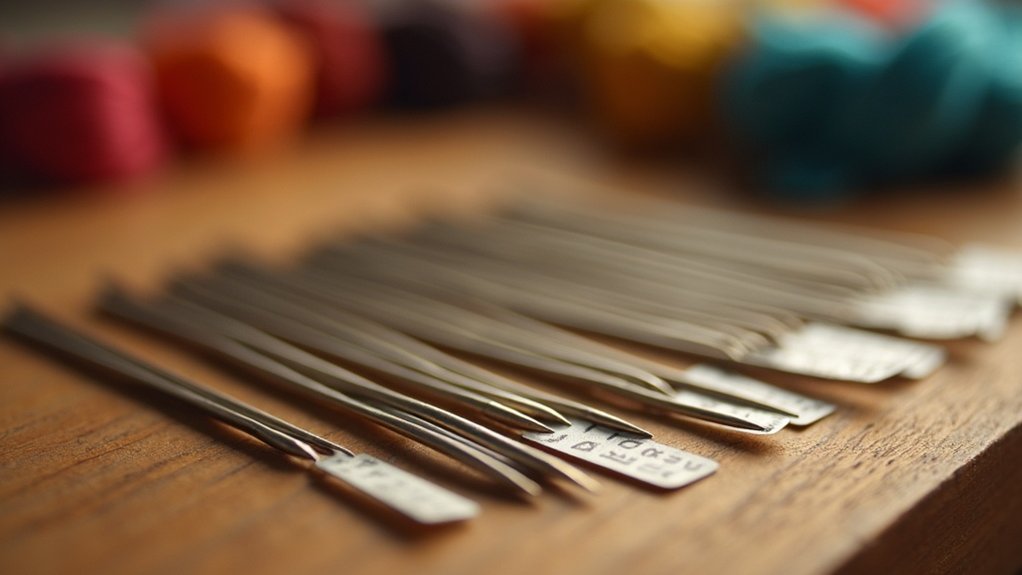
Organizing your embroidery needles efficiently can save you time and frustration during projects. Use a needle book or labeled felt strips to categorize and store different needle sizes. Consider variety packs or multi-packs of needles that include sizes #3 to #9 for versatility. Implement needle ID Cards to quickly identify needle types and sizes, reducing confusion. Store your needles in zippered bags with usage labels to keep them sorted and prevent loss. Familiarize yourself with needle brands, as sizing variations can occur, enhancing your needle identification accuracy for your embroidery projects.
| Needle Type | Size Range | Storage Method |
|---|---|---|
| Hand Needles | #3 – #9 | Needle Book |
| Embroidery | #5 – #9 | Zippered Bags |
| Specialty | #1 – #3 | Needle ID Cards |
| Quilting | #7 – #11 | Labeled Felt Strips |
| Assorted | Multi-packs | Zippered Bags |
Identifying Specialty Needles
How can you guarantee you’re using the right specialty needle for your embroidery projects? Selecting the appropriate needle enhances your embroidery techniques and guarantees ideal results. Here’s a quick guide:
Choosing the right specialty needle is essential for achieving the best results in your embroidery projects.
- Beading Needles: Long, thin shafts with small eyes for fine threads—perfect for intricate beadwork.
- Chenille Needles: Sharp tips and larger eyes suitable for multiple strands of thicker threads in surface embroidery.
- Sashiko Needles: Thicker and rigid, designed for consistent multiple running stitches in Sashiko projects.
Understanding these specialty needles, along with their needle sizes and thread types, will elevate your embroidery experience.
Recommendations for Needle Brands
When selecting embroidery needles, three brands consistently stand out for their quality and performance: DMC, John James, and Clover Gold Eye.
DMC needles are known for their durability and precision, ideal for achieving quality embroidery results.
John James needles excel in sharpness and feature a smooth finish, minimizing fabric snagging.
Clover Gold Eye needles boast a unique design that simplifies threading, making them perfect for beginners or those using multiple strands.
These brands offer needle packs with various sizes, typically ranging from 3 to 9, ensuring you have the right needle sizes for your diverse embroidery projects.
Community Resources for Needlework Education
While many embroiderers rely on personal experience, community resources can greatly enhance your knowledge of needlework, especially when it comes to understanding needle sizes.
Here are three valuable resources to evaluate:
- Embroidery Blogs: Discover free tutorials and articles that clarify needle sizes and their appropriate uses.
- Workshops: Local sewing and craft shops often host hands-on classes that help you identify and use different needle sizes effectively.
- Social Media Groups: Join communities where experienced stitchers share recommendations and advice on needle selection, providing a wealth of knowledge for your needlework education.