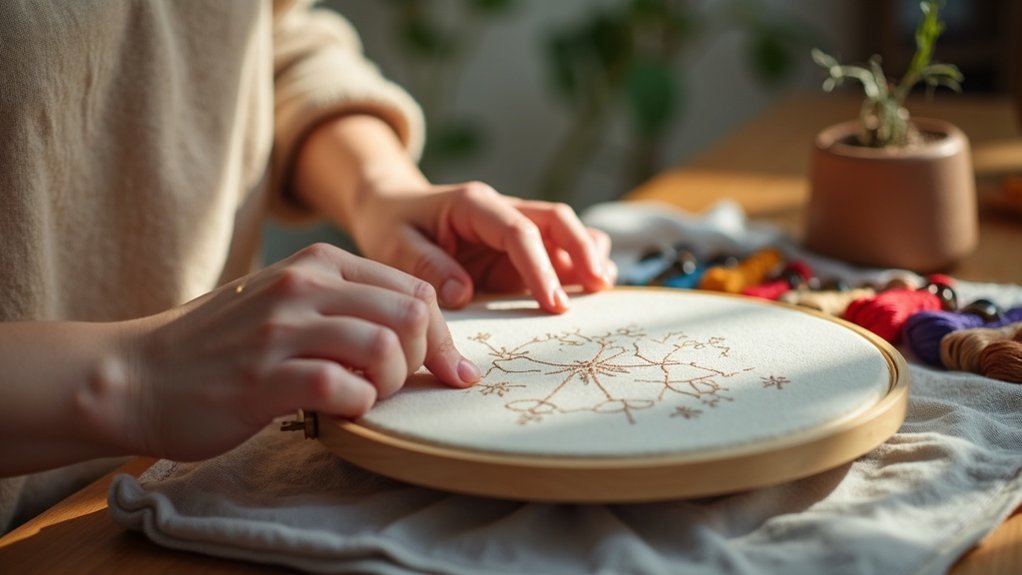
To prevent wrist strain during embroidery, focus on maintaining proper posture by keeping your arms at or below bust level and sitting up straight. Use ergonomic tools like hands-free embroidery hoops and wrist supports to minimize strain. Remember to take breaks every 30 minutes to stretch and refresh your hands. Also, try to use shorter lengths of thread to limit hand movement. There’s so much more you can learn about keeping your wrists healthy while you create.
Key Takeaways
- Maintain straight wrists and proper posture by keeping arms at or below bust level and feet flat on the floor while stitching.
- Use ergonomic tools, such as hands-free embroidery hoops and adjustable stands, to reduce wrist strain and promote comfort.
- Take regular breaks every 30 minutes to stretch and promote circulation, helping to prevent repetitive strain injuries.
- Opt for shorter lengths of thread to minimize hand movement and reduce strain on your wrists during embroidery.
- Keep elbows close to your body and use both hands for alignment to maintain neutral wrist positions while working.
Understanding Wrist Strain in Embroidery
When you’re deeply engrossed in embroidery, it’s easy to overlook how your wrist position can impact your comfort. Poor wrist alignment often leads to strain, especially from repetitive motions.
To prevent this, make sure your wrists stay straight and avoid excessive bending while stitching. Consider using ergonomic tools, like a hands-free embroidery hoop, for better wrist support.
Remember to take breaks every 30 minutes to stretch your wrists and hands; this simple act can greatly reduce your risk of repetitive strain injury (RSI).
Also, try using shorter lengths of thread to lessen the strain on your joints. Your comfort matters!
Importance of Proper Posture
Although you mightn’t think about it during those intricate stitching sessions, proper posture is vital for preventing wrist strain.
Keeping your arms at or below bust level helps align your wrists, minimizing the risk of wrist pain. Sit up straight with your feet flat on the floor and use a chair that supports your back.
Adjust your work surface height to guarantee your wrists remain straight and aligned while you create beautiful hand embroidery. Practicing good posture not only enhances your comfort but also reduces the likelihood of repetitive strain injuries, allowing you to enjoy your craft longer.
Ergonomic Tools to Consider
Maintaining good posture is just one part of safeguarding your wrists during embroidery; the tools you use can make a significant difference too.
Consider these ergonomic options to minimize wrist pain and improve your experience:
- Hands-free embroidery hoop for comfortable stitching
- Wrist support or brace for compression and stability
- Ergonomic scissors and rotary cutters to reduce wrist movements
- Adjustable embroidery stands tailored to your height
- Non-slip mats for foot pedals and tools to enhance stability
Techniques for Reducing Strain
To effectively reduce wrist strain during embroidery, it’s essential to adopt specific techniques that prioritize your comfort and well-being.
First, take shorter lengths of thread to minimize hand movement and lessen strain on your wrists. Gradually pull the thread through the fabric instead of yanking, preventing unnecessary tension.
To minimize wrist strain, use shorter thread lengths and pull gently through the fabric for a smoother experience.
Position your elbows close to your body and rest them when possible to stabilize your movements. Keep your wrists neutral by using both hands, with one hand on top for alignment.
Finally, consider switching to a hands-free embroidery hoop to reduce the need for gripping, further alleviating strain.
Incorporating Breaks Into Your Routine
While you immerse yourself in the intricate world of embroidery, don’t underestimate the power of regular breaks to protect your wrists from strain.
To keep those aches and pains at bay, it’s best to take a break every 30 minutes to an hour. Here are some tips to help you establish this essential routine:
- Set a timer to remind you to take breaks.
- Stand up and walk around during your breaks.
- Stretch your wrists and hands to promote blood circulation.
- Change activities to keep your mind engaged.
- Use breaks to refresh your creativity and productivity.
Your wrists will thank you!
Stretching Exercises for Relief
As you immerse yourself in the delicate art of embroidery, incorporating stretching exercises can be a game changer for your wrist health.
Try simple wrist stretches by flexing and extending your wrists for 5-10 seconds to reduce pain and stiffness. Spread your fingers wide to alleviate tension and enhance dexterity, minimizing the risk of strain.
Regularly perform wrist circles to promote blood flow and prevent repetitive strain injuries. Additionally, extend your arm with your palm up, gently pulling back on your fingers to relieve forearm tension.
Remember to take short breaks every 30 minutes to maintain your wrist health.
Adjusting Your Workspace
To keep your wrists comfortable while embroidering, adjust your table height so it’s at elbow level, allowing your arms to rest naturally.
Pair that with an ergonomic chair that supports your lower back, helping you maintain a straight posture.
These simple changes can make a big difference in reducing strain and enhancing your crafting experience.
Optimal Table Height
Finding the right table height can make a significant difference in your embroidery experience. To achieve the ideal table height and create an ergonomic workspace, consider the following:
- Your elbows should be at a 90-degree angle when your hands rest on the table.
- The table surface should be at or slightly below wrist height while seated.
- Adjust your table according to your chair height for comfort.
- Use a height-adjustable table to suit different seating positions.
- Regularly check and adjust your workspace to prevent wrist strain during long sessions.
Ergonomic Chair Selection
Selecting the right ergonomic chair is essential for a comfortable embroidery experience. An ideal chair supports proper posture, minimizes wrist strain, and keeps you focused. Consider the table below to guide your selection:
| Feature | Importance | Benefits |
|---|---|---|
| Adjustable Height | Guarantees elbows are at 90 degrees | Reduces wrist strain |
| Lumbar Support | Maintains proper posture | Eases back tension |
| Adjustable Armrests | Prevents wrist elevation | Offers flexibility during stitching |
| Seat Depth | Allows backrest contact | Keeps feet flat for stability |
| Cushioned Seating | Enhances comfort during long sessions | Prevents awkward movements |
Choose wisely for your crafting joy!
Seeking Professional Advice
If you’re experiencing persistent wrist pain while embroidering, it’s essential to consult a healthcare professional as soon as possible.
Seeking professional advice can help identify issues like inflammation of the tendons and guarantee you receive proper care. Early intervention is key to avoiding further injury.
Here’s what you can expect:
- A thorough diagnosis to rule out conditions like arthritis
- Recommendations for ergonomic adjustments, including proper stitching posture
- Suggested exercises or physical therapy to strengthen your wrist
- Advice on using supports like wrist braces
- Insights from occupational therapy for maintaining wrist health
Prioritize your well-being to continue creating beautifully!