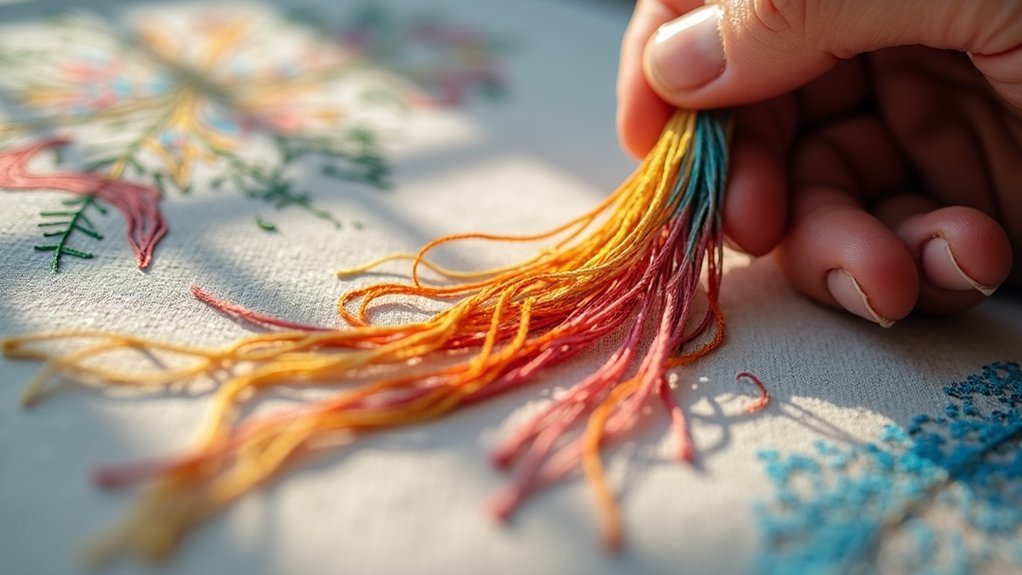
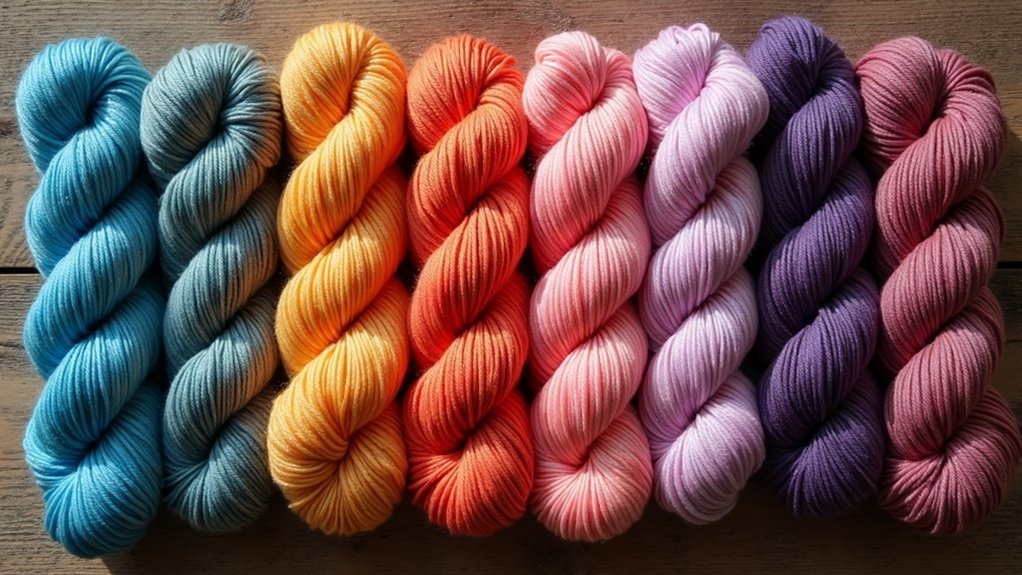
When choosing yarn for punch needle embroidery, opt for smooth textures like 100% wool or Oeko-Tex® certified cotton. Make sure the yarn weight matches your needle size; thicker yarns work best with wider needles, while finer ones suit thinner needles. Remember to remove knots for a consistent flow, and test your yarn by pulling it through the needle. This will prevent jams and make certain your loops look great. Stick around to uncover more tips for perfecting your projects!
Key Takeaways
- Select smooth yarns like 100% wool or Oeko-Tex® certified cotton to prevent snagging during punch needle embroidery.
- Match yarn weight to needle size; thicker yarns are better for wider needles, while finer yarns suit thinner needles.
- Remove any knots from the yarn before starting to ensure smooth looping and prevent snags.
- Test yarn movement through the needle by pulling a swatch to ensure consistent loop sizes and prevent jamming.
- Experiment with multiple strands of fine yarn for enhanced control and richer texture in your projects.
Understanding Yarn Characteristics for Punch Needle
When you choose yarn for punch needle embroidery, it’s essential to understand how different characteristics can affect your project.
Smooth yarn is vital for easy movement through Oxford punch needles; avoid fluffy or lumpy textures that snag. Make certain the yarn weight matches your needle size—thicker yarn for wider needles and lighter yarn for finer ones.
Testing yarn movement helps prevent jams and slippage. Opt for quality yarns like 100% wool or Oeko-Tex® certified cotton for durability and overall excellence.
Don’t forget to remove any knots in yarn to guarantee even loops, enhancing the final outcome of your punch needle projects.
Recommended Yarn Types for Punch Needle Projects
Selecting the right yarn type for your punch needle projects can make all the difference in achieving stunning results.
100% wool rug yarn stands out as the top choice for durability, especially when creating rugs, thanks to its coarse texture that forms even loops and grips the fabric securely.
If you prefer non-animal products, Aran 100% cotton yarn offers a smooth finish for smaller decorative items.
For enhanced control, consider using multiple strands of fine yarn.
Beginners should opt for thicker yarns with regular Oxford punch needles to keep the fabric in place and simplify the punching process.
Choose wisely!
Matching Yarn Weight to Punch Needle Size
Once you’ve chosen the right yarn types for your punch needle projects, matching the yarn weight to your punch needle size becomes the next important step. Each Oxford needle is tailored for specific yarn weights; thicker needles suit chunkier yarns while thinner needles work best with finer options. Using the wrong thickness can lead to jamming or slipping loops. Testing yarn on a swatch is essential to verify it feeds smoothly and anchors in the foundation fabric. The right match enhances your piece’s quality and durability. Here’s a handy reference:
| Needle Size | Recommended Yarn Weights | Usage |
|---|---|---|
| Fine | 3-4 weight | Detail work |
| Regular | 5-6 weight | Standard rugs |
| Chunky | 7-8 weight | Quick projects |
Preparing Your Yarn for Punch Needle Embroidery
Before diving into your punch needle embroidery project, it’s crucial to prepare your yarn properly to guarantee a smooth and enjoyable experience.
Start by removing any knots from your craft yarn, as they can disrupt the flow and cause loops to unravel on your punch needle fabric.
Test the yarn you’ll use for punch by pulling it through your needle; it should feed effortlessly and create consistent loop sizes.
Remember, thicker the yarn requires a larger size needle, while finer yarn works with regular punch needles.
Consider using multiple strands of fine yarn for better control and texture richness.
Handling Knots and Yarn Scraps
When you’re getting ready to punch needle, it’s vital to remove any knots in your yarn to guarantee smooth looping.
Knots can snag and even cause your loops to unravel, so take a moment to check your yarn before you start.
Plus, don’t forget about the potential of using yarn scraps from previous projects, which not only saves resources but also sparks your creativity!
Importance of Knot Removal
Although it might seem tempting to dive right into your punch needle project, taking the time to remove knots from your yarn is crucial for a successful and enjoyable experience. Knots can disrupt the flow, causing loops to unravel. Here’s a quick guide on managing knots:
| Action | Benefit |
|---|---|
| Remove knots | Guarantees smooth punching experience |
| Test yarn movement | Identifies knots for better control |
| Unthread if necessary | Fixes loops that aren’t holding |
| Check yarn scraps | Maintains consistent loop quality |
| Prevent snagging | Enhances overall project success |
Utilizing Yarn Scraps
Utilizing yarn scraps can breathe new life into your punch needle projects, especially when you’re looking to add unique color variations and textures. By incorporating these remnants, you not only promote sustainability but also create visually stunning pieces.
Before you start punching, make certain to handle any knots, as they can lead to frustration and inconsistent loops.
- Test the movement of yarn scraps through your punch needle tools.
- Remove knots to prevent snagging and guarantee loops hold properly.
- Experiment with different types of yarn, like acrylic, to see what works best for your project.
Pull the yarn with confidence!
Preventing Snags During Punching
Handling yarn scraps can lead to unexpected challenges, especially when it comes to preventing snags during your punch needle embroidery.
Before you start, always remove knots from your yarn; they can snag and disrupt the smooth flow through the needle. Using multiple strands of fine yarn enhances control, reducing the chances of snagging.
Test the yarn movement to guarantee it flows seamlessly, avoiding looping issues on the fabric. If loops aren’t holding due to knots or snags, don’t hesitate to unthread the needle and address the problem.
This attention to detail guarantees a successful and enjoyable embroidery experience.
Testing Yarn for Compatibility With Your Project
Before diving into your punch needle project, it’s essential to test your yarn for compatibility to confirm a smooth crafting experience.
Testing your yarn for compatibility is crucial for a seamless punch needle crafting experience.
Conduct a test swatch to verify your yarn glides effortlessly through the needle. Here are a few tips to keep in mind:
- Use multiple strands of fine yarn for better control and loop consistency.
- Match yarn weight with your punch needle size; bulky weight yarn needs wider needles.
- Choose smoother yarns to prevent snagging, especially if you’re a beginner.