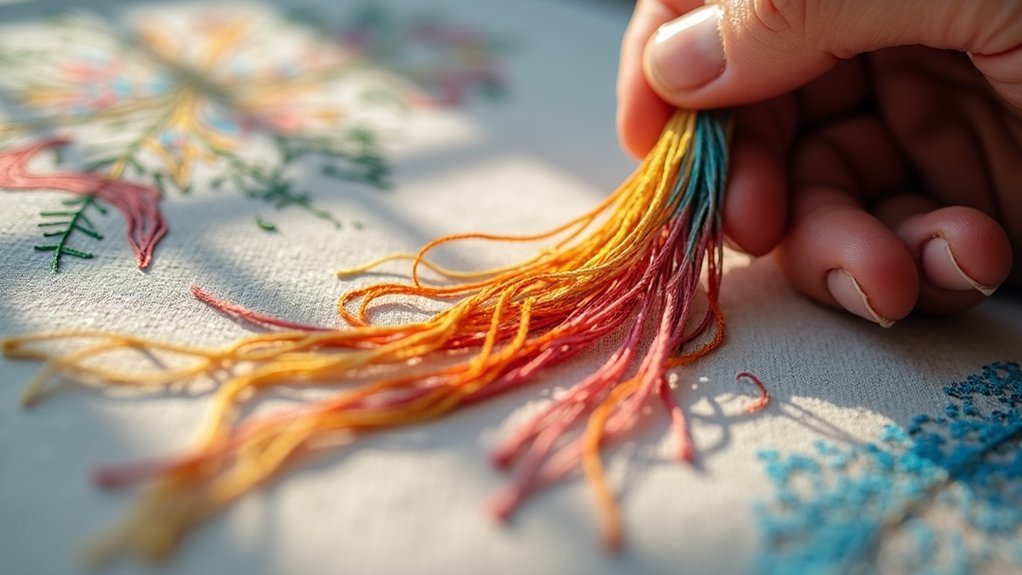
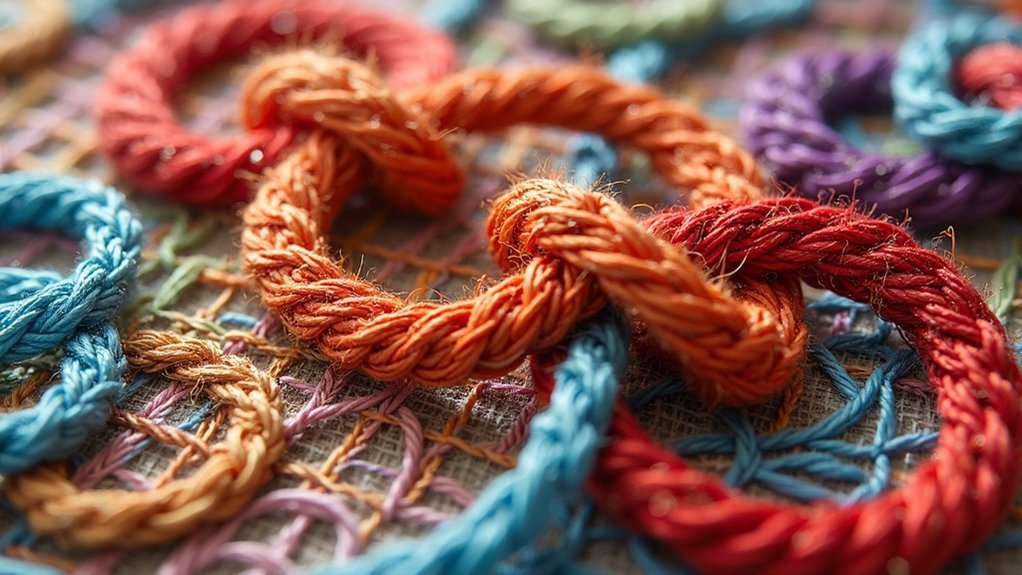
To add texture in embroidery with stitches, combine different techniques like layering satin stitches with seed stitches to create depth. Use various threads, such as pearl cotton for sheen or metallics for sparkle, to enhance visual impact. Incorporate 3D elements like beads and sequins for added dimension. Experiment with contrasting hues and composite stitch methods to enrich your designs. You’ll discover even more exciting ways to elevate your embroidery as you explore further!
Key Takeaways
- Combine various stitches like knotted pearl and raised buttonhole to create dimensional texture in your embroidery.
- Layer stitches such as seed stitch with satin stitch to enhance depth and visual interest.
- Use different thread types, like pearl cotton and metallics, to influence the texture and sheen of your work.
- Incorporate 3D embellishments like beads and sequins for added tactile and visual appeal in your designs.
- Experiment with contrasting hues and layering techniques to bring life and depth to your embroidery projects.
Understanding Texture in Embroidery
Texture in embroidery transforms a flat piece of fabric into a fascinating visual experience. You can achieve this by using various stitches like knotted pearl stitch or raised buttonhole band, adding physical dimension.
Layering stitches, such as combining seed stitch with satin stitch, enhances depth. Experimenting with different threads, like pearl cotton or metallics, influences the tactile experience.
Thread painting allows you to create stunning color gradients, enriching the texture further. Finally, incorporating 3D embellishments like beads and sequins elevates your design, adding unique visual interest.
Together, these elements create an enthralling tapestry that serves both beauty and function.
Techniques for Layering Stitches
Building on your understanding of texture, layering stitches is a dynamic way to enhance the visual depth of your embroidery work. You can add texture by combining long and short stitches to create smooth shifts between colors.
For a more dimensional effect, consider layering satin stitches of varying lengths, forming padded or raised sections. Additionally, incorporating seed stitches alongside satin stitch fills gaps, enriching the overall look.
Experimenting with these techniques not only boosts creativity but also leads to unique designs, inviting you to explore new possibilities with each stitch. Embrace layering stitches to elevate your embroidery projects.
Exploring Composite Stitch Methods
In exploring composite stitch methods, you’ll find that combining different stitches not only enhances texture but also adds visual intrigue to your work.
Layering techniques, like stitching raised elements over a flat base, creates depth and dimension that truly elevates your design.
Don’t hesitate to experiment with color families; using contrasting hues can bring your stitches to life in unexpected ways.
Combining Different Stitches
While you might be familiar with basic embroidery stitches, combining different techniques can transform your work into a textured masterpiece. By layering satin stitches over seed stitches, you can create rich textures that captivate.
Techniques like whipped stitches enhance visual appeal, introducing contrasting colors and textures. Composite stitches, such as scalloped buttonholed chain stitch over chain stitch loops, allow for intricate designs.
Building decorative bands on straight stitch foundations, like raised stem stitches, adds dimension to flat areas. Exploring detached buttonhole or trellis stitches provides unique fillings, bringing a tactile quality that’s great for adding depth and visual interest to your embroidery projects.
Layering Techniques for Depth
To create depth in your embroidery, layering techniques can be a game-changer, especially when you explore composite stitch methods. Combining layering stitches like padded satin with seed stitch can yield a rich, textured effect. Utilize straight stitch bars beneath raised stem or chain stitches for decorative bands. Techniques like Casalguidi embroidery leverage raised stitches over straight foundations, enhancing dimension. Whipped stitches, such as whipped backstitch, can add color and texture. Experimenting with these composite stitch methods allows for unique effects and dynamic interplay of textures.
| Technique | Description | Effect |
|---|---|---|
| Padded Satin + Seed | Rich, layered texture | Depth and dimension |
| Raised Stem on Bars | Decorative bands for visual interest | Enhanced dimension |
| Casalguidi | Raised over straight foundation | Intricate texture |
| Whipped Backstitch | Added color and texture | Linear embellishment |
| Composite Methods | Stitches into one another | Unique textures |
Experimenting With Color Families
Exploring color families can greatly elevate the visual impact of your embroidery, especially when layered with composite stitch methods. By using shades and tints from the same palette, you create depth and dimension, enhancing texture.
Layering stitches in these colors allows for a harmonious blend, while strategic color placement highlights specific areas, drawing attention to your design. Combine techniques like scalloped buttonholed chain stitches with contrasting tones to achieve striking effects.
Additionally, thread painting techniques enable smooth shifts between shades, resulting in a dynamic appearance. Embrace experimentation, and watch your embroidery transform into enchanting works of art.
Utilizing Different Thread Types
When you choose different thread types for your embroidery projects, you’ll discover how each one can dramatically influence texture and visual impact.
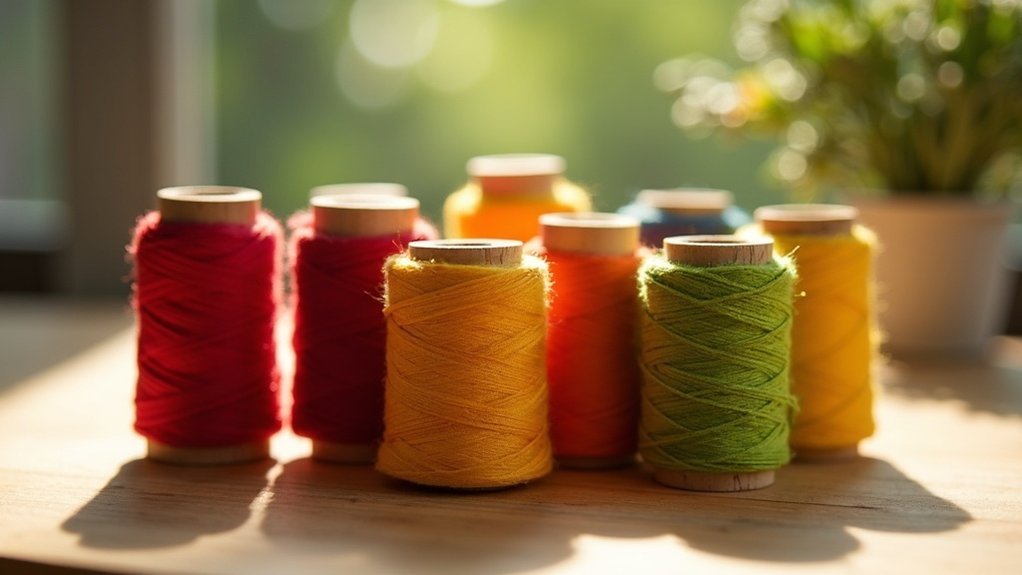
For instance, Pearl Cotton offers a slight sheen and a thicker texture, perfect for raised effects and bold outlines. Mixing threads like smooth DMC Stranded Cotton with textured wool can enhance depth and interest.
Explore the unique effects of Pearl Cotton and textured wool to create stunning depth and bold outlines in your embroidery.
Specialty threads, including metallic options, add sparkle and dimension, reflecting light beautifully. Remember, your thread choice also affects stitch definition; thicker threads yield bolder stitches, while finer threads create delicate details.
Embrace these variations to elevate your embroidery artistry and serve your creative vision.
Incorporating Additional Materials for Depth
Incorporating additional materials into your embroidery not only amplifies the visual appeal but also deepens the textural experience of your work. You can add a variety of different embellishments like beads, sequins, or yarn to create stunning raised effects.
These elements complement your great stitch techniques, making your designs dynamic and engaging. Layering threads or attaching fabric scraps introduces contrasting textures that stand out beautifully.
Experimenting With Color for Dimension
How can you elevate the dimension of your embroidery through color? By exploring a color family, you can use different shades of a single hue to create depth and dimension.
This approach enriches your designs and enhances texture. Experiment with thread painting techniques for seamless blending, allowing varied tones to come alive in your embroidery projects.
Don’t shy away from strategic color choices, like contrasting colors or gradients, to add visual interest. Each combination can inspire your creativity, leading to unique, personalized designs that truly serve others with beauty and depth.
Immerse yourself in color exploration for enthralling results!
Showcasing Your Textured Creations
While you may have poured hours into perfecting your textured embroidery creations, showcasing them effectively can elevate their impact even further.
Use stitches like the Knotted Pearl Stitch and Velvet Tufting to enhance visual interest. Display your work against contrasting backgrounds, such as frames or fabric panels, to highlight the texture added through layering and diverse threads.
Consider incorporating 3D embellishments like beads and sequins for a unique tactile experience. Share images on social media to inspire others and invite feedback.
Finally, organize your pieces in a portfolio by stitch type or theme to track your progress and showcase your evolving skills.