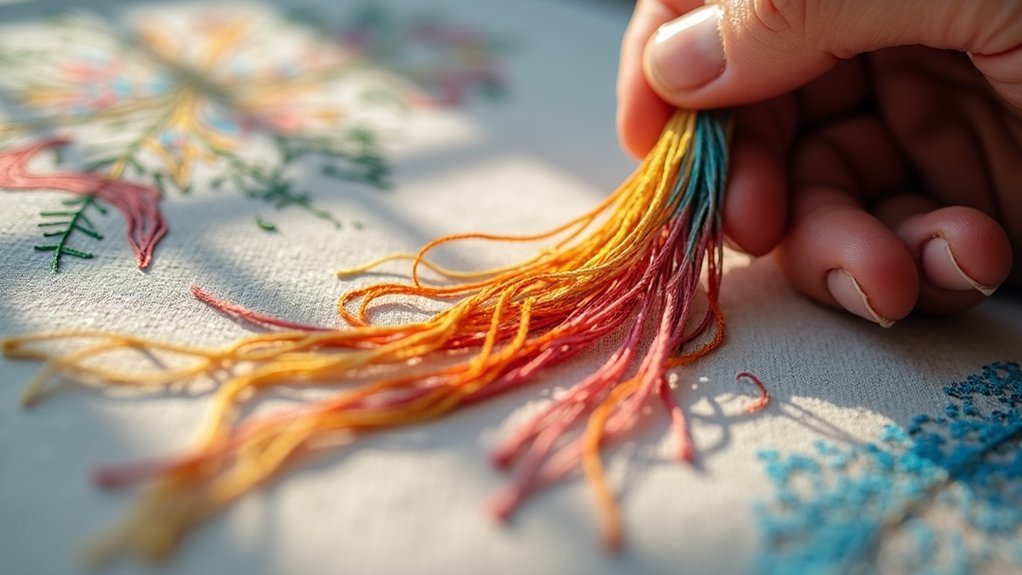

To prevent embroidery thread tangling, keep your thread length around 50 cm (20 inches) to minimize twists. Organize your supplies with bobbins and color-code threads for quick access. Use thread conditioners to smooth fibers and regularly check for tangles while stitching. When you’re ready to use, pull the thread from the bottom of the skein for natural unraveling. By following these strategies, you’ll enhance your stitching experience and discover even more effective techniques.
Key Takeaways
- Use thread lengths of about 50 cm (20 inches) to minimize tangling while stitching.
- Organize threads on bobbins and color-code them for easy selection and reduced knots.
- Apply thread conditioner or beeswax to smooth fibers and prevent tangling.
- Regularly inspect and untwist the thread during stitching to catch tangles early.
- Store unused threads properly and pull from the bottom of skeins to reduce knots.
Understanding Thread Tangling
When you’re embroidering, understanding how thread tangling occurs can help you navigate the challenges more effectively.
Thread knots often form when loops twist on themselves, so inserting the needle into these loops can untangle them. Using all six strands of embroidery floss without separation or inserting the needle too quickly can create more tangles.
To minimize issues, opt for shorter lengths of thread, ideally under 50 cm (20 inches). Additionally, pull thread from the bottom of the skein to allow it to unravel naturally, resulting in less tangles.
Regular checks for tangles and using a larger-eyed needle can also help.
Optimal Thread Lengths for Embroidery
Choosing the right thread length is essential for a successful embroidery experience. Aim for a length of about 50 cm (20 inches) or, preferably, 18-24 inches, as shorter thread lengths are less likely to tangle.
A practical rule is to measure from your elbow to your middle finger, which helps prevent excessive twisting. If you encounter persistent tangling, try cutting the thread 10 cm (4 inches) shorter to enhance your stitching.
Frequent re-threading with these ideal lengths won’t only minimize knots but also prolong the life of your floss, ensuring a smoother and more enjoyable embroidery process.
Effective Thread Management Techniques
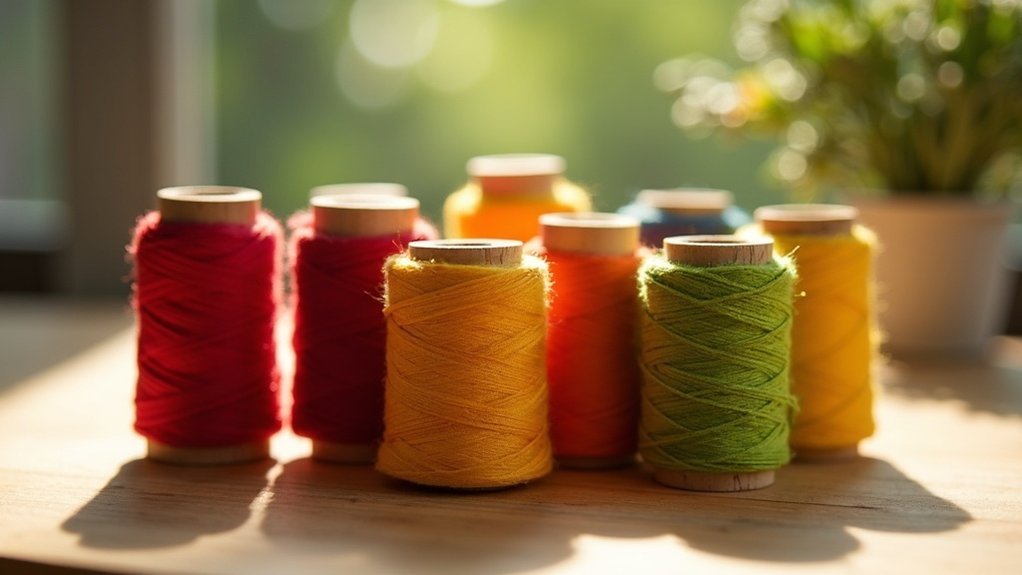
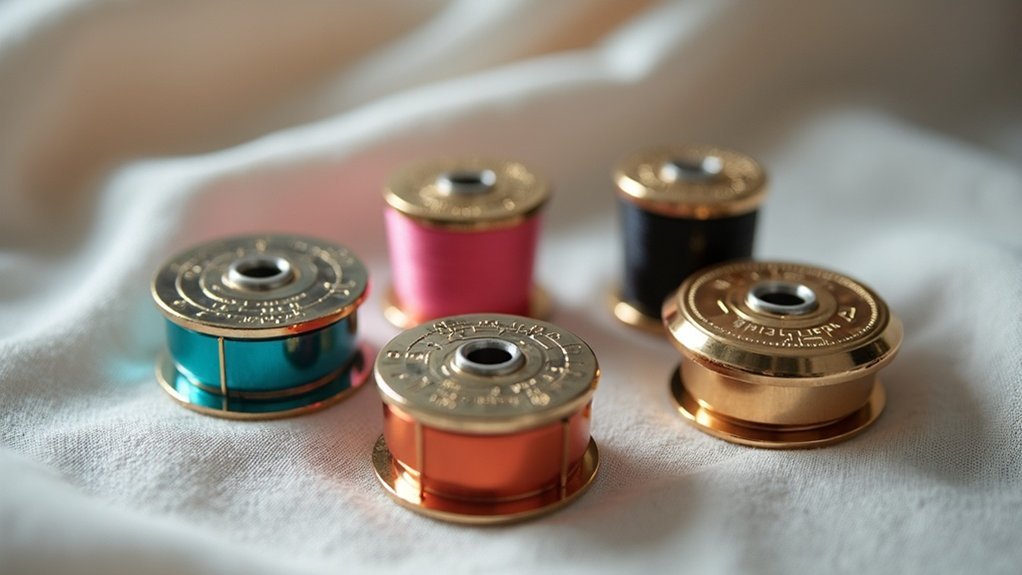
To effectively manage your embroidery thread and prevent tangling, start by organizing your supplies with intentionality. Use bobbins to store threads, color-coding them for easy access. Consider storage boxes designed for wound bobbins, arranged by color families. When separating strands of thread, pull each one individually and hold it loosely between your fingers. Maintain an ideal thread length of about 50 cm (20 inches) for usability. Regularly check and untwist the thread using a thread conditioner while stitching.
| Technique | Purpose | Benefits |
|---|---|---|
| Bobbin Storage | Organizes and reduces tangling | Easier access and storage |
| Color Coding | Simplifies selection | Quick identification |
| Thread Conditioner | Smooths fibers | Prevent tangling |
The Importance of Proper Thread Preparation
Effective thread management techniques can only go so far without proper preparation. Proper thread preparation is essential for preventing knots and tangles in your embroidery thread.
Here’s how to make sure your thread is ready for use:
- Gently release the tail from the DMC floss skein to minimize wear.
- Store released thread on bobbins or hang it straight to reduce waviness.
- Regularly stroke the thread with your fingers to straighten it.
- Allow the thread to hang freely between sessions to prevent twisting.
- Pull from the bottom of the skein, following its natural twist to minimize tangling.
Tips for Untangling Threads
When you encounter tangled threads, start by gently pulling the needle upwards through the loops to release any knots without adding to the problem.
For those particularly stubborn tangles, using tweezers can give you the precision needed to navigate tight spots effectively.
Gentle Pull Techniques
Sometimes, threads can become tangled in the most frustrating ways, but gentle pull techniques can make untangling much easier.
Here are some effective strategies:
- Gently pull the needle upwards through loops to release tension.
- Swing the needle slightly while pulling to loosen stubborn knots.
- Incorporate patience; avoid rushing the process.
- Regularly check for tangles while stitching to catch issues early.
- Work slowly and carefully to prevent new knots from forming.
Use of Tweezers
Gentle pull techniques can help alleviate some tangles, but for those stubborn knots that resist your best efforts, tweezers become a handy ally.
Use tweezers to grasp tangled loops carefully, pulling them apart slowly to prevent additional knots. For tight tangles, insert the tweezers into the knot to loosen the thread before attempting to separate it.
Patience is essential; take your time to avoid breaking the thread or increasing frustration.
Always keep a pair of tweezers in your embroidery kit, as they can streamline the untangling process, making it quicker and less stressful when dealing with knotted threads.
Maintaining Thread Quality and Condition
To maintain thread quality and condition, you’ll want to use synthetic conditioners or beeswax to smooth fibers and minimize tangling, especially with metallic threads.
Don’t forget to store your unused thread properly, avoiding knots or tight configurations that can cause damage.
Regularly inspect your threads and discard any worn strands to guarantee a consistent and smooth stitching experience.
Thread Conditioning Techniques
Although you may not realize it, conditioning your embroidery thread plays an essential role in maintaining its quality and preventing tangling.
Here are some effective techniques for conditioning your thread:
- Use synthetic conditioners like Thread Heaven or beeswax for rough or metallic threads.
- Limit synthetic application to prevent residue buildup.
- Experiment with damp makeup sponges to reduce static cling.
- Try dryer sheets for alternative conditioning, but test for effectiveness.
- Regularly condition unbranded threads, which tangle more easily, to keep them tangle-free.
Proper Storage Practices
Proper storage practices play an essential role in maintaining the quality and condition of your embroidery thread. Store your threads wound onto bobbins to keep them organized and prevent tangling.
Utilize storage boxes or organizers, arranging bobbins by color families or thread numbers. This enhances organization and minimizes knot risks. Keep threads in separate compartments to prevent unwinding, ensuring each thread remains accessible and in good condition.
When pulling from skeins, always pull from the bottom to allow the thread to unravel naturally, considerably reducing tangling. Regularly review your storage methods to preserve the longevity of your embroidery materials.
Regular Maintenance Tips
Maintaining the quality and condition of your embroidery thread is essential for achieving flawless results in your projects. Follow these maintenance tips to keep your thread in top shape:
- Gently stroke the thread with your fingers to straighten it.
- Let the thread hang freely between stitching sessions to avoid twisting.
- Use a needle with a wide enough eye to prevent constraining the thread.
- Periodically allow the needle to hang from your embroidery hoop, letting the thread unwind naturally.
- Consider applying thread conditioner on rough or metallic threads for enhanced smoothness.
These practices will help you thread your needle smoothly and avoid tangles with long thread.
Community Insights and Shared Experiences
When you connect with fellow embroiderers, you’ll discover a wealth of shared experiences that can help you tackle the common issue of thread tangling. Engaging in community discussions reveals effective solutions like using shorter lengths of thread and separating individual strands from floss. The “untangle dangle” technique is another popular tip to prevent knots. Here’s a quick overview:
| Tips | Description |
|---|---|
| Short Thread Lengths | Use around 50 cm (~20 inches) to minimize tangling. |
| Separate Strands | Reduce knots by preparing strands before use. |
| Untangle Dangle Technique | Let the thread hang straight to avoid twisting. |
| Community Support | Exchange tips in forums for enhanced practices. |
Additional Resources for Embroiderers
Engaging with the embroidery community not only provides shared experiences but also opens the door to a variety of additional resources that can enhance your skills and tackle thread tangling effectively.
Engaging with the embroidery community enriches your crafting journey and offers invaluable resources for mastering thread management.
Consider exploring these valuable options:
- Join online forums for tips on thread management.
- Watch YouTube tutorials demonstrating effective storage techniques.
- Attend workshops at local embroidery supply stores for hands-on learning.
- Read books that focus on advanced thread management strategies.
- Follow embroidery enthusiasts on social media for innovative organization ideas.
Utilizing these resources will deepen your understanding and improve your crafting efficiency, ultimately benefiting those you serve.