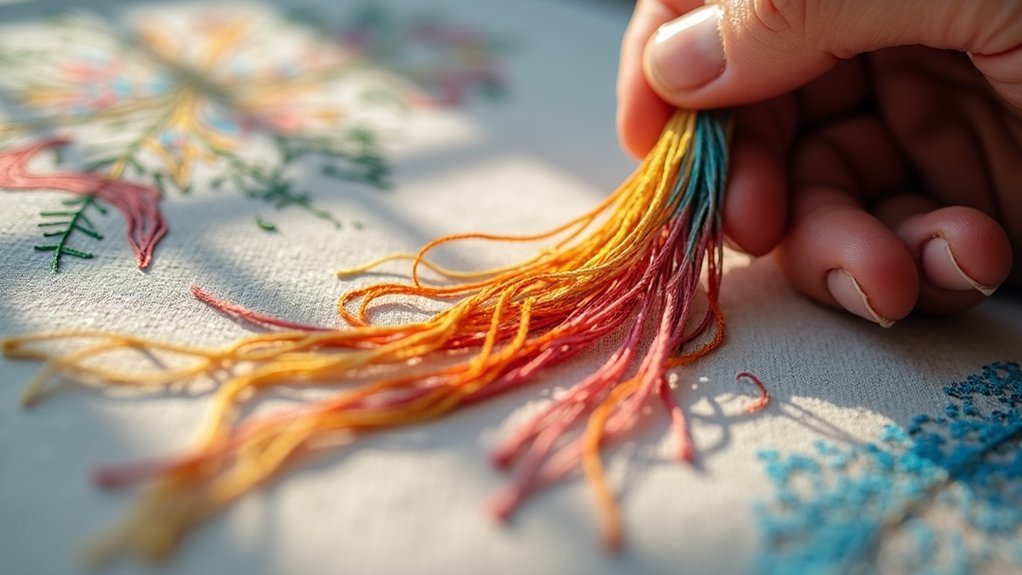

When embroidery says “3 strands,” it means you’re using three individual strands of thread for a bolder, more defined look. This technique is perfect for fabrics like 14-count Aida, giving you great coverage and visibility. It balances thickness and texture, enhancing your designs beautifully. Whether you’re cross stitching or backstitching, this approach improves detail and definition. If you want to learn more about adjusting strands for different fabrics or techniques, there’s plenty more to explore!
Key Takeaways
- “3 strands” refers to using three individual strands of embroidery floss for enhanced visibility and texture on fabrics like 14 count Aida.
- This strand count provides maximum coverage, making colors pop, especially on darker fabrics.
- For denser details, three strands are ideal for techniques like cross stitch and backstitching.
- Adjusting the number of strands can improve control and stitch density based on fabric count.
- Consistent tension is essential when using three strands to ensure smooth, flat stitches without puckering.
Understanding Strands in Embroidery
When you immerse yourself in the world of embroidery, understanding strands is essential, especially when you hear the term “3 strands.”
This phrase refers to the practice of using three individual strands of stranded cotton thread, which allows you to achieve a perfect balance of thickness and coverage in your stitches. By choosing to separate the threads, you can customize your embroidery thread for various techniques, such as cross stitch and blackwork.
Using three strands of cotton thread offers an ideal blend of thickness and coverage for your embroidery techniques.
Using three strands enhances visibility and texture, particularly on fabrics like 14 count Aida, ensuring your stitches pop, even on darker backgrounds.
Embrace the art of strands!
The Importance of Thread Count
When it comes to embroidery, the thread count plays a vital role in your project’s success.
Choosing the right number of strands not only influences the texture but also impacts the overall look of your design.
Whether you’re aiming for bold coverage or delicate detail, understanding how strand count interacts with your fabric can elevate your stitching game.
Understanding Strand Count Impact
Although many factors contribute to the overall quality of your embroidery, understanding strand count is essential for achieving the desired visual impact in your projects.
When a pattern specifies three strands, you’re encouraged to use three individual threads, enhancing thickness and opacity. This choice creates bold, defined lines in stitches like backstitch or split stitch, perfect for outlining or adding texture.
Experimenting with three strands on fabrics like 14 count Aida helps you grasp how the number of threads affects stitch density and finish.
Embrace this knowledge to elevate your hand embroidery, crafting beautiful pieces that truly resonate.
Choosing Strands for Techniques
Choosing the right number of strands in your embroidery not only affects the overall look but also influences the technique you’re using.
For cross stitch, using three strands of embroidery floss is ideal, providing excellent coverage on cotton fabrics like 14 count Aida. This density guarantees the fabric beneath doesn’t show through.
Adjusting to one or two thread strands can enhance control for delicate details or finer stitches. Always consider your fabric type; three strands create a bolder effect, while fewer strands may suit lighter or darker materials.
Tailoring your approach elevates your embroidery and serves your project beautifully.
Determining Coverage With Three Strands
When you’re working with three strands of embroidery floss, choosing the right fabric is essential for achieving the look you want.
Consider how the thread count affects stitch density; this choice will shape the final appearance of your project.
Balancing fabric type with your design’s needs guarantees vibrant colors and a polished finish.
Optimal Fabric Types
Selecting the right fabric is essential for achieving the best results when using three strands of embroidery floss. For normal cotton fabrics, like 14-count Aida, three strands provide maximum coverage without excessive buildup.
If you’re working with higher thread count materials, such as 32-count linen, you’ll enjoy a denser look without sacrificing a smooth finish. On dark fabrics, three strands guarantee your thread color pops against the background, minimizing visibility of the fabric underneath.
Stitch Density Considerations
Achieving the right stitch density with three strands of embroidery floss can greatly enhance the visual appeal of your work. Consider these factors for ideal coverage:
- Fabric choice: Thicker fabrics like 14-count Aida benefit from three strands.
- Color concealment: The added density reduces visibility of underlying fabric colors, perfect for darker shades.
- Stitch length: Adjusting lengths helps maintain evenness and prevents puckering.
- Balanced look: Patterns specifying three strands guarantee full coverage without gaps, creating a bold, textured effect.
Guidelines for Cross Stitch Techniques
To create beautiful cross stitch projects, understanding your fabric and thread choices is essential.
When working with 14 count Aida fabric, using three strands of embroidery floss guarantees ideal coverage and prevents the fabric from showing through. For higher count fabrics like 16 or 18 count, you might want to switch to two strands to maintain a balanced appearance.
On darker fabrics, three strands offer increased density, enhancing stitch visibility. Always check your pattern’s recommendations, and remember to maintain consistent tension.
This prevents unevenness and guarantees a smooth, professional finish in your cross stitch creations. Happy stitching!
Adjusting Strands for Different Fabrics
While working on cross stitch projects, adjusting the number of strands you use can greatly impact the overall appearance of your work.
Consider these tips for using three strands effectively:
- Use three strands on 14 count Aida for excellent coverage.
- On dark fabrics, opt for three strands with lighter threads to prevent show-through.
- For 32 count evenweave or linen, three strands can enhance density in larger designs.
- Adjust strands based on fabric type; higher counts might need fewer strands for clarity.
Recommendations for Backstitching
Backstitching can elevate your embroidery projects by adding definition and detail, especially when you choose to use three strands of floss. This technique is perfect for achieving a lighter outline on fabrics, lending subtlety to your designs.
Be sure to select an appropriate needle size that accommodates the thickness of your three strands, ensuring smooth stitching. Adjusting the tension while backstitching is essential; it helps prevent puckering and keeps your stitches laying flat.
For the best results, practice on a scrap piece of fabric first to find the perfect balance of strands and tension for your final project.
Tips for Managing Thread Usage
Managing thread usage effectively can make a significant difference in your embroidery experience, especially when working with three strands of floss.
To guarantee smooth stitching, consider these tips:
- Separate the strands carefully to prevent tangling and maintain tension.
- Cut the thread to an arm’s length to minimize wear and fraying.
- Thread through the fabric with control for a polished finish, especially in techniques like cross stitch.
- Adjust the number of strands based on fabric type, using three strands for standard cotton but reducing for delicate materials.
Personalizing Your Stitching Experience
As you explore the world of embroidery, personalizing your stitching experience with three strands of floss can transform your projects into unique expressions of creativity.
This technique provides balanced stitch thickness, ensuring excellent coverage on fabrics like 14 count Aida. Depending on your personal preference, using three strands can enhance vibrancy on lighter materials or detail on medium-weight fabrics.
Adjusting the strand count allows for tailored results, especially for backstitching, where a thicker line adds depth.
Experiment with threading from the skein and observe how three strands elevate your designs, guiding your journey in stranded embroidery.