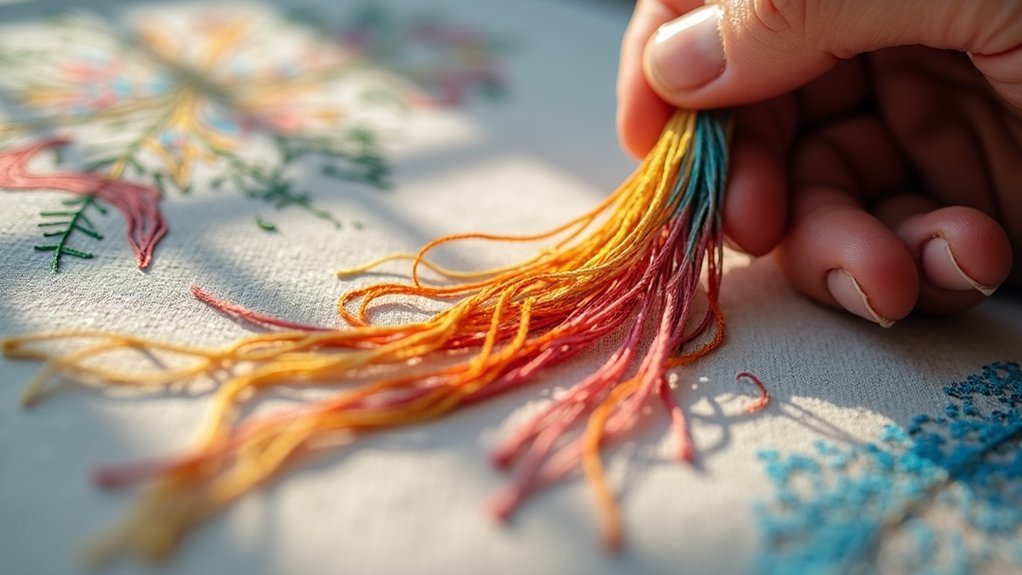

To start with embroidery stitches, gather essential supplies like embroidery floss, a hoop, and needles. Practice basic stitches such as back stitch, running stitch, and satin stitch on your fabric. Create a personal sampler to hone your skills and track your progress. Explore specialized stitches like whip stitch or woven wheel stitch for more complex designs. With time and practice, you’ll gain confidence. Keep going, and you’ll discover even more techniques and project ideas ahead.
Key Takeaways
- Start with basic stitches like back stitch and running stitch to build foundational skills in embroidery.
- Use an embroidery hoop to keep your fabric taut for more precise stitching.
- Familiarize yourself with essential supplies such as embroidery floss, needles, and fine-tipped scissors.
- Practice different stitches using downloadable sampler patterns available online for hands-on experience.
- Join online embroidery communities for inspiration, feedback, and to share your work with fellow crafters.
Getting Started With Embroidery
Getting started with embroidery can feel overwhelming, but it doesn’t have to be. Begin by cutting a length of thread about the length of your forearm, using three strands for practice. Thread the needle, securing a tail of 3-4 inches with a knot.
Place your fabric in an embroidery hoop and tighten the screw to keep it taut. This guarantees a smooth surface for your work. Use pencil guidelines to practice stitching lines consistently.
Familiarize yourself with basic stitches like the straight stitch and back stitch, as mastering these techniques will enhance your hand sewing projects and build your confidence.
Essential Supplies for Embroidery
When diving into embroidery, having the right supplies can make all the difference in your experience and outcomes. Essential supplies include:
| Supply | Purpose |
|---|---|
| Embroidery Hoop | Keeps fabric taut for precise stitching |
| Embroidery Floss | High-quality threads for colorful and textured designs |
| Embroidery Needles | Larger eyes for smooth stitching with various threads |
| Fabric Choice | Options like cotton or linen for different textures |
| Scissors | Fine-tipped for trimming threads and ensuring clean edges |
With these supplies, you’ll enhance your stitching process and create beautiful pieces that serve others beautifully.
Basic Embroidery Stitches
Now that you’ve gathered your essential supplies, let’s explore basic embroidery stitches.
You’ll learn key techniques like the Back Stitch for outlining and the Running Stitch for basting, while also discovering their common applications in various projects.
Plus, we’ll touch on creative variations that can enhance your designs and add a personal touch.
Essential Stitch Techniques
Embroidery stitches form the foundation of your creative projects, enabling you to bring designs to life with precision and flair.
Master essential stitch techniques like the Back Stitch for solid outlines, and the Running Stitch for simple, straight lines. Use the Satin Stitch to fill shapes smoothly, enhancing curves with vibrant color.
The Lazy Daisy Stitch adds charm to floral designs, especially when paired with French Knots for intricate centers.
Common Stitch Applications
Mastering basic embroidery stitches opens up a world of creative possibilities, allowing you to apply them in various projects. Here are some common stitch applications you can explore:
| Stitch | Purpose | Common Uses |
|---|---|---|
| Back Stitch | Creates solid outlines | Detailing patterns |
| Blanket Stitch | Provides a decorative edge | Felt and appliqué projects |
| French Knots | Adds intricate details | Flower centers |
| Lazy Daisy Stitch | Creates flower shapes | Embellishments |
| Stem Stitch | Follows curves and lines | Floral designs |
| Running Stitch | Simple decorative stitching | Borders and textures |
| Satin Stitch | Fills shapes with smooth color | Solid areas in designs |
Explore these stitches to enhance your embroidery skills!
Variations for Creativity
While exploring the world of embroidery, you can find numerous variations of basic stitches that can elevate your projects.
The Back Stitch is often used for outlining and detailing, while straight stitches, like the Running Stitch, serve both outlining and basting purposes.
For floral designs, try the Lazy Daisy Stitch combined with French knots to add intricate details.
The popular Satin Stitch fills shapes smoothly with closely spaced stitches, while the Chain Stitch creates decorative outlines through interlocking loops.
Each variation allows you to pull creativity into your work, enriching the aesthetics and texture of your embroidery projects.
Specialized Stitches for Advanced Techniques
In this section, you’ll explore specialized stitches that elevate your embroidery skills.
The Whip Stitch is perfect for connecting felt edges neatly, especially in tight spaces where other stitches might be tricky.
Meanwhile, the Woven Wheel Stitch creates beautiful rose-like designs, adding texture and interest to your projects.
Whip Stitch Techniques
Whip stitch techniques offer you a versatile option for securely joining fabric edges, especially when working with felt or appliqué projects.
To execute a whip stitch, start from the wrong side, bringing your needle through the first layer at the edge, then insert it through both layers to create a secure stitch. This technique not only provides a decorative finish but also excels in tight spaces where precision is key.
For best results, maintain consistent tension to avoid puckering. Whip stitches are ideal for hemming and finishing seams, making them a valuable addition to your embroidery and sewing repertoire.
Woven Wheel Stitch Guide
As you explore advanced embroidery techniques, mastering the Woven Wheel Stitch can greatly enhance your skill set. This stitch creates a beautiful flower shape by weaving thread over and under spokes.
Begin by anchoring the thread in the circle’s center and stitching straight spokes to its edge. Next, use an over-and-under pattern to weave the thread.
Adjust the stitch tightness for varied texture and dimension—tightly woven wheels create thick flowers, while looser ones offer a flatter appearance.
Practice on circles of different sizes to develop your skills and achieve stunning visual effects in your embroidery designs, particularly for floral motifs.
Tips for Practicing and Improving Your Skills
To become a proficient embroiderer, it’s essential to start with basic stitches like the running stitch and backstitch, which lay the groundwork for more intricate techniques such as satin stitch and French knots.
Practice consistently by setting aside time each week for embroidery; this will enhance your muscle memory and improve your stitch uniformity.
Use downloadable sampler patterns to explore various stitches and boost your confidence.
Document your stitching progress in a journal, noting the techniques you enjoy and areas for improvement.
Finally, join embroidery communities to share your work, gather feedback, and find inspiration from fellow stitchers.
Creative Ideas for Your Embroidery Projects
Embroidery projects can truly shine when you infuse them with creativity and personal flair. Combine backstitch outlines with lazy Daisy Stitch to create intricate designs.
Use decorative stitches like chain or herringbone stitches as borders, enhancing visual interest. Incorporate specialty stitches, such as woven wheels or French knots, to add dimension.
Experiment with contrasting thread colors to make specific elements pop, creating a vibrant experience. Consider incorporating seasonal motifs or nature-inspired designs to guide your projects, ensuring they feel cohesive.
These creative ideas will elevate your embroidery, making it not just a craft but a heartfelt expression of your artistry.
Resources for Further Learning and Inspiration
Whether you’re just starting out or looking to refine your skills, a wealth of resources is available to inspire and enhance your embroidery journey.
Explore free embroidery sampler patterns online to practice various stitches described and techniques suitable for beginners. The “How to Embroider for Beginners” series provides extensive guidance on popular stitches and engaging project ideas.
Discover free embroidery sampler patterns online to master various stitches and techniques perfect for beginners.
Join online embroidery communities to share your work and gain inspiration from fellow crafters. Don’t miss out on video tutorials that visually demonstrate techniques, making learning more engaging.
Download a free embroidery wreath design as a beginner-friendly project to apply your new skills creatively.